Soil Centipede Identification Guide
Learn how to recognize the thread-thin, many-legged soil centipede that lives its whole life underground.
Read the full Soil Centipede encyclopedia entry →Key Visual Features
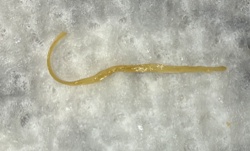
- Extremely thin, elongated, worm-like body, often pale yellow, tan, or whitish (sometimes pale orange or brown)
- Very long antennae relative to head size, used to feel through soil particles
- Extraordinarily high leg count for a centipede — depending on species, adults can have 30 to over 170 pairs of legs
- Body is soft and delicate compared to the hard, glossy segments of surface-dwelling centipedes
- No prominent eyes; many species are eyeless since they live in darkness
- Body length usually ranges from under an inch to about 2 inches, though it looks longer due to its thread-like shape
Where and When You'd See Them
- Found deep in loose, moist soil, leaf litter, compost piles, and under buried logs or stones
- Rarely seen at the surface; most encounters happen when digging in a garden bed or turning over compost
- Active year-round underground but most noticeable after rain, when soil is turned, or during gardening chores
- Prefers consistently damp, organic-rich soil and avoids dry or compacted ground
Similar-Looking Bugs
- House centipedes have far fewer, much longer legs and move in quick, visible surface dashes — soil centipedes have short legs and slow, sinuous movement.
- Millipedes have two pairs of legs per body segment (giving a denser, brush-like leg row) and a rounder, harder body, while soil centipedes have one pair per segment and a flatter, more flexible shape.
- Wireworms (click beetle larvae) are stiff, shiny, and legless-looking with only three small pairs of legs near the head, unlike the leg-covered soil centipede.
- Symphylans (garden centipedes) are much smaller, whiter, and have only 12 pairs of legs.
Quick ID Checklist
- Thread-thin, pale, worm-like body found only in soil or leaf litter
- Very high number of short leg pairs running the full body length
- Long, sensitive antennae and no visible eyes
- Slow, gliding movement rather than fast scurrying
- Found while digging, never scurrying across floors or walls
Frequently asked questions
How can I tell a soil centipede from a millipede?
Look at the legs per segment: soil centipedes have one pair of legs per body segment, giving a sparser look, while millipedes have two pairs per segment, giving a denser, brush-like row of legs along a rounder body.
Why do soil centipedes have so many legs?
Their leg count is an adaptation for burrowing and moving efficiently through the tiny air pockets and channels within loose soil, unlike surface centipedes that rely on speed.
Do soil centipedes have eyes?
Most species lack visible eyes entirely, relying instead on long antennae to sense their way through dark, underground spaces.
What time of year are soil centipedes most visible?
They can be found any time soil is disturbed, but gardeners most often spot them in spring and fall while turning compost or digging planting beds.
Soil Centipede identified by the community
Recent Soil Centipede finds identified with Bug Identifier.