Spider Wasp Identification Guide
Identify the long-legged, fast-walking wasps that specialize in hunting spiders across open ground and garden beds.
Read the full Spider Wasp encyclopedia entry →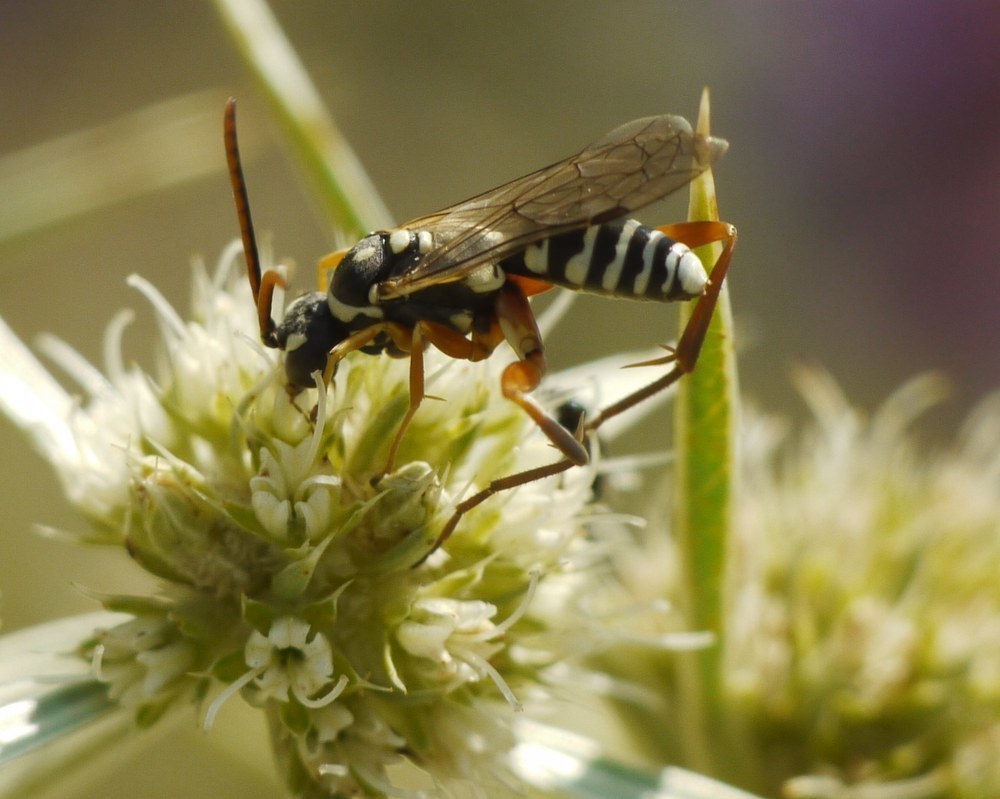
Key Visual Features
Spider wasps make up a large family with considerable variety, but most share a distinctive slender build suited to hunting on the ground.
- Size: Ranges from about 10 mm to over 30 mm depending on species.
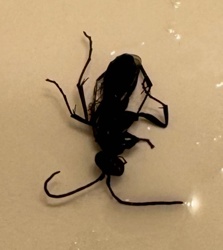
- Color: Often black or dark blue with smoky or amber wings; some species show orange markings on the body or legs, while others are entirely dark.
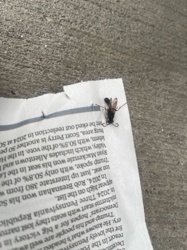
- Body shape: Slender with a pronounced narrow waist and long, tapering abdomen.
- Wings: Frequently held out to the sides rather than folded flat, and often flicked or quivered while the wasp is active on the ground.
- Legs: Notably long and spiny, especially the hind legs, adapted for grappling and dragging spider prey.
- Antennae: Long, thin, and constantly moving, used to track prey by scent and touch.
Where and When You'll See One
Spider wasps are ground-active hunters best looked for at soil level rather than in the air.
- Look on bare ground, garden paths, patios, and low vegetation where they run rapidly in short bursts, pausing to flick their wings.
- Common in gardens, fields, and woodland edges during warm weather, generally from late spring through early fall.
- Adults are frequently seen dragging a paralyzed spider across open ground toward a burrow or crevice, a distinctive behavior that helps confirm identification.
- Also visit flowers for nectar between hunting trips, particularly in sunny, open areas.
Similar-Looking Bugs
- Tarantula hawks: Part of the same broader family but much larger, with a metallic blue-black body and bright orange wings rather than the more modest coloring of typical spider wasps.
- Mud daubers: Share the thread-waisted look but build mud nests rather than hunting on foot, and are less often seen running rapidly across open ground.
- Velvet ants: Fuzzy, wingless females can superficially resemble a spider wasp on the ground, but their dense hair and lack of wings set them apart.
- Ichneumon wasps: Have much longer antennae relative to body length and hunt hidden host larvae rather than actively pursuing spiders in the open.
Quick ID Checklist
- Slender, dark-bodied wasp with a pronounced narrow waist
- Long, spiny legs adapted for grappling prey
- Fast, erratic running on open ground with frequent wing-flicking
- Wings often held out to the sides rather than folded flat
- Sometimes seen dragging a paralyzed spider toward a burrow
Frequently asked questions
Why does the wasp keep flicking its wings while walking?
Wing-flicking is a common behavior in this group while the wasp searches the ground for spider prey or scouts a nest site, and it is a useful behavioral clue for identification.
How do spider wasps differ from tarantula hawks?
Tarantula hawks belong to the same family but are much larger and show a distinctive metallic blue-black body with bright orange wings, while most other spider wasps are smaller with more subdued coloring.
Why is the wasp dragging something across the ground?
Spider wasps hunt spiders and drag captured prey back toward a burrow or sheltered crevice, so seeing a wasp hauling a spider is a strong identification clue for this group.
Do spider wasps build nests like paper wasps?
No, most spider wasps use existing crevices, burrows they dig themselves, or abandoned holes rather than constructing a papery combed nest.
Spider Wasp identified by the community
Recent Spider Wasp finds identified with Bug Identifier.