Tiger Swallowtail Caterpillar Identification Guide
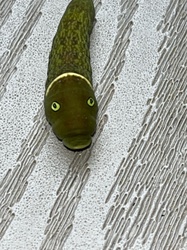
A green caterpillar with large fake eyespots near its head that give it a snake-like appearance, found on cherry and tulip tree leaves.
Read the full Tiger Swallowtail Caterpillar encyclopedia entry →Key Visual Features
The tiger swallowtail caterpillar undergoes a dramatic change in appearance as it matures, reaching about 2 inches long.
- Mature coloring: Smooth green body with a swollen, snake-like thorax bearing two large eyespots — yellow with black centers and a blue crescent — positioned to resemble a small reptile's face
- Young coloring: Early instars are mottled brown and white, closely resembling a bird dropping
- Body shape: Thick toward the front (thorax) and tapering toward the rear, unlike the more evenly cylindrical shape of many other caterpillars
- Osmeterium: A hidden orange forked organ behind the head that can be briefly extended when disturbed
- Rear end: Rounded and unmarked aside from faint banding in some individuals
Where and When You'll See It
Tiger swallowtail caterpillars feed on the leaves of a range of trees, especially wild cherry, tulip tree, ash, and birch. They are typically found from late spring through summer, often resting inside a folded or curled leaf shelter that they line with silk. This leaf-folding behavior, combined with their green color and eyespot pattern, means they are usually only spotted when the folded leaf itself catches attention.
Similar-Looking Bugs
- Spicebush swallowtail caterpillar: Similar green body and eyespots, but the eyespots are typically more yellow-orange with distinct blue dot patterns, and it feeds on spicebush and sassafras rather than cherry or tulip tree
- Eastern black swallowtail caterpillar: Green with black bands and yellow-orange spots rather than large eyespots, and feeds on carrot-family plants
- Polyphemus/luna moth caterpillars: Also green and smooth but lack the swollen "snake head" thorax and large eyespots
Quick ID Checklist
- Green body with a swollen thorax bearing two large eyespots
- Young stage resembles a bird dropping (brown and white)
- Rests inside a folded or silk-lined leaf shelter
- Hidden orange forked organ behind the head
- Found on wild cherry, tulip tree, ash, or birch leaves
Frequently asked questions
What are the big spots on a tiger swallowtail caterpillar?
They are false eyespots on the swollen thorax, colored yellow with black centers and a blue crescent, that give the caterpillar a snake-like appearance for camouflage.
Where does the tiger swallowtail caterpillar hide during the day?
It typically rests inside a leaf that it has folded over and secured with silk, forming a small shelter on its host tree.
What trees do tiger swallowtail caterpillars prefer?
They commonly feed on wild cherry, tulip tree, ash, and birch leaves.
How is the tiger swallowtail caterpillar different from the spicebush swallowtail caterpillar?
Both have green bodies with eyespots, but the spicebush swallowtail's eyespots tend to show more yellow-orange coloring with distinct blue dots, and it is found on spicebush and sassafras rather than cherry or tulip tree.
Tiger Swallowtail Caterpillar identified by the community
Recent Tiger Swallowtail Caterpillar finds identified with Bug Identifier.