Vietnamese Walking Stick Identification Guide
Recognize the Vietnamese Walking Stick by its smooth, spineless, elongated brown body and the pair of small wing pads on adult females.
Read the full Vietnamese Walking Stick encyclopedia entry →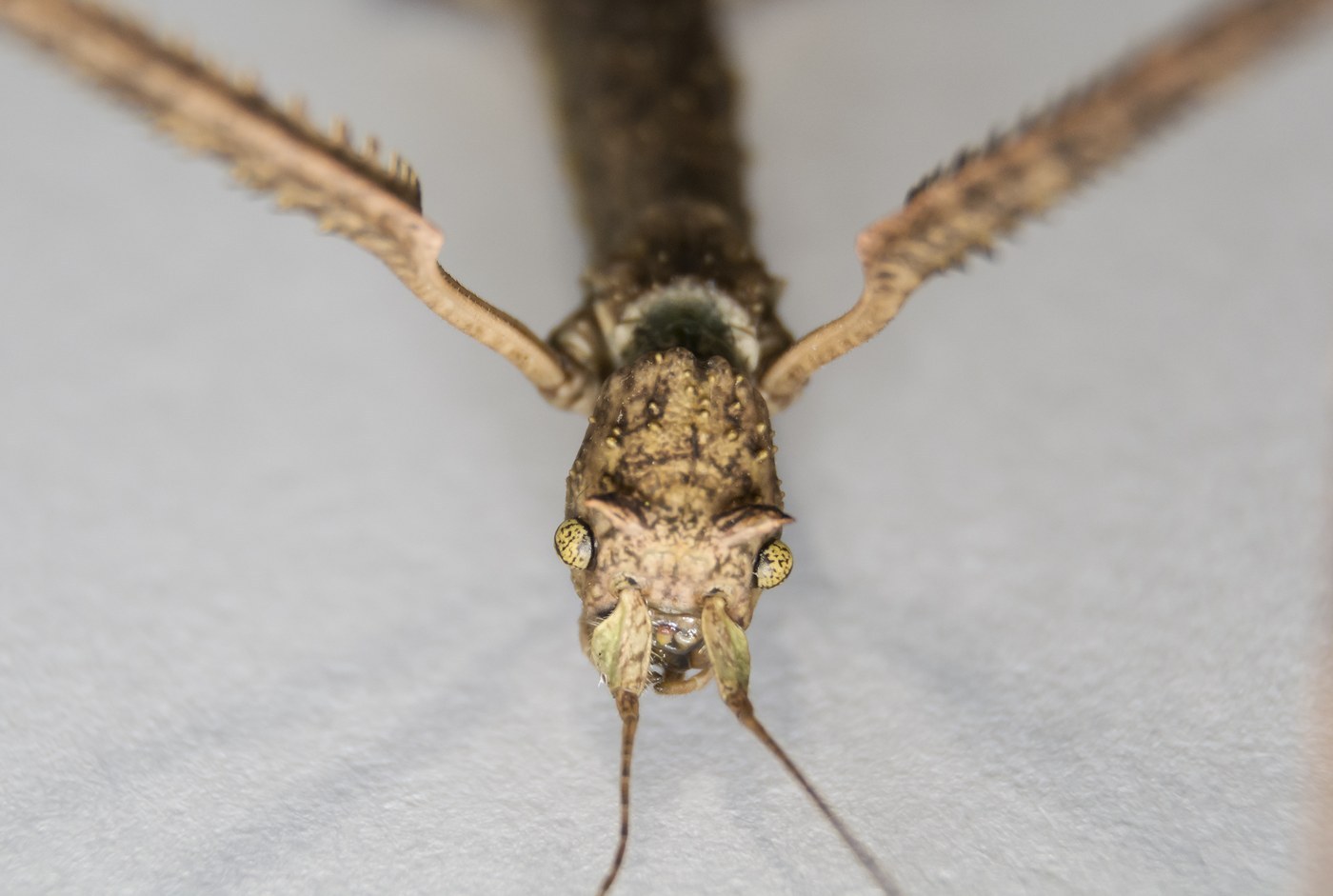
Key Visual Features
The Vietnamese Walking Stick is a medium-sized stick insect, with females typically reaching 3 to 4 inches and males somewhat smaller and slimmer, known for its smooth, twig-like body commonly kept and observed as a classic stick insect form.
- Body: Long, cylindrical, and smooth-textured, usually a solid brown or tan color that closely resembles a dry twig or stem.
- Legs: Long, thin, and stick-like, held close to the body's line when at rest to enhance the disguise.
- Wings: Females typically show small, short wing pads on the upper back rather than full functional wings, while males may have slightly more developed wing structures, though flight is limited or absent in both sexes.
- Antennae: Long and thread-like, extending forward well beyond the head.
- Texture: Notably smooth compared to some other stick insect species, without prominent spines or bumps along the body.
Where and When You'd See It
In its native range, the Vietnamese Walking Stick inhabits tropical and subtropical forest vegetation, resting on leaves, stems, and branches where its brown, twig-like body blends into the surrounding plant material. It is active mainly at night, feeding on leaves under cover of darkness, while remaining still and camouflaged during the day. This species is also widely kept and observed in captivity due to its manageable size and ease of identification, where it is typically found resting motionless on leafy branches within an enclosure.
Similar-Looking Bugs
The Vietnamese Walking Stick can be confused with:
- Other smooth-bodied stick insects – Several related tropical species share a similar brown, cylindrical shape, distinguished by subtle differences in size, wing pad shape, and leg proportions.
- Spiny stick insects – Some walkingstick species have prominent spines or ridges along the body and legs, a feature absent in the smoother-bodied Vietnamese Walking Stick.
- Northern Walkingstick – Similar in general body plan, but typically differs in size, regional range, and the presence of small wing pads in this species compared to the fully wingless Northern Walkingstick.
- Dry twigs or plant stems – The closest visual match; checking for antennae, legs, and subtle movement confirms the presence of an insect.
Quick ID Checklist
- Long, smooth, cylindrical brown body without spines
- Long, thin, stick-like legs held in line with the body
- Small wing pads present, especially in females, rather than full wings
- Long, thread-like antennae extending past the head
- Found resting motionless on leaves and stems, most active at night
Frequently asked questions
How can I tell a Vietnamese Walking Stick from other stick insects?
It has a notably smooth, spineless body compared to many other species, along with small wing pads on the upper back, which helps distinguish it from both spinier tropical species and fully wingless types.
Does the Vietnamese Walking Stick fly?
It has only small, underdeveloped wing pads rather than full functional wings, so flight is limited or absent, and it relies mainly on walking and camouflage.
When is this insect most active?
It is primarily active at night, feeding on leaves under cover of darkness, while remaining motionless and camouflaged among foliage during the day.
What is the easiest way to confirm it's an insect and not a twig?
Look for the long, thread-like antennae, six jointed legs, and small wing pads on the back, along with any slow, subtle movement, all of which distinguish it from an actual dry twig.
Vietnamese Walking Stick identified by the community
Recent Vietnamese Walking Stick finds identified with Bug Identifier.