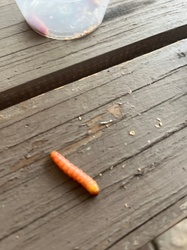
Waxworm Identification Guide
Identify the pale, smooth-bodied waxworm and learn how it differs from beetle grubs like the mealworm.
Read the full Waxworm encyclopedia entry →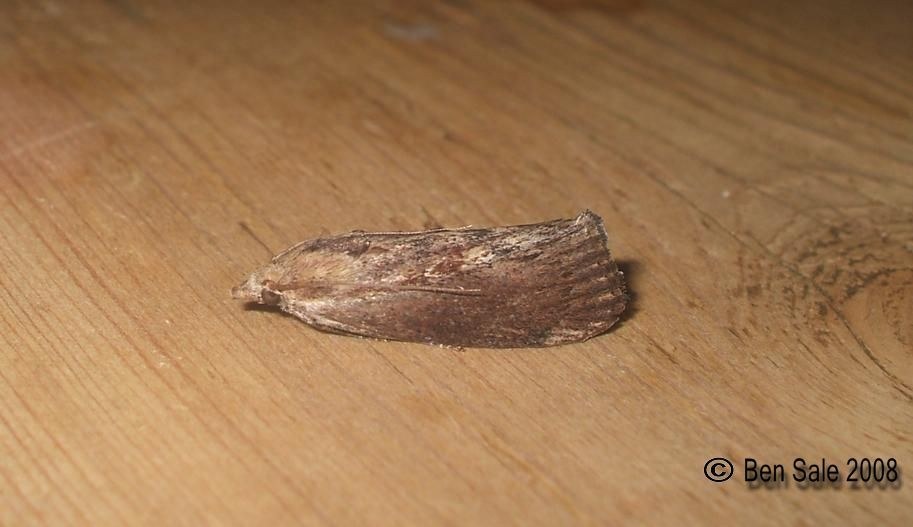
Key Visual Features
The waxworm is the larval stage of the wax moth, a small moth associated with beehives. Despite the name, it is a true caterpillar, not a worm.
- Body color: Creamy white to pale gray, sometimes with a faint yellowish tint, and generally uniform in color along its length.
- Body shape: Smooth, soft, and cylindrical, with subtle segmentation and no prominent spines, horns, or hair tufts.
- Head: Small and brown, contrasting with the pale body, tucked at the front end.
- Legs: Short true legs near the head and small prolegs along the abdomen, typical of a caterpillar body plan.
- Size: Reaches roughly 1 inch (2.5 cm) at full growth.
Where and When You'll See It
In natural settings, waxworms are found inside honeybee hives or on stored honeycomb, where the larvae tunnel through wax comb. They are also widely reared in captivity as a food source and fishing bait, so they are commonly encountered in bait shops, pet supply stores, or breeding containers rather than out in general habitat. Development can occur year-round in warm indoor conditions.
Similar-Looking Larvae
- Mealworm: Often confused with waxworms because both are used as feeder insects, but mealworms are the larvae of darkling beetles, not moths. Mealworms have a harder, shinier, more segmented exoskeleton and a darker yellow-brown color, compared to the soft, pale, smooth body of a waxworm.
- Silkworm: Also pale and soft-bodied, but larger, with a small rear horn and a diet restricted to mulberry leaves rather than wax comb.
- Other wax moth species (greater vs. lesser wax moth): The two common wax moth larvae look very similar; the lesser wax moth larva tends to be smaller and more slender than the greater wax moth larva.
Quick ID Checklist
- Smooth, soft, creamy-white to pale gray cylindrical body
- Small brown head contrasting with the pale body
- No spines, horns, or hair tufts present
- Found in wax comb or in captive-rearing containers rather than on foliage
- Softer and paler than the harder-bodied, beetle-larva mealworm
Frequently asked questions
Is a waxworm the same as a mealworm?
No, they are commonly confused because both are used as feeder insects, but the waxworm is a moth caterpillar with a soft, smooth body, while the mealworm is a beetle larva with a harder, more segmented exoskeleton.
Where do waxworms naturally occur?
In nature they are found inside beehives or on stored honeycomb, where the larvae tunnel through wax.
What color is a typical waxworm?
It is creamy white to pale gray with a small brown head, and its color stays fairly uniform along the body.
What does the adult wax moth look like?
The adult is a small, dull grayish-tan moth with a narrow body, much less conspicuous than the pale larval stage.
Waxworm identified by the community
Recent Waxworm finds identified with Bug Identifier.