Western Black Widow Identification Guide
Learn to identify the western black widow through its glossy black body, red hourglass marking, and desert-adapted habitat.
Read the full Western Black Widow encyclopedia entry →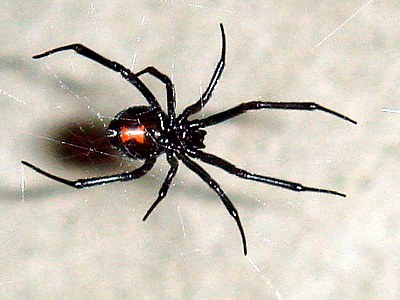
Key Visual Features
The western black widow shares the classic widow body plan with regional differences worth noting:
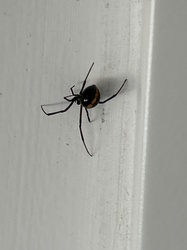
- Color: Shiny black body, sometimes with a slightly duller or more brownish-black tone than other widow species, especially in younger individuals.
- Abdomen shape: Large, rounded, and glossy, giving the spider a smooth, marble-like appearance.
- Hourglass marking: A red or orange hourglass on the underside of the abdomen; in this species the two triangles of the hourglass are often more clearly separated by a thin waist than in the southern black widow.
- Size: Females reach about 0.5 inches in body length; males are smaller, tan to gray, and marked with light-colored bands or spots along the abdomen.
- Legs: Thin, long, dark legs attached to a small cephalothorax relative to the bulky abdomen.
Where and When You'll See One
This species is common throughout the western United States, including dry, arid, and semi-arid regions. It favors ground-level, sheltered locations such as rodent burrows, rock piles, woodpiles, and the undersides of debris, and readily takes up residence in garages, sheds, and crawl spaces. Its messy, irregular web is typically built close to the ground in a protected nook. Adults are seen throughout warm months, with peak visibility in late summer.
Similar-Looking Spiders
- Southern black widow: Nearly identical in general appearance, but ranges overlap only in limited areas, and the hourglass on the southern species tends to appear more solidly connected.
- Northern black widow: Shows a broken, two-part hourglass and additional red spots along the back, a pattern the western species usually lacks.
- Brown widow spider: Lighter tan-brown mottled coloring instead of solid glossy black, plus a spiky, textured egg sac.
Quick ID Checklist
- Glossy black, rounded abdomen on thin dark legs
- Red-orange hourglass marking on the underside, often with a clear waist between triangles
- Small, pale-marked male distinct from the larger black female
- Irregular, low-hanging web in arid, sheltered ground-level spots
- Found throughout dry regions of the western United States
Frequently asked questions
How does the western black widow's habitat differ from other widow species?
It favors drier, more arid ground-level habitats such as rodent burrows, rock piles, and desert scrub, reflecting its range across the western United States.
Is the hourglass marking always a perfect shape?
No, the two triangles that make up the hourglass can appear connected or slightly separated by a thin waist, and the exact shape can vary between individual spiders.
What kind of web should I look for?
An irregular, tangled, three-dimensional cobweb built low to the ground in a sheltered, undisturbed location like a woodpile or rock crevice.
How do juvenile western black widows look different from adults?
Juveniles often show more brown, cream, or patterned coloring on the abdomen and gradually darken to solid glossy black as they mature.
Western Black Widow identified by the community
Recent Western Black Widow finds identified with Bug Identifier.