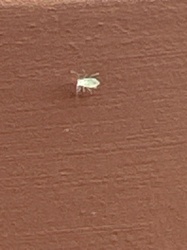
Whitefly Identification Guide
Spot whiteflies by their tiny, moth-like white wings that flutter up in a small cloud when a leaf is disturbed.
Read the full Whitefly encyclopedia entry →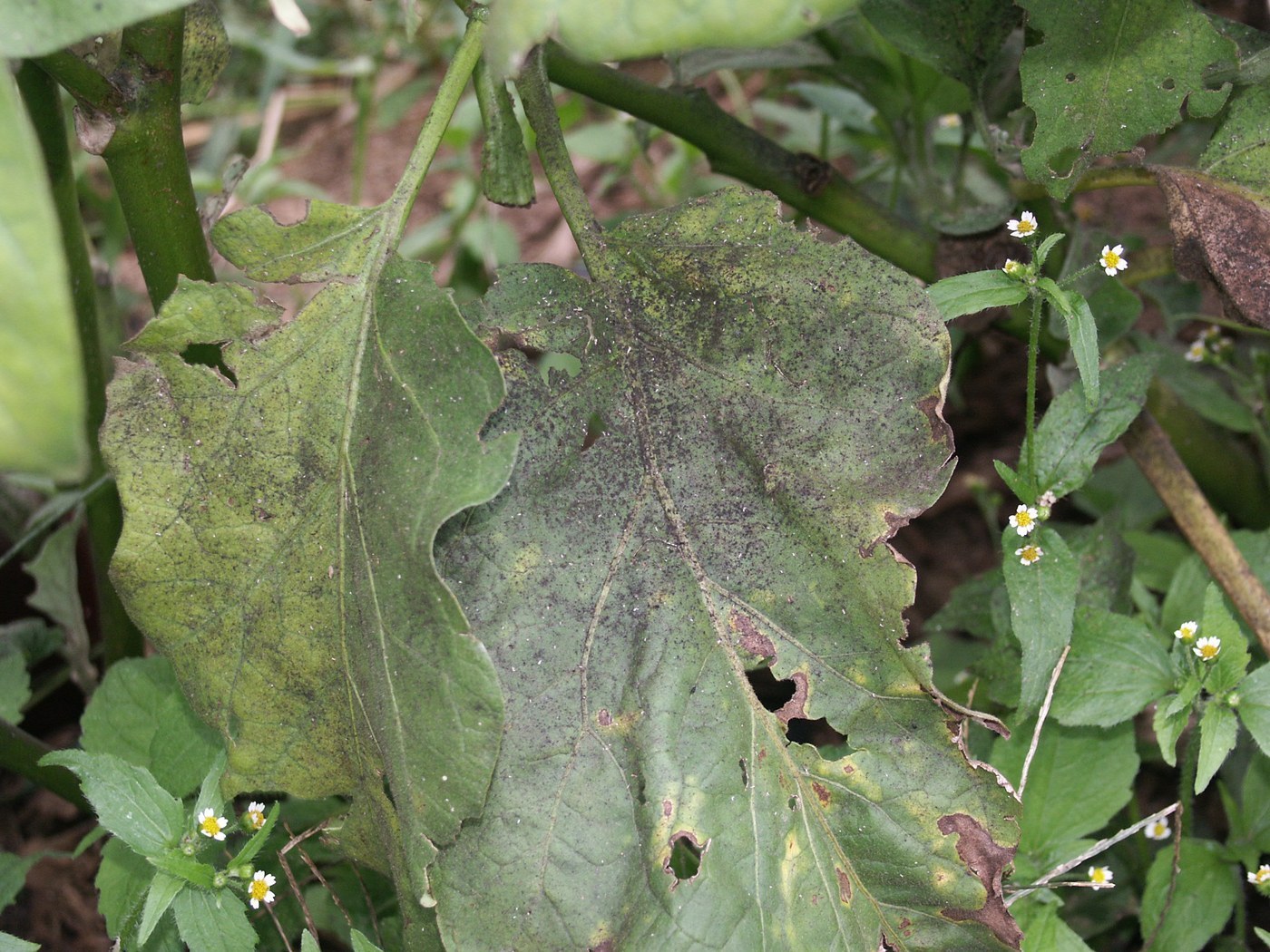
Key Visual Features
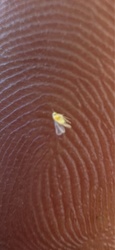
Whiteflies are tiny sap-feeding insects best recognized by their powdery white wings and moth-like appearance.
- Size: Very small, typically only 1-2mm long.
- Color: A pale yellowish body is coated with a fine white, waxy powder, and the wings are also covered in white wax, giving the whole insect a uniform white appearance.
- Body shape: Tiny, soft-bodied, with wings held tent-like or roof-like over the body at rest, similar in posture to a very small moth.
- Wings: Two pairs of wings, both dusted with white wax, giving them an opaque, powdery look rather than clear or glassy.
- Legs: Six small legs, not usually a prominent identifying feature given the insect's tiny size.
- Immature stages: Nymphs are flat, oval, and scale-like, usually pale green to yellow, fixed in place on the underside of leaves.
Where and When You'll See It
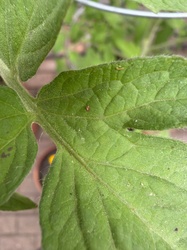
Whiteflies are most often found in dense clusters on the undersides of leaves, particularly on houseplants, garden vegetables like tomatoes and cabbage, and greenhouse plants. When an infested leaf is disturbed, adults burst upward in a small fluttering cloud of tiny white specks before quickly resettling. They can be present year-round indoors or in warm climates, and are most numerous outdoors during the warm growing season.
Similar-Looking Bugs
- Aphids: Soft-bodied and often clustered similarly on leaves, but aphids are pear-shaped, lack the powdery white wing covering, and do not fly up in a cloud when disturbed.
- Fungus gnats: Dark-colored, slender flying insects usually seen near soil rather than clustered on leaf undersides, and lacking the whitefly's waxy white coloring.
- Small moths: Some tiny moths can resemble whiteflies at a glance, but moths are generally larger, have patterned or scaled wings, and don't cluster densely on leaf undersides.
Quick ID Checklist
- Tiny, 1-2mm insect coated in fine white wax
- Wings held tent-like over the body, moth-like posture
- Found in dense clusters on the undersides of leaves
- Flies up in a small white cloud when the leaf is disturbed
- Flat, scale-like pale nymphs fixed to leaf undersides
Frequently asked questions
How do I recognize a whitefly infestation on a plant?
Look for tiny white, moth-like insects clustered on the undersides of leaves that flutter up in a small cloud when the leaf is shaken or brushed.
What's the difference between whiteflies and aphids?
Whiteflies have powdery white wax-covered wings and fly up readily when disturbed, while aphids are pear-shaped, usually lack a white waxy coating, and tend to stay put rather than take flight in a cloud.
What do whitefly nymphs look like?
Nymphs are flat, oval, scale-like, and pale green to yellow, remaining fixed in place on the underside of leaves rather than moving around like the winged adults.
Where on a plant are whiteflies usually found?
They are most commonly found clustered on the undersides of leaves, where both adults and immobile nymphs feed on plant sap.
Whitefly identified by the community
Recent Whitefly finds identified with Bug Identifier.