Winter Moth Identification Guide
Recognize this unusual cold-weather moth by its late-autumn flight and its flightless, wingless females.
Read the full Winter Moth encyclopedia entry →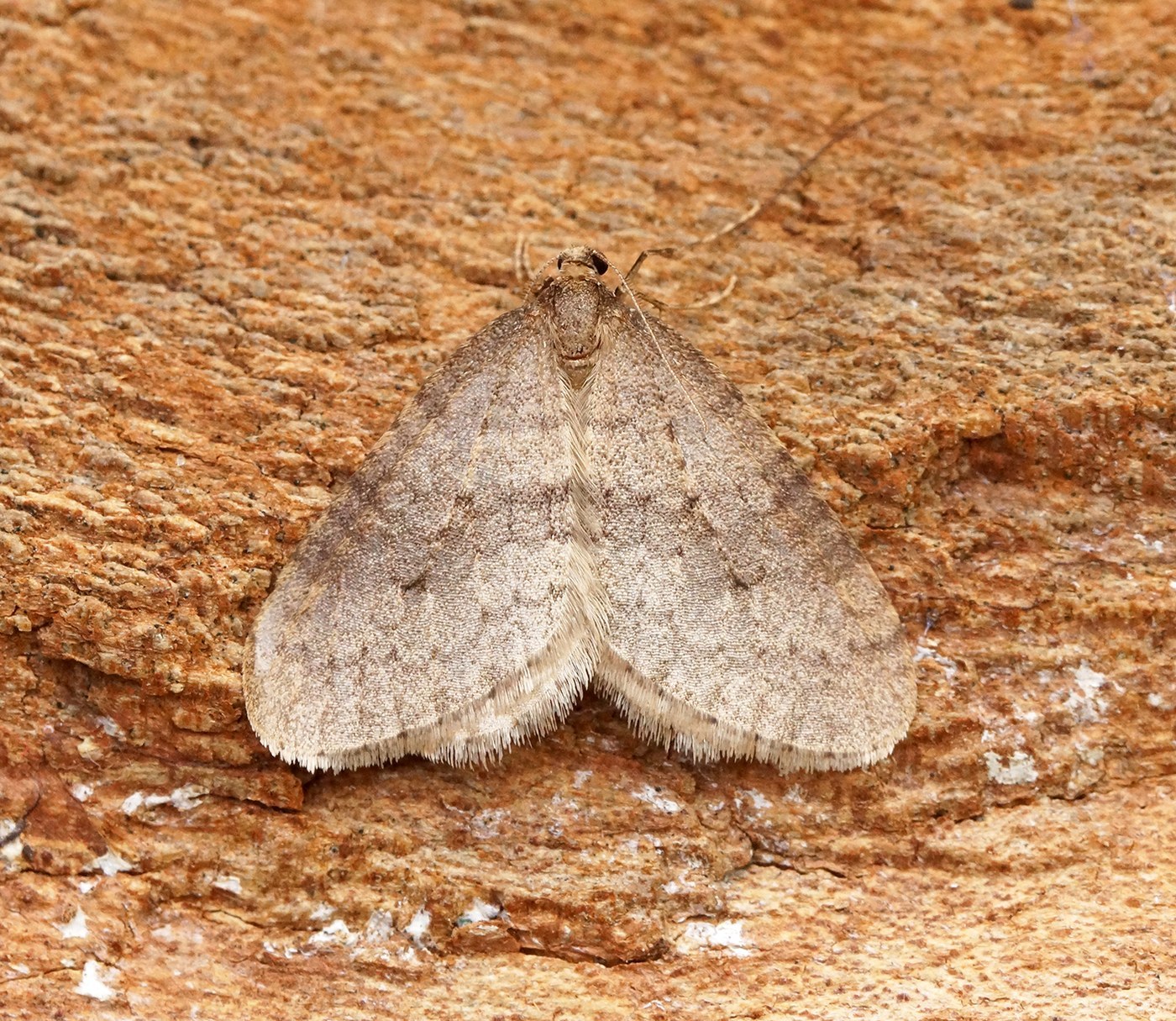
Key Visual Features
The winter moth is notable for being active during the coldest months of the year, when most other moths have disappeared.
- Size: Males have a wingspan of about 25-30mm; females are similar in body length but nearly wingless.
- Color and pattern (males): Pale grayish-brown to tan wings with faint wavy darker lines.
- Color and pattern (females): Grayish-brown, stout, and hairy, with only tiny vestigial wing stubs.
- Body shape: Males have a slender flying body; females are plump and flightless.
- Legs and antennae: Antennae are thread-like in both sexes, though reduced in overall development in females, matching their flightless lifestyle.
Where and When You'll See It
This species occurs in deciduous woodlands, orchards, and gardens across Europe, and has also been introduced to parts of North America, where it can be locally common on host trees. Look for adults on or near host trees such as oak, maple, and apple, particularly around dusk. Uniquely, adults emerge and are active in late autumn and early winter, often flying even on cold nights close to freezing, and are commonly noticed fluttering around outdoor lights during this unusual flight period when few other insects are active. Flightless females climb tree trunks after dark to lay eggs in bark crevices.
Similar-Looking Moths
Other geometrid "winter" moths, such as the mottled umber and November moth, look similar with pale brown wings and fine wavy lines, and all three species can appear in the same habitats at the same time of year. Winter moth males tend to have a plainer, more uniformly tan-gray wing compared to the more contrasting, blotchier pattern of the mottled umber. The most reliable way to confirm identification is timing: the winter moth's flight period in late fall and early winter, combined with its flightless, wingless females, sets it apart from most other moths active at that time of year.
Quick ID Checklist
- Pale tan-brown male moth with faint wavy lines
- Wingspan of about 2.5-3cm in males
- Flies in late autumn and early winter, even on cold nights
- Females are wingless and remain on tree trunks
- Often seen near outdoor lights during cold-season flights
Frequently asked questions
What makes the winter moth unusual compared to other moths?
It flies during late autumn and early winter, a time when most other moth species are inactive.
Can female winter moths fly?
No, females are essentially wingless and remain on tree trunks to lay eggs.
How do I distinguish it from the mottled umber?
Winter moth males have a plainer, more uniform tan-gray wing pattern compared to the mottled umber's more contrasting markings.
Where is the winter moth commonly found?
In deciduous woodlands, orchards, and gardens across Europe and parts of North America.
Winter Moth identified by the community
Recent Winter Moth finds identified with Bug Identifier.