Wireworm Identification Guide
Identify this hard-bodied, shiny soil-dwelling beetle larva by its slender, wire-like shape and tough segmented exoskeleton.
Read the full Wireworm encyclopedia entry →Key Visual Features
The wireworm is not a caterpillar at all but the larval stage of click beetles (family Elateridae), and its hardened body is the key to telling it apart from soft-bodied caterpillars found in soil.
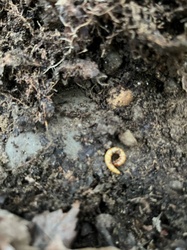
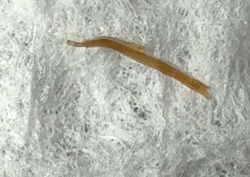
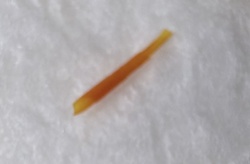
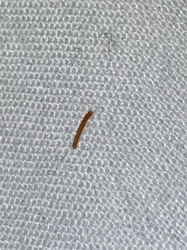
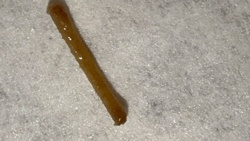
- Body color: Yellowish-brown to reddish-brown, with a smooth, shiny surface.
- Body shape: Long, slender, and cylindrical, with a tough, wire-like rigidity that gives the group its common name.
- Exoskeleton: Hard and heavily segmented, noticeably tougher and shinier than the soft skin of moth or butterfly caterpillars.
- Legs: Three pairs of short, true legs clustered near the head; no fleshy prolegs are present along the body, unlike true caterpillars.
- Tail end: The last body segment is often flattened, notched, or bears small projections, varying somewhat by species.
- Size: Typically 0.5-1.5 inches (1.5-4 cm) long depending on age and species, and larvae can take several years to complete development.
Where and When You'll See It
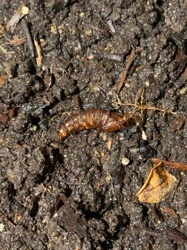
Wireworms live in soil, particularly in areas with a history of grassy vegetation such as former pasture, sod, or grassland converted to garden or crop use. They are usually found by digging into soil around plant roots rather than on foliage. Activity is highest in spring and fall when soil temperatures are moderate; wireworms move deeper into the soil during temperature extremes.
Similar-Looking Larvae
- Mealworm: Also a hard-bodied, shiny beetle larva, but found in stored grain products rather than soil, and typically shows a darker, more uniformly brown color.
- Cutworm: A soft-bodied moth caterpillar sometimes found in soil near plant bases, but lacks the hard, shiny, wire-like exoskeleton and instead has a smooth or slightly fuzzy caterpillar body with visible prolegs.
- White grub (beetle larva, e.g., June beetle): Has a plump, C-shaped, soft-bodied form rather than the slender, straight, hard-bodied shape of a wireworm.
Quick ID Checklist
- Long, slender, cylindrical body with a hard, shiny, wire-like exoskeleton
- Yellowish-brown to reddish-brown coloring
- Three pairs of short true legs near the head, no fleshy prolegs
- Found in soil, especially areas with a history of grass or sod
- Distinguished from soft cutworm caterpillars by its rigid, tough body
Frequently asked questions
Is a wireworm a type of caterpillar?
No, it is the larva of a click beetle, not a moth or butterfly, which is why its body is hard and shiny rather than soft like a true caterpillar.
How can I tell a wireworm from a cutworm in soil?
The wireworm has a hard, shiny, wire-like exoskeleton and only true legs near the head, while the cutworm has a soft, smooth caterpillar body with visible fleshy prolegs along its length.
Where in the ground are wireworms typically found?
They are usually found in soil around plant roots, especially in areas that were previously grassland, pasture, or sod.
What does the adult wireworm become?
It develops into a click beetle, a narrow, elongated beetle known for its ability to snap its body with an audible click to right itself.
Wireworm identified by the community
Recent Wireworm finds identified with Bug Identifier.