
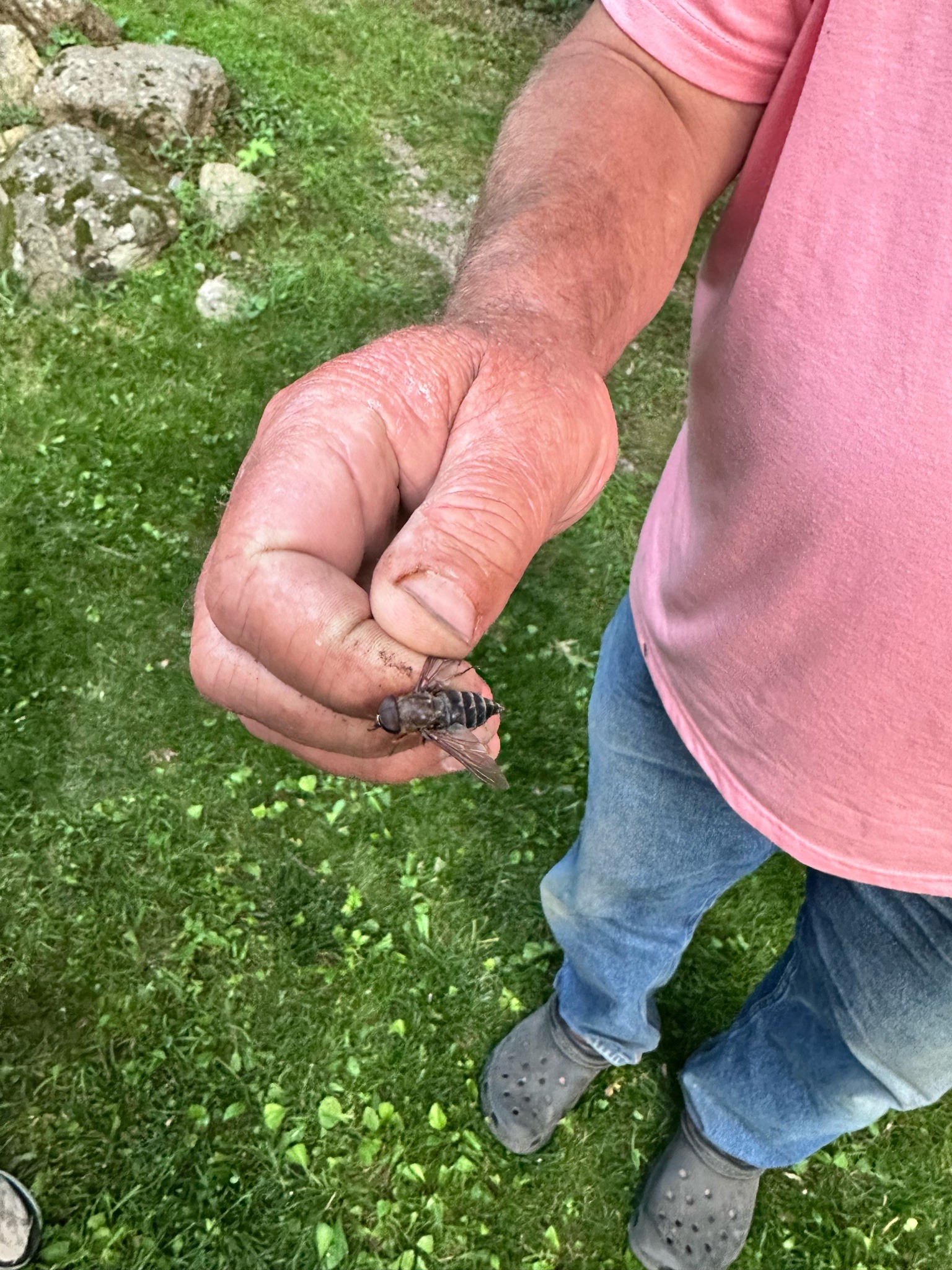
Community identification
Horse Fly
Tabanus sudeticus
- Order & Family
- Diptera: Tabanidae
- Size
- 20-25 mm (0.8-1.0 in)
Natural Habitat
Pastures, woodlands, damp fields, and areas near water where livestock or wild mammals are present
Diet & Feeding
Adult females feed on mammal blood (including horses, cattle, and humans); males and females both feed on nectar and plant juices
Behavior Patterns
Females are persistent daytime biters that use scissor-like mouthparts to cut skin and lap up blood; larvae are predatory in moist soil or mud
Risks & Benefits
Risks: Females inflict painful bites that can cause swelling, allergic reactions, and secondary infections, and can transmit blood-borne diseases to livestock. Benefits: Adult flies serve as pollinators and food for birds and dragonflies.