Acorn Weevil Identification Guide
Learn to spot the long-snouted weevil that uses its extraordinarily long rostrum to interact with acorns.
Read the full Acorn Weevil encyclopedia entry →
Key Visual Features
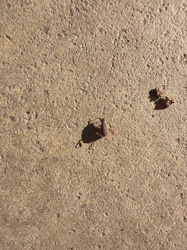
Acorn weevils (genus Curculio) are small to medium beetles, typically 5-9 mm in body length, but their most striking feature is an extremely long, thin, curved snout (rostrum) that can be as long as or longer than the rest of the body, especially in females. The body itself is oval and covered in fine, often golden-brown, tan, or grayish scales or hairs that can give it a slightly mottled or speckled appearance. The legs are long and slender relative to the body, and the antennae are elbowed and attached partway along the snout, near its tip. Because the snout is used to bore into developing acorns, its exceptional length is the single most reliable field mark for this group.
Where and When You're Likely to See Them
Acorn weevils are found on and around oak trees, since their larvae develop inside acorns. Adults are most active in late summer and early fall, coinciding with acorn development, and can be seen resting on oak leaves, twigs, or directly on acorns while females use their long snout to drill a hole for egg-laying. They are less commonly noticed at other times of year, since much of their life cycle after the larval stage takes place inside fallen acorns or in the soil beneath oak trees.
Similar-Looking Bugs
The extremely long, needle-like snout distinguishes true acorn weevils from most other weevils, whose snouts, while elongated, are usually much shorter relative to body size. Nut weevils that attack other nuts, such as hazelnut or chestnut weevils, look very similar and are best separated by which tree or nut they are found on rather than obvious body differences. Other beetles found on oak trees, such as small leaf beetles or bark beetles, lack the pronounced snout entirely, making rostrum length the quickest way to confirm an acorn weevil identification.
Quick ID Checklist
- Small to medium beetle, 5-9 mm body length
- Extremely long, thin, curved snout, often as long as the body or longer
- Fine tan, golden-brown, or gray scales giving a mottled look
- Found on oak trees and acorns, especially in late summer and early fall
- Elbowed antennae attached near the tip of the snout
Frequently asked questions
Why is the acorn weevil's snout so long?
The elongated snout, especially prominent in females, is used to drill into developing acorns, and its unusual length relative to the body is the clearest identifying feature of this weevil group.
When is the best time to look for acorn weevils?
Adults are most active in late summer and early fall, when acorns are developing on oak trees, which is when females are commonly seen using their snout on the nuts.
How can I tell an acorn weevil from other nut weevils?
They look quite similar to other nut-feeding weevils, so the host tree is the most useful clue; acorn weevils are specifically associated with oak trees and acorns.
Do acorn weevils have noticeable body markings?
Their bodies are typically covered in fine tan, golden-brown, or grayish scales that can create a mottled or speckled look, though the long snout remains the more distinctive feature.
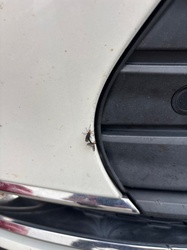
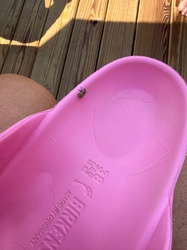
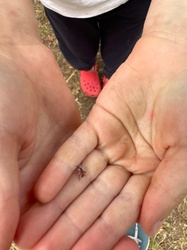
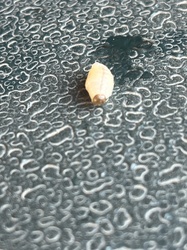
Acorn Weevil identified by the community
Recent Acorn Weevil finds identified with Bug Identifier.