Acrobat Ant Identification Guide
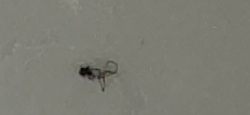
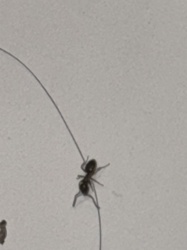
Identify the Acrobat Ant by its heart-shaped abdomen raised acrobatically over its body when disturbed.
Read the full Acrobat Ant encyclopedia entry →Key Visual Features
- Small ant, about 2.5-4 mm long, colored light brown to dark brown or black, sometimes with a two-toned appearance between the head/thorax and abdomen.
- The most distinctive trait is the shape of the abdomen (gaster), which is heart-shaped or shield-shaped when viewed from above, tapering to a point at the rear rather than being simply oval.
- When disturbed, workers characteristically raise their heart-shaped abdomen up and forward over the thorax and head, resembling an acrobatic pose, which gives the species its common name.
- Waist has two nodes, with the rear node attached broadly to the top of the abdomen rather than at its base, which is what allows the abdomen to flip upward.
- Thorax typically shows a pair of small spines near the rear, visible under magnification.
Where and When You're Likely to See It
- Found across much of North America and other temperate to subtropical regions, common in wooded areas, gardens, and around homes.
- Nests in a wide variety of locations, including under bark, in dead or decaying wood, in stumps, and occasionally in wall voids or insulation of buildings.
- Frequently found nesting near or moving into cavities previously created by other wood-boring insects rather than excavating solid, sound wood themselves.
- Active primarily from spring through fall in temperate climates, foraging both during the day and at night depending on temperature.
- Often seen traveling along tree branches, utility lines, or building exteriors as they move between nest sites and food sources.
Similar-Looking Species
- Odorous house ants are similarly small and dark but have a rounded, oval abdomen that is not raised acrobatically and lacks thoracic spines.
- Pavement ants also have thoracic spines but a more oval abdomen and grooved head, and do not display the same abdomen-raising behavior.
- Pyramid ants share a somewhat angular abdomen shape but the profile is different and the raised-abdomen "acrobatic" posture is not as pronounced.
- Carpenter ants are much larger overall and have a smoothly rounded, single-humped thorax rather than a spined one.
Quick ID Checklist
- Small (2.5-4 mm), light-to-dark brown body.
- Heart-shaped or shield-shaped abdomen tapering to a point.
- Abdomen raised up and forward over the body when disturbed.
- Pair of small spines on the thorax.
- Nests in decaying wood, under bark, or in stumps.
Frequently asked questions
Why is it called the Acrobat Ant?
Workers raise their heart-shaped abdomen up and forward over their thorax and head when disturbed, creating an acrobatic-looking posture that gives the species its name.
What shape distinguishes the Acrobat Ant's abdomen from other small ants?
Its abdomen is heart-shaped or shield-shaped, tapering to a point at the rear, rather than the simple oval abdomen seen in many similarly sized ants.
Where does the Acrobat Ant typically build its nest?
It commonly nests in decaying wood, under bark, in stumps, or occasionally within wall voids or insulation, often reusing cavities made by other wood-dwelling insects.
How can I tell an Acrobat Ant from a Pavement Ant?
Both have thoracic spines, but the acrobat ant has a distinctive pointed, heart-shaped abdomen it raises when disturbed, while the pavement ant has a more oval abdomen and grooved head.
Acrobat Ant identified by the community
Recent Acrobat Ant finds identified with Bug Identifier.