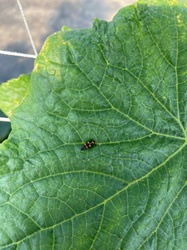
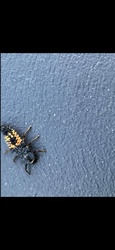
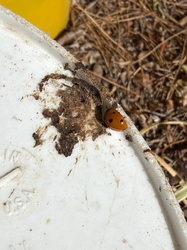
Asian Lady Beetle Identification Guide
Identify an Asian lady beetle by the black M or W mark on its pronotum, since color and spot count vary widely.
Read the full Asian Lady Beetle encyclopedia entry →
Key Visual Features
- Adult about 1/4 to 3/8 inch, oval and domed, similar in general shape to other lady beetles
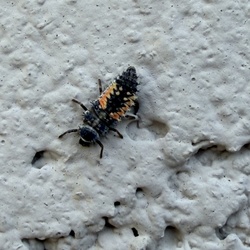
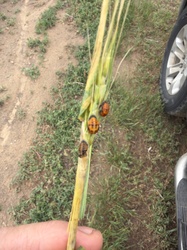
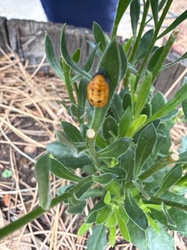
- Color is highly variable, ranging from pale yellow-orange to deep red across different individuals
- Spot count on the wing covers ranges from none to as many as 19 black spots, making spot number an unreliable trait on its own
- The clearest identifying mark is a black "M" or "W"-shaped marking on the pale area just behind the head (the pronotum)
- Legs and antennae are reddish-brown, and the underside of the body is typically a rusty orange
- Body shape is slightly more elongated than some native lady beetle species, though this is a subtler feature than the pronotum mark
Where and When You'll See Them
- Found on plants, especially near aphid colonies, where it's a common predator feeding throughout the growing season
- Commonly seeks shelter in and around buildings in large numbers during fall as temperatures drop, often clustering on sun-warmed exterior walls
- Active outdoors from spring through fall in gardens, crop fields, and wooded edges
- Becomes a noticeable indoor presence in cooler months while seeking overwintering sites in wall voids and attics
- Widespread across North America after being introduced from Asia to help control agricultural pests
Similar-Looking Bugs
- Often confused with native ladybird species
- The most reliable distinguishing feature is the black M/W mark on the pale pronotum, which native lady beetles typically lack or show differently
- Native species tend to have more consistent spot patterns and less color variability
- Native lady beetles rarely form the large fall indoor aggregations typical of the Asian lady beetle
Quick ID Checklist
- Variable orange-to-red color with 0 to 19 spots
- Black M/W-shaped mark on the pronotum behind the head
- Forms large clusters on sunny walls in fall
- Oval, domed shell shape
Frequently asked questions
How can I identify it if spot count varies so much?
Look at the pronotum - the black M or W-shaped mark just behind the head is the most consistent identifying feature regardless of color or spot count.
Why do they gather in large groups on buildings?
They're seeking sheltered overwintering spots as outdoor temperatures cool in fall.
Can an Asian lady beetle be completely spotless?
Yes, individuals can range from no spots to nearly 19 spots, which is why color and spot pattern alone aren't reliable for identification.
Is every orange spotted beetle this species?
No, several native ladybird species look similar - check for the M/W pronotum marking to confirm.
Asian Lady Beetle identified by the community
Recent Asian Lady Beetle finds identified with Bug Identifier.