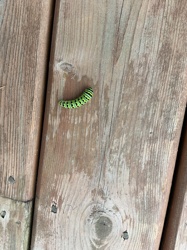
Black Swallowtail Caterpillar Identification Guide
Learn to recognize the striking green, black, and yellow banding of the black swallowtail caterpillar, plus its hidden orange defensive organ.
Read the full Black Swallowtail Caterpillar encyclopedia entry →Key Visual Features
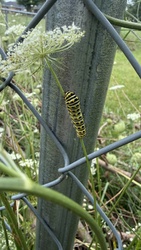
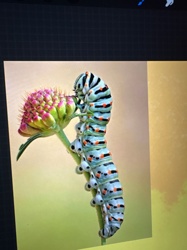
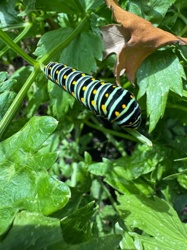
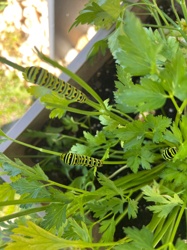
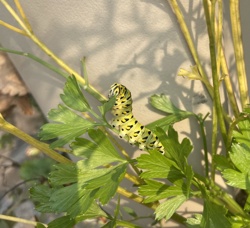
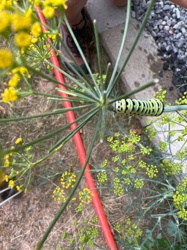
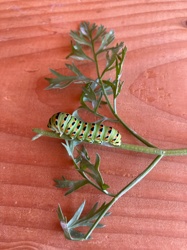
- Smooth, plump body in bright green marked with bold black bands, each black band dotted with a row of small yellow-orange spots
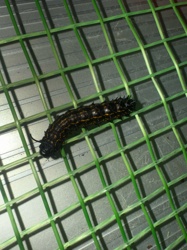
- Coloring and pattern shift with age — very young caterpillars are mostly dark, resembling bird droppings, before transitioning to the bright green-and-black banded look as they mature
- Hidden behind the head is a forked, fleshy orange organ (the osmeterium) that can be briefly extended when the caterpillar is disturbed, then retracted
- Grows to roughly 1.5 to 2 inches long at full size
- No spines or long hairs — the body surface is smooth to the touch
- Cylindrical body shape that tapers only slightly at the head and rear
Where and When You'd See Them
- Found on plants in the carrot family, including parsley, dill, fennel, carrot tops, and Queen Anne's lace, as well as some garden herbs
- Most visible from late spring through summer and into early fall, with multiple generations possible depending on region
- Typically found singly, resting or feeding along the stems and leaves of host plants
- Common in vegetable gardens, herb patches, and open meadows or roadsides where wild host plants grow
Similar-Looking Bugs
- Monarch caterpillars have a similar bold banded look but use bright yellow-black-white stripes and long fleshy filaments at both ends, and feed only on milkweed rather than carrot-family plants.
- Giant swallowtail caterpillars are mottled brown and white, resembling bird droppings at all life stages, rather than transitioning to the bright green-and-black look of the black swallowtail.
- Young black swallowtail caterpillars themselves closely resemble bird droppings before molting into the brighter banded coloring of later stages, which can cause confusion within the same species.
- Parsleyworm is simply another common name for the black swallowtail caterpillar, so this is not truly a different species, just a regional term.
Quick ID Checklist
- Bright green body with bold black bands dotted in yellow-orange spots
- Smooth skin with no spines or hairs
- Hidden orange forked organ behind the head that may briefly appear if disturbed
- Found on parsley, dill, fennel, carrot tops, or Queen Anne's lace
- Young caterpillars look like bird droppings before turning green and banded
Frequently asked questions
What plants are the most reliable place to find a black swallowtail caterpillar?
Check parsley, dill, fennel, carrot tops, and Queen Anne's lace, since these carrot-family plants are its primary hosts.
Do young black swallowtail caterpillars look different from older ones?
Yes, early instars are mostly dark and blotchy, resembling bird droppings, before molting into the bright green body with black-and-yellow banding seen in later stages.
What is the orange forked structure sometimes seen behind its head?
That is the osmeterium, a fleshy organ that can be briefly extended when the caterpillar feels disturbed and is then retracted back behind the head.
How do I tell a black swallowtail caterpillar from a monarch caterpillar?
The black swallowtail has green skin with black bands dotted in yellow-orange spots and no long filaments, while the monarch has bold yellow-black-white stripes and two pairs of long fleshy filaments, and each feeds on entirely different host plants.
Black Swallowtail Caterpillar identified by the community
Recent Black Swallowtail Caterpillar finds identified with Bug Identifier.