Black Swallowtail Identification Guide
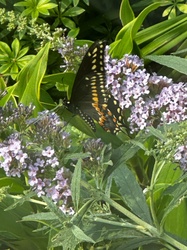
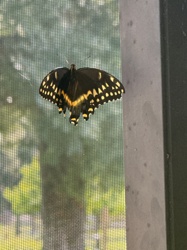
Distinguish the black swallowtail by its two rows of yellow spots on mostly black wings.
Read the full Black Swallowtail encyclopedia entry →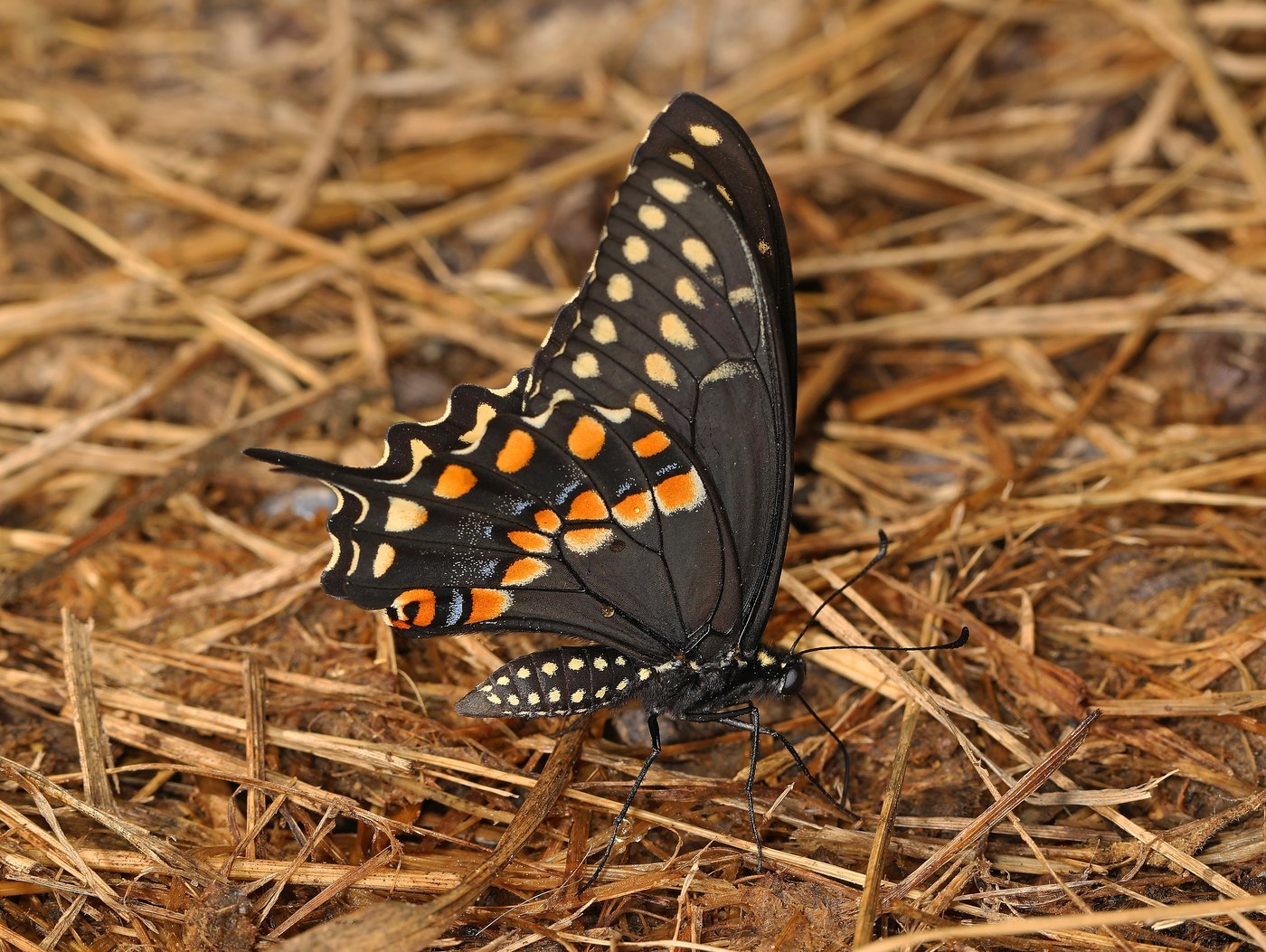
Key Visual Features
The black swallowtail (Papilio polyxenes) is a striking dark swallowtail common across much of North America.
- Size: Wingspan of about 2 3/4 to 4 1/4 inches (7–11 cm).
- Color: Predominantly black wings marked with two rows of yellow spots — an outer row of small spots near the wing edge and an inner row of larger spots.
- Body shape: Black body with small yellow spots running along the sides of the abdomen.
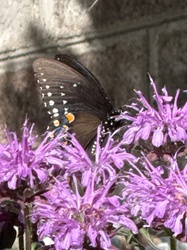
- Wings: Hindwings carry a band of blue scaling between the yellow spot rows (more extensive and vivid in females than males) and end in a single tail. Near the tail base sits a distinctive orange eyespot with a black pupil-like center.
- Sex differences: Males tend to show larger, brighter yellow spots and less blue; females show more blue shading and smaller yellow spots.
- Antennae: Black, clubbed antennae.
Where and When You'll See One
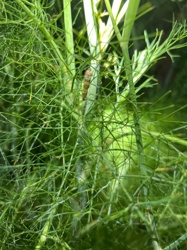
Black swallowtails are common across meadows, gardens, roadsides, and agricultural areas throughout most of the United States, southern Canada, and into Mexico and Central America. They are especially associated with plants in the carrot family (such as Queen Anne's lace, dill, and fennel), which serve as caterpillar host plants, so they are frequently seen fluttering around gardens and herb patches. Adults fly from spring through fall, with several generations possible in warmer regions.
Similar-Looking Bugs
- Dark-morph eastern tiger swallowtail female: Larger overall, with a faint shadow of vertical tiger stripes rather than the black swallowtail's two clean rows of separate yellow spots.
- Spicebush swallowtail: Lacks the prominent double row of yellow spots, instead showing pale cream spots along the wing edge and strong blue-green hindwing shading.
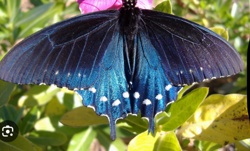
- Pipevine swallowtail: Wings are more uniformly black with iridescent blue-green sheen on the hindwing and a row of pale orange spots underneath, rather than the black swallowtail's bold yellow spot rows on top.
Quick ID Checklist
- Black wings with two rows of yellow spots
- Band of blue scaling between the spot rows on hindwing
- Orange eyespot with dark center near the tail
- Yellow spots along the sides of the black abdomen
- Frequently seen around carrot-family garden plants
Frequently asked questions
How can I tell a male black swallowtail from a female?
Males generally show larger, brighter yellow spots and a narrower band of blue on the hindwing, while females show more extensive blue-purple shading and comparatively smaller yellow spots.
How do I avoid confusing this with a dark tiger swallowtail?
Check for a shadow of vertical striping — dark-morph tiger swallowtails retain a faint ghost pattern of the tiger stripes and are notably larger, while black swallowtails show two crisp, separate rows of individual yellow spots.
What garden plants are black swallowtails commonly seen near?
They are frequently spotted around herbs and plants in the carrot family, including dill, fennel, parsley, and Queen Anne's lace, which serve as host plants for their caterpillars.
Does the black swallowtail have any color variation between individuals?
Yes, the amount of blue shading and the size of the yellow spots can vary noticeably between males and females, and even somewhat between individuals of the same sex.
Black Swallowtail identified by the community
Recent Black Swallowtail finds identified with Bug Identifier.