Blue Bottle Fly Identification Guide
Recognize the blue bottle fly by its shiny metallic blue body, bristly thorax, and loud buzzing flight.
Read the full Blue Bottle Fly encyclopedia entry →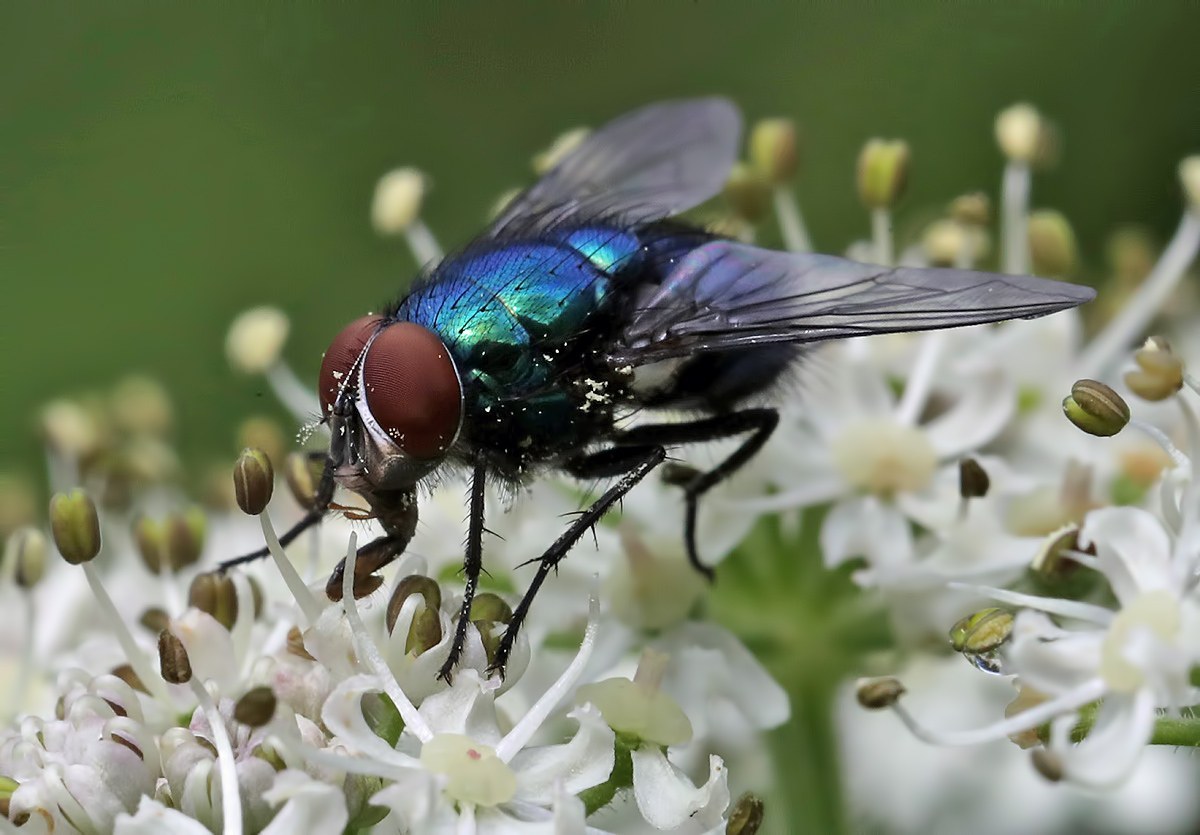
Key Features
- Robust, bristly fly about 10-14mm long, noticeably larger than a common house fly
- Metallic, iridescent blue coloring covering most of the body, sometimes with a slightly purplish or greenish sheen depending on lighting
- Body is densely covered in short black bristles, especially visible on the thorax
- Large, reddish compound eyes take up much of the head
- Wings are clear with a light amber tint at the base and are held out to the sides at rest, not folded flat over the body
- Legs are black and relatively short compared to body length
Where and When to Look
- Common in a wide range of outdoor settings, including gardens, farms, woodlands, and urban areas
- Often seen resting on sunlit walls, fences, and vegetation, or flying with a loud, distinctive buzz
- Most active in warmer months, from spring through fall, and tends to be more common in cooler, shaded conditions compared to some other blow flies
- Frequently found around decaying organic matter outdoors, where it pauses briefly before flying off
Similar-Looking Bugs
- Green bottle flies are similarly sized and shaped but show a bright metallic green rather than blue coloring
- Common house flies are smaller, duller gray, with distinct dark stripes on the thorax rather than a solid metallic sheen
- Other blow fly species in the genus Calliphora and related genera can look very similar; overall size, bristle density, and the exact shade of metallic blue help narrow down identification, though close relatives can be difficult to tell apart without close examination
Quick ID Checklist
- Solid metallic blue, iridescent body
- Larger and bulkier than a house fly
- Dense black bristles on the thorax
- Clear wings held out to the sides at rest
- Loud, buzzing flight
Frequently asked questions
How is a blue bottle fly different from a house fly?
It is noticeably larger, has a solid metallic blue body instead of dull gray with stripes, and is more heavily bristled.
What color exactly is the blue bottle fly?
A shiny, iridescent blue that can show slight purple or green highlights depending on the light.
Where are blue bottle flies commonly seen?
Outdoors in gardens, farms, and urban areas, often resting on sunny walls or fences.
How can I tell a blue bottle fly from a green bottle fly?
The most reliable clue is body color: blue bottle flies are metallic blue, while green bottle flies are metallic green, though both are similar in size and shape.
Blue Bottle Fly identified by the community
Recent Blue Bottle Fly finds identified with Bug Identifier.