Bombardier Beetle Identification Guide
Identify this ground beetle by its two-toned orange-and-blue-black body and quick, active movements after dark.
Read the full Bombardier Beetle encyclopedia entry →Key Visual Features
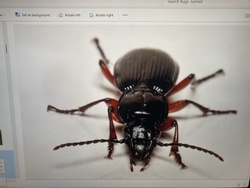
Bombardier beetles are a group of ground beetles known for their distinctive two-toned coloring:
- Size: Generally small to medium, about 0.4-0.8 inches (10-20mm) long.
- Coloring: A striking contrast between a reddish-orange to tan head and pronotum (thorax) and dark blue-black to black elytra, giving a clear two-color effect.
- Body shape: An elongated, somewhat flattened body typical of ground beetles (family Carabidae), with a distinct head, narrow "neck" region, and broader elytra.
- Legs and antennae: Long, slender legs built for fast running, along with long, thin, thread-like antennae.
- Behavior note: When threatened, it can eject a hot chemical spray from the tip of its abdomen as a defensive response, a well-known trait of this group.
Where and When You'll See One
Bombardier beetles are found worldwide in temperate and tropical regions, typically hiding under rocks, logs, leaf litter, and loose bark in moist areas. They are mostly nocturnal, becoming active after dark to hunt for small invertebrates, and can sometimes be found congregating in groups under cover during the day.
Similar-Looking Bugs
- Other ground beetles: Many Carabidae species share the elongated, fast-moving body shape, but most lack the bombardier beetle's sharp two-tone coloring of a light head/thorax against dark elytra.
- Tiger beetles: Also fast-moving and predatory, but tiger beetles tend to be more uniformly colored or metallic, and are typically diurnal (active by day) rather than nocturnal.
- Rove beetles: Have a similar dark coloring in some species, but rove beetles have short elytra that expose most of the abdomen, unlike the bombardier beetle's fully covering wing cases.
Behavior Notes
Bombardier beetles are fast, alert runners that dart for cover the moment they are exposed to light, since they generally avoid daytime activity in the open. During the colder months in temperate regions, groups of bombardier beetles may gather together in sheltered spots such as under bark or within rock crevices, making them easier to find in numbers at certain times of year than as scattered individuals.
Quick ID Checklist
- Reddish-orange head and thorax contrasting with dark blue-black elytra
- Elongated, flattened ground-beetle body shape
- Long legs built for quick running
- Found under rocks, logs, or leaf litter in moist habitats
- Active mainly at night
Frequently asked questions
What makes a bombardier beetle easy to identify?
Its sharp two-tone coloring, a reddish-orange head and thorax paired with dark blue-black elytra, is one of the most reliable visual clues, along with its typical elongated ground beetle shape.
Where is the best place to look for a bombardier beetle?
Check under rocks, logs, loose bark, and leaf litter in moist, shaded areas, since these beetles spend daylight hours hidden away and become active at night.
Are bombardier beetles active during the day?
They are mostly nocturnal, hunting for small invertebrates after dark, though they can sometimes be found resting in groups under cover during the day.
How can I tell a bombardier beetle from other ground beetles?
Look for the distinct contrast between the light orange-tan head and thorax and the dark elytra; most other ground beetles are more uniformly colored throughout the body.
Bombardier Beetle identified by the community
Recent Bombardier Beetle finds identified with Bug Identifier.