Brown-tail Moth Identification Guide
A pure white moth with a distinctive tuft of brown hair at the tip of its abdomen, easiest to spot at night near deciduous trees.
Read the full Brown-tail Moth encyclopedia entry →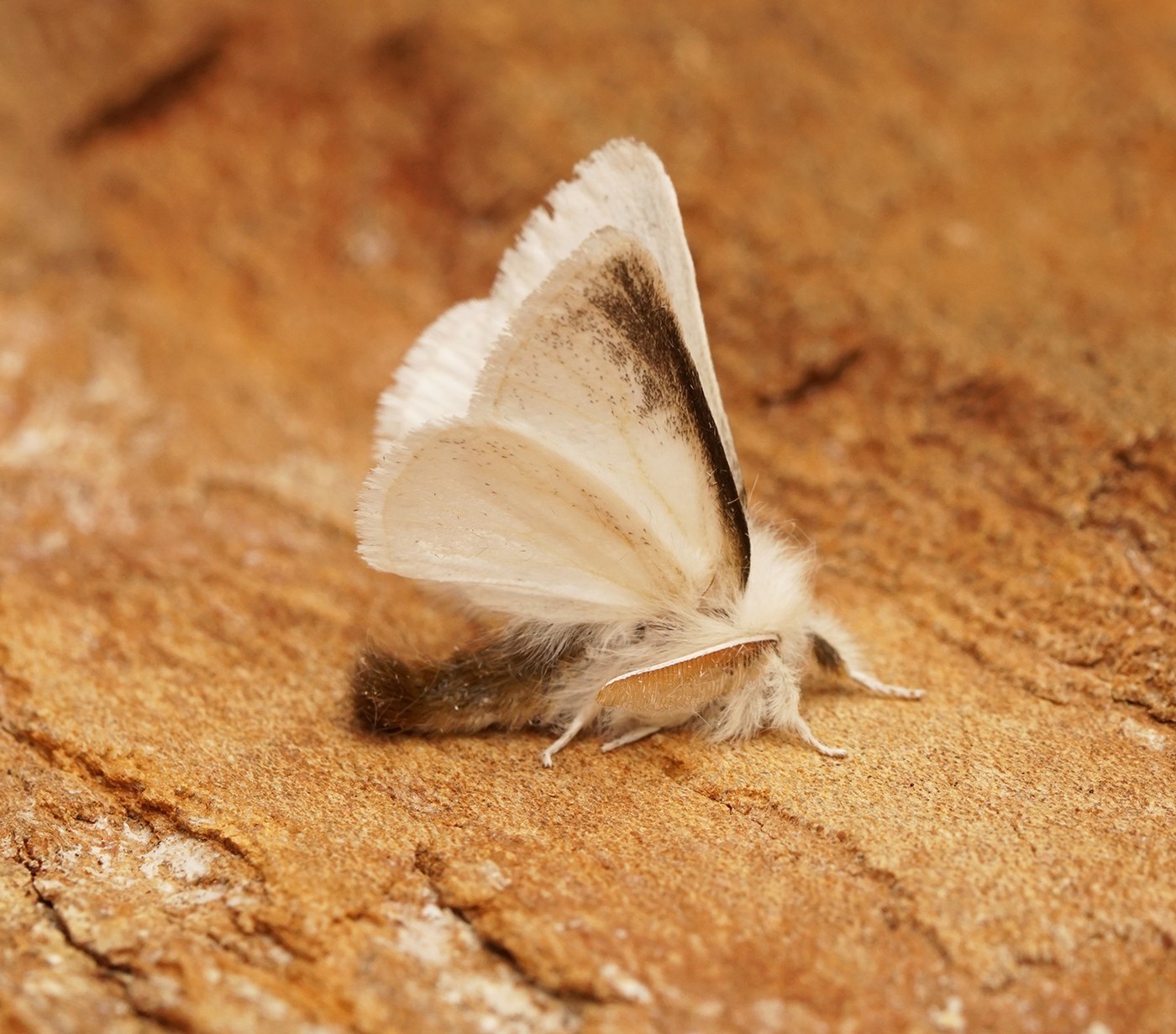
Key Visual Features
The brown-tail moth is one of the easier white moths to identify thanks to its namesake feature:
- Size: Medium moth with a wingspan of about 3.2-3.8 cm (1.3-1.5 in).
- Color: Wings and body are almost entirely bright, satiny white, giving the moth a clean, unmarked look.
- Signature mark: A conspicuous tuft of brown hair at the very tip of the abdomen, which extends past the folded wings — the clearest identifying feature, especially visible in females.
- Body: Densely furry, all-white thorax and abdomen aside from the brown tail tuft.
- Antennae: Feathery (bipectinate), more pronounced in males, typical of the tussock moth group it belongs to.
- Wing shape: Broad, rounded wings held tent-like over the body at rest.
Where and When You're Likely to See It
Brown-tail moths inhabit deciduous woodlands, hedgerows, orchards, and coastal scrub, particularly where oak, cherry, and rose family trees and shrubs grow. Adults fly at night in mid to late summer and are readily attracted to porch lights and outdoor lighting. They are most often noticed clustering around lit windows or streetlights on warm summer evenings. During the day, adults rest quietly on foliage or tree bark, where their solid white color makes them easy to spot against darker leaves.
Similar-Looking Moths
- Gypsy-type moth females: Also pale and furry, but lack the sharply defined brown tail tuft and tend to show a few faint dark markings on the forewings.
- Other white ermine or tiger moths: Usually have small black spots scattered across the wings, unlike the brown-tail moth's essentially unmarked white wings.
- Fall webworm moth: Similarly all-white in some forms, but lacks the distinct brown abdominal tuft and has a less densely furry body.
Quick ID Checklist
- Solid, satiny white wings with no spots
- Brown hair tuft at the tip of the abdomen
- Densely furry white body
- Feathery antennae, bushier in males
- Nocturnal, drawn strongly to lights
Frequently asked questions
What is the single best way to identify a brown-tail moth?
Look for the tuft of brown hair at the very end of the abdomen against otherwise pure white wings and body; this combination is distinctive within its range.
Do male and female brown-tail moths look different?
Both sexes share the white wings and brown tail tuft, but males have noticeably bushier, more feathery antennae than females.
When are adult brown-tail moths active?
Adults fly at night during mid to late summer and are frequently seen around outdoor lights during this period.
Where are brown-tail moths typically found?
They favor deciduous trees and shrubs in woodlands, hedgerows, and coastal areas, particularly where oak and rose-family plants are common.
Brown-tail Moth identified by the community
Recent Brown-tail Moth finds identified with Bug Identifier.