Cobweb Spider Identification Guide
Learn how to recognize cobweb spiders by their tangled, irregular webs and rounded abdomens.
Read the full Cobweb Spider encyclopedia entry →Key Visual Features
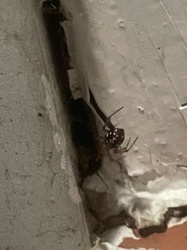
Cobweb spiders (family Theridiidae) are a large group of small to medium spiders best known for the messy, three-dimensional webs they build rather than any single body pattern.
- Size: Body length usually ranges from 3 to 10 mm, with legs adding extra span.
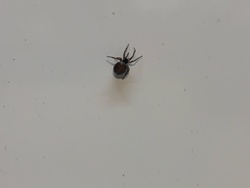
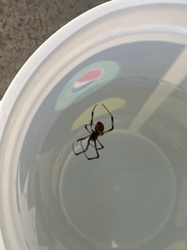
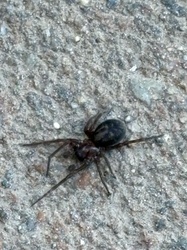
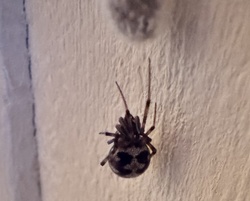
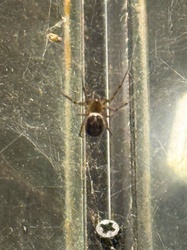
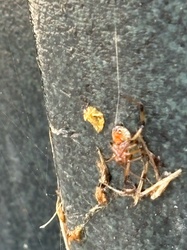
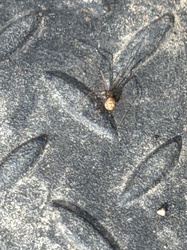
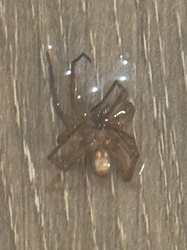
- Body shape: A bulbous, rounded or oval abdomen that is often much larger than the cephalothorax (front body section).
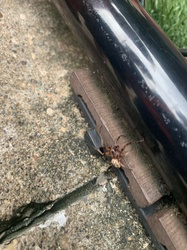
- Color: Highly variable across species — shades of brown, tan, gray, or black, sometimes with mottled or striped patterns on the abdomen.
- Legs: Thin, relatively long legs compared to the body, often held close together when the spider is still.
- Eyes: Eight small eyes arranged in two rows, though they are hard to see without magnification.
Where and When You'd See One
Cobweb spiders are found nearly worldwide in a wide range of habitats. Look for them in:
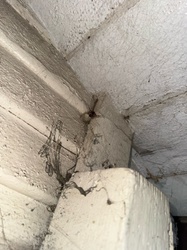
- Corners of ceilings, window frames, and doorways
- Sheds, garages, basements, and crawl spaces
- Under eaves, in woodpiles, and among low shrubs outdoors
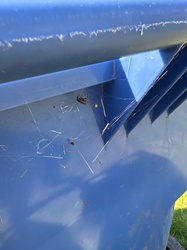
- Their signature irregular, tangled webs (unlike the neat spiral of an orb weaver)
They are most noticeable from spring through fall, when both the spiders and their webs are actively maintained, but many species persist indoors year-round in sheltered corners.
Similar-Looking Bugs
- Orb weavers build flat, circular, geometric webs, while cobweb spiders build irregular, three-dimensional tangles.
- Cellar spiders (daddy long-legs spiders) have much longer, thinner legs and a smaller, more elongated abdomen.
- Wolf spiders do not build webs at all and are found roaming on the ground rather than hanging in a tangle.
- Comb-footed spiders are technically part of this same family, so overlap is expected; look at the web shape and habitat together with body proportions for the best clue.
Quick ID Checklist
- Rounded, bulbous abdomen larger than the front body section
- Messy, irregular, tangled web (not a neat spiral or sheet)
- Web tucked into a corner, crevice, or sheltered structure
- Thin legs held close to the body at rest
- Found in both indoor and outdoor sheltered spots
Frequently asked questions
What is the easiest way to identify a cobweb spider?
Look at the web first: cobweb spiders build irregular, tangled, three-dimensional webs rather than neat spirals, and the spider itself usually has a rounded, bulbous abdomen.
Do all cobweb spiders look the same?
No — the family includes many species with different colors and patterns, so the web shape and general body proportions are more reliable identification clues than color alone.
Where are cobweb spiders most commonly found?
They favor sheltered corners such as ceiling angles, window frames, sheds, basements, and outdoor spots like woodpiles and low shrubs.
How can I tell a cobweb spider from an orb weaver?
Orb weavers spin flat, circular, geometric webs, while cobweb spiders spin messy, irregular tangles with no clear pattern.
Cobweb Spider identified by the community
Recent Cobweb Spider finds identified with Bug Identifier.