Common House Spider Identification Guide
Recognize this small indoor cobweb spider by its bulbous, mottled abdomen and messy tangled web.
Read the full Common House Spider encyclopedia entry →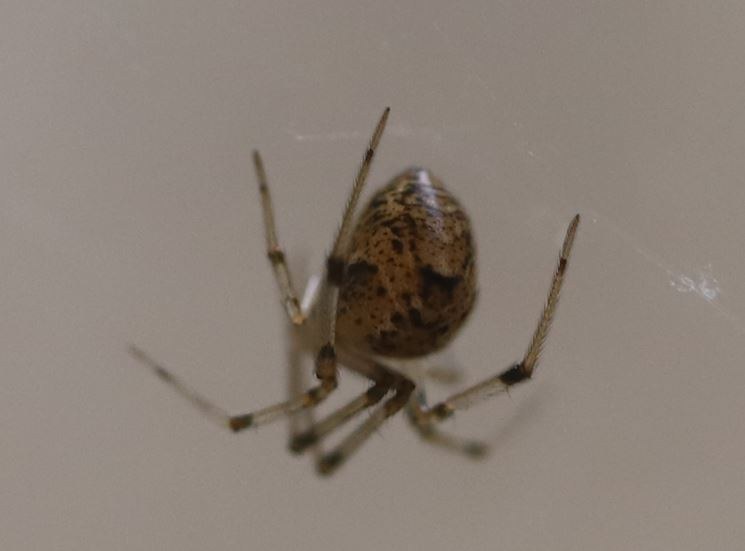
Key Visual Features
The common house spider is a small, unassuming spider frequently found indoors:
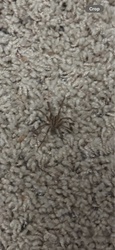
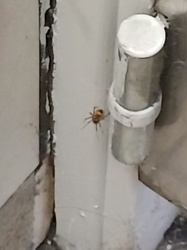
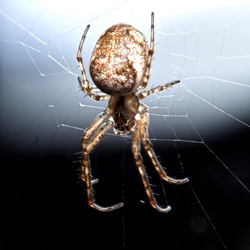
- A small body, with females typically around a quarter to a third of an inch and males noticeably smaller and slimmer
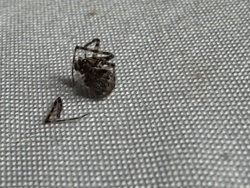
- A rounded, bulbous abdomen that is much larger relative to the head region (cephalothorax), giving a teardrop or globe-like shape
- Mottled brown, tan, and grey coloring on the abdomen, often with darker chevron or banding patterns
- Thin, relatively long legs compared to the body
- No prominent spines or bright colors — an overall drab, camouflaged look
- Egg sacs that appear as small, brownish, papery or tear-shaped bundles suspended within the web
Where and When You'd See It
As the name suggests, this spider is closely associated with human structures, commonly found in corners of rooms, basements, garages, sheds, window frames, and other undisturbed indoor or sheltered outdoor spots. It builds a messy, irregular, three-dimensional tangle web (a "cobweb") rather than a neat orb, typically in a corner where it can remain for extended periods. It can be found year-round indoors, with populations often peaking in late summer and fall, and it usually stays near the same web rather than wandering to new sites.
Similar-Looking Bugs
- Cellar spiders have extremely long, thin legs and a much smaller, elongated body, unlike the bulbous abdomen of the house spider.
- Widow spiders, in the same broad family, have a more glossy, rounded abdomen, often darker and unmarked or with a distinct marking on the underside, and their webs are similarly tangled but their body coloring is usually darker and more uniform.
- Orb-weaver spiders build neat, wheel-shaped webs rather than the irregular tangle web typical of the house spider.
Quick ID Checklist
- Small size with a large, rounded, bulbous abdomen
- Mottled brown and tan coloring with chevron-like markings
- Thin, moderately long legs
- Messy, irregular tangle-style web in a corner
- Found in and around buildings year-round
Frequently asked questions
What is the most identifying feature of a common house spider?
Its disproportionately large, rounded, mottled abdomen compared to a small head region, paired with a messy tangle web in a corner, is the clearest identifying combination.
How is the web different from an orb-weaver's web?
House spiders build an irregular, three-dimensional tangle of silk rather than the neat, flat, wheel-shaped web made by orb-weavers.
Where indoors are these spiders most commonly found?
Look in corners of rooms, basements, garages, and window frames — undisturbed spots where a tangle web can remain intact for a long time.
How can I tell males and females apart?
Females have a notably larger, rounder abdomen, while males are smaller and slimmer with a less bulbous body shape.
Common House Spider identified by the community
Recent Common House Spider finds identified with Bug Identifier.