Common Housefly Identification Guide
Identify a common housefly by its four dark thorax stripes, single wing pair, and sponging mouthparts.
Read the full Common Housefly encyclopedia entry →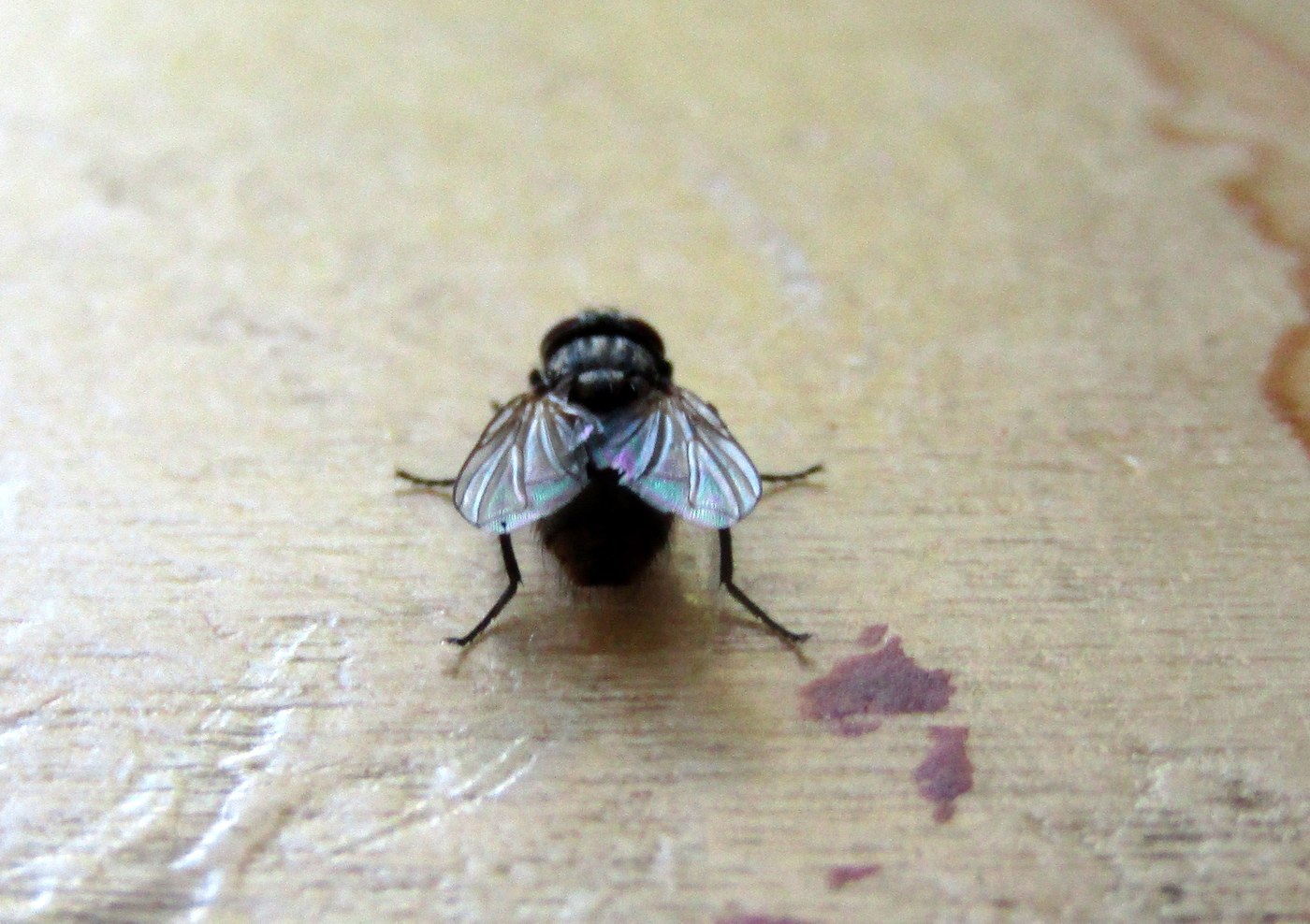
Key Visual Features
- About 1/4 to 3/8 inch long with a dull gray thorax marked by four dark longitudinal stripes running front to back
- Grayish-black abdomen, sometimes showing a faint checkered pattern near the base
- A single pair of clear, membranous wings - true flies have only one functional wing pair, with the hind pair reduced to small balance organs called halteres
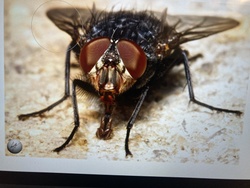
- Large, reddish compound eyes that take up much of the head, positioned close together in males and more widely spaced in females
- Sponging mouthparts (a retractable proboscis) used for feeding, visible when the fly is close up or resting
- Body covered in short, bristly hairs, including a set of longer bristles on the legs
Where and When You'll See Them
- Found nearly worldwide, closely associated with human activity - homes, farms, outdoor gathering areas, and anywhere food or waste is present
- Active during the day, resting at night in sheltered spots such as ceiling corners or vegetation
- Attracted to food odors and moisture sources, often landing repeatedly on exposed surfaces
- Breeding occurs in decaying organic matter, with a rapid life cycle from egg to adult in warm conditions
- Found in virtually every climate where people live, from rural farms to dense urban areas
Similar-Looking Bugs
- Blow flies (bottle flies) are shiny metallic green or blue rather than dull gray
- Flesh flies show three dark thoracic stripes and a checkered gray-black abdomen with a reddish tip
- Fruit flies are much smaller (about 1/8 inch) with prominent red eyes on a small tan body
- Stable flies look almost identical in size and color but have a forward-pointing piercing proboscis instead of the sponging type
Quick ID Checklist
- Four dark stripes on a dull gray thorax
- Single pair of clear wings
- Large reddish eyes
- Sponging (not piercing) mouthparts
- About 1/4 to 3/8 inch long
Frequently asked questions
How can I tell a housefly from a fruit fly?
Size is the easiest clue - houseflies are noticeably larger, while fruit flies are tiny with visible red eyes on a small tan body.
Does a common housefly bite?
The common housefly has sponging mouthparts and does not pierce skin; the very similar-looking stable fly, by contrast, does have piercing mouthparts.
Why does it only have one pair of wings?
True flies (order Diptera) have a single functional wing pair, with the hind pair reduced to small club-shaped balance organs called halteres.
What colors do houseflies come in?
Typically a dull gray with four dark stripes on the thorax, never the shiny metallic green or blue seen on blow flies.
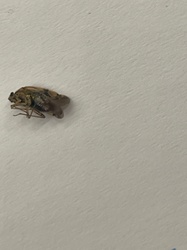
Common Housefly identified by the community
Recent Common Housefly finds identified with Bug Identifier.