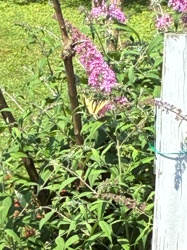
Eastern Tiger Swallowtail Identification Guide
Learn to identify the eastern tiger swallowtail by its bold yellow-and-black tiger-stripe pattern.
Read the full Eastern Tiger Swallowtail encyclopedia entry →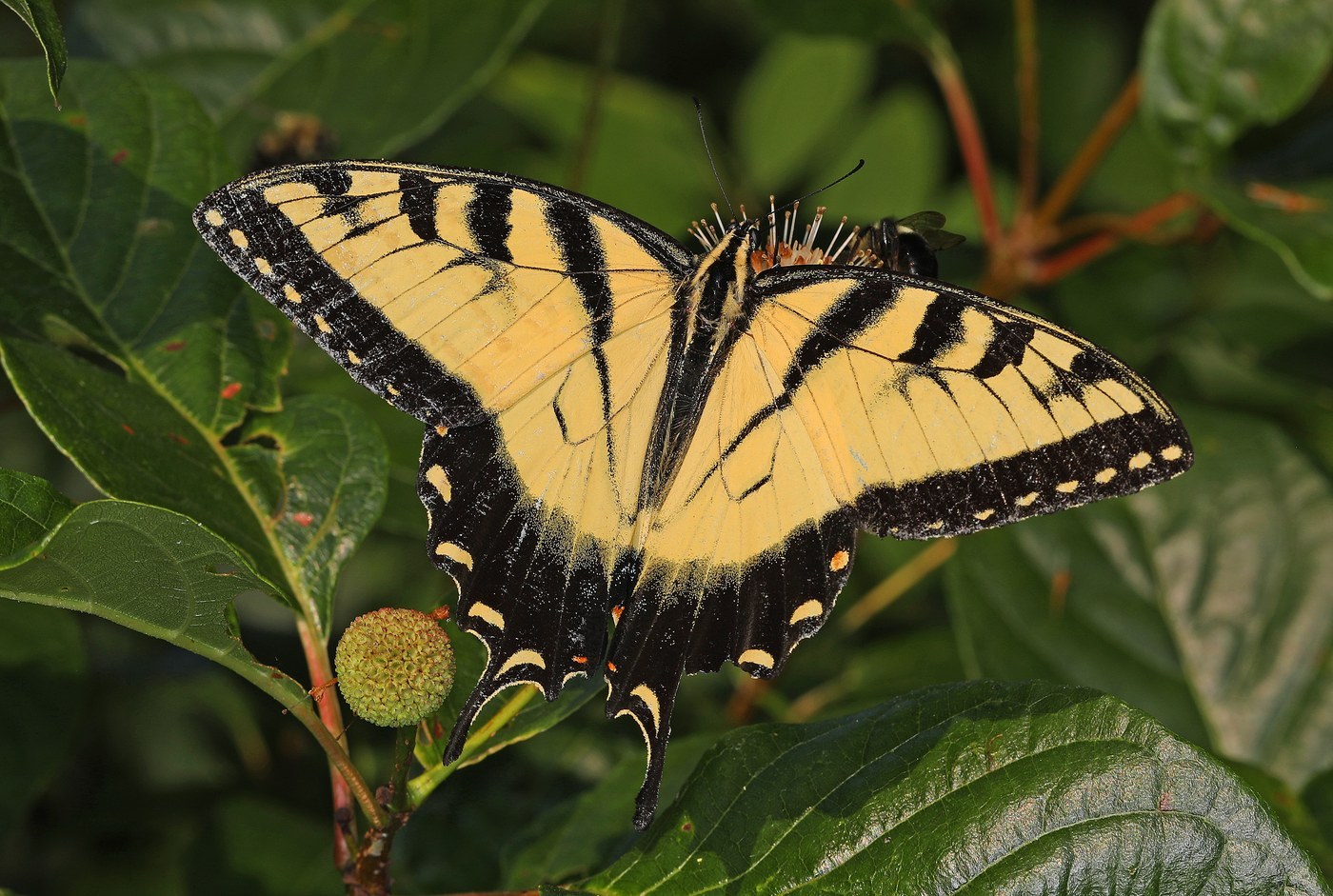
Key Visual Features
The eastern tiger swallowtail (Papilio glaucus) is one of the largest and most recognizable butterflies in eastern North America.
- Size: Wingspan of 3 to 5 1/2 inches (7.5–14 cm), among the larger swallowtails.
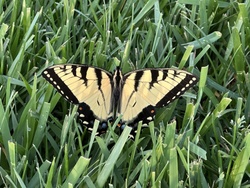
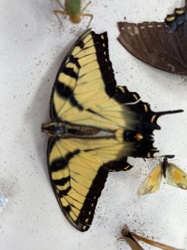
- Color: Bright yellow wings marked with four bold black "tiger" stripes running vertically across the forewing, plus a black border along the wing edges.
- Body shape: Robust body with a yellow-and-black striped abdomen.
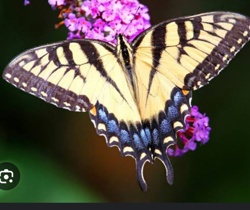
- Wings: Hindwings extend into a pair of narrow tails, with a row of blue scaling along the black hindwing margin and a single orange eyespot near the tail base.
- Color morph: Females have a dark morph that is almost entirely black with a shadow of the tiger stripes still faintly visible and more extensive blue scaling on the hindwing — this dark form is more common in southern populations.
- Antennae: Long, clubbed, black antennae.
Where and When You'll See One
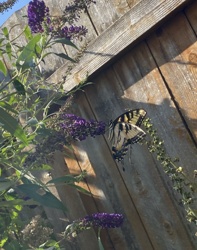
Look for this species in deciduous woodlands, forest edges, orchards, parks, and gardens throughout the eastern and central United States and southeastern Canada. Adults are strong, fairly high fliers and are frequently seen visiting flowering trees, garden blooms, and mud puddles (a behavior called "puddling," typically seen in males gathering minerals). They fly from spring through late summer, with multiple broods in southern parts of their range.
Similar-Looking Bugs
- Black swallowtail: Lacks the yellow tiger-stripe background; instead shows two rows of yellow spots on a mostly black wing.
- Spicebush swallowtail: Also mostly black but with blue-green hindwing shading and pale spots rather than yellow stripes — easily confused with the dark female tiger swallowtail morph, though spicebush swallowtails are generally smaller with a more rounded wing shape.
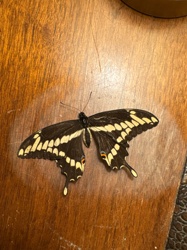
- Giant swallowtail: Larger still, with a yellow spot pattern arranged more like a cross or "X" rather than continuous vertical stripes.
Quick ID Checklist
- Large yellow wings with four vertical black tiger stripes
- Black-bordered wings with hindwing tails
- Blue scaling and an orange eyespot near the tail
- Some females appear as an all-black dark morph
- Common in woodlands, gardens, and near flowering trees in eastern North America
Frequently asked questions
Why do some eastern tiger swallowtails look completely black?
Some females develop a dark color morph that replaces the yellow background with black, though the tiger-stripe pattern often remains faintly visible as a shadow, and the hindwing typically shows extra blue scaling compared to males.
How do I tell a dark-morph female from a black swallowtail?
Look closely at the wing shape and any ghosted striping — dark-morph tiger swallowtails are noticeably larger and retain a shadow of vertical tiger stripes, while black swallowtails show distinct rows of yellow spots rather than striping.
What is the butterfly doing when it gathers at a mud puddle?
This 'puddling' behavior, most often seen in males, involves clustering at damp soil, mud, or puddles, and is a normal and commonly observed activity for this species during warm months.
Where in North America is the eastern tiger swallowtail found?
It ranges across the eastern and central United States into southeastern Canada, favoring deciduous forests, forest edges, and areas with flowering plants such as gardens and orchards.
Eastern Tiger Swallowtail identified by the community
Recent Eastern Tiger Swallowtail finds identified with Bug Identifier.