Eyed Click Beetle Identification Guide
Identify the eyed click beetle by its two large fake eyespots and its signature clicking flip when turned on its back.
Read the full Eyed Click Beetle encyclopedia entry →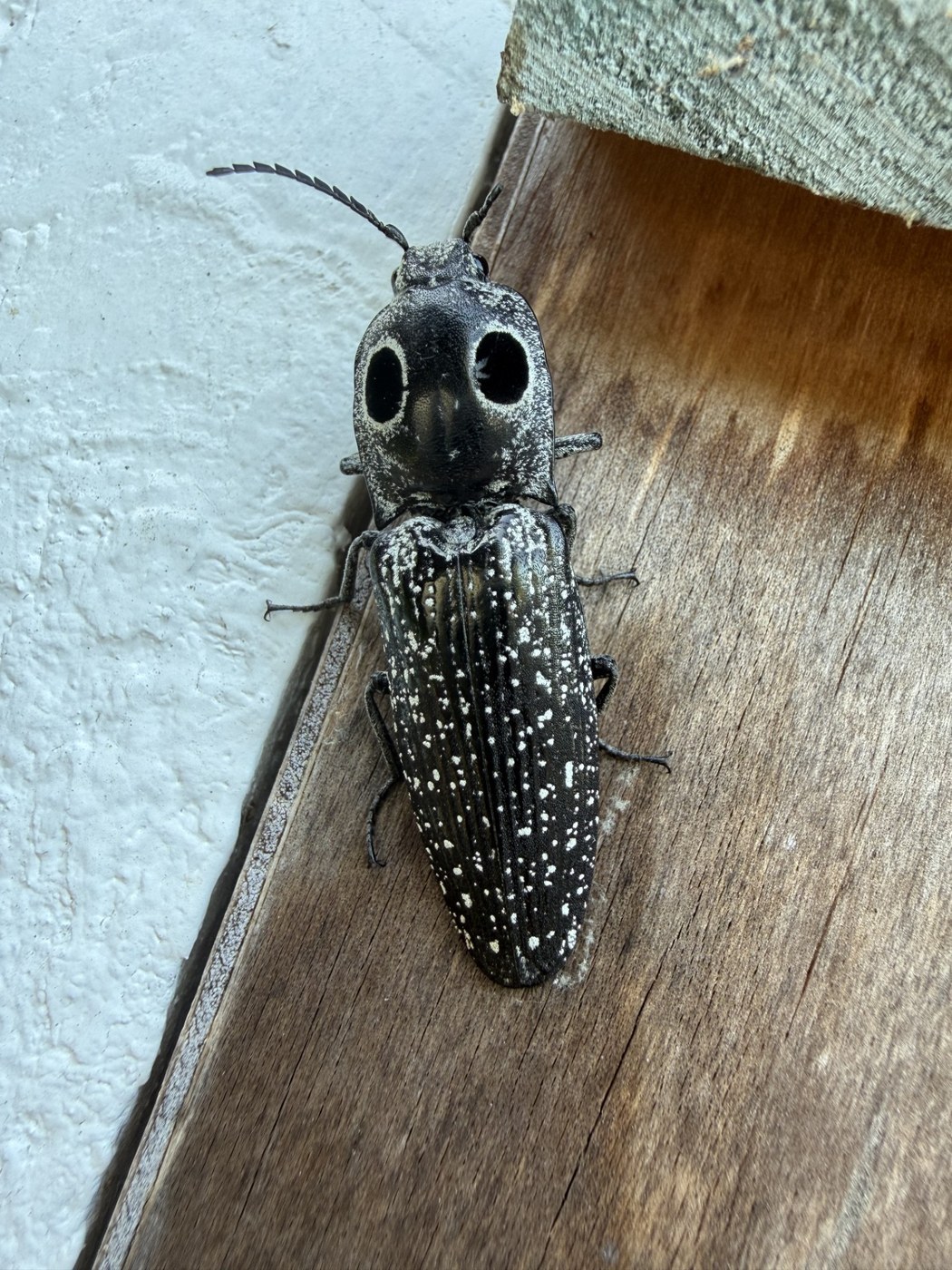
Key Visual Features
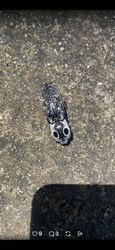
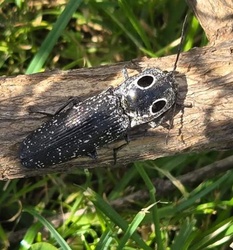
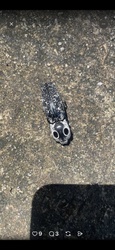
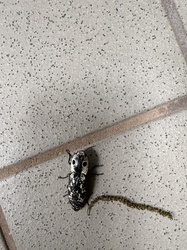
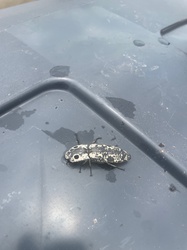
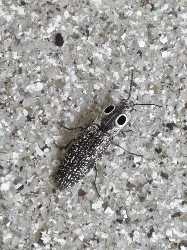
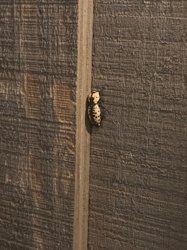
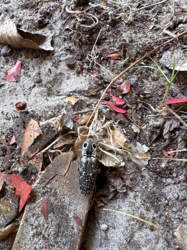
The eyed click beetle (Alaus oculatus) is one of the largest and most recognizable click beetles in North America, typically 1 to 1.75 inches long. Its body is elongated and somewhat flattened, colored in a mottled pattern of black, gray, and white speckles that gives it a marbled look. The unmistakable field mark is a pair of large, prominent black eyespots ringed with white on the top of the pronotum (the segment just behind the head), which strongly resemble a pair of large eyes and give the beetle its common name. The real eyes are much smaller and located on the actual head below these markings. Like all click beetles, it has a spring-loaded joint between the thorax and abdomen that lets it snap its body with an audible click, flipping itself into the air if it lands on its back — a mobility trick rather than a defense against a predator's bite.
Where and When You'll See Them
Eyed click beetles are typically found in and around wooded areas, especially near decaying logs, stumps, and dead or dying trees, since their larvae (wireworms) develop inside rotting wood. Adults are most active from late spring through summer and are often seen resting on tree trunks, fallen logs, or occasionally on the ground after being disturbed. They're most common in the eastern half of North America, including forests, woodlots, and shaded parks.
Similar-Looking Bugs
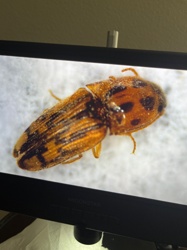
- Other click beetles — share the same clicking, self-righting mechanism, but lack the large paired eyespots that make the eyed click beetle distinctive.
- Ground beetles — some are similarly large and dark, but lack both the eyespot pattern and the clicking ability.
- Longhorn beetles — generally have much longer antennae and a narrower body shape.
Quick ID Checklist
- Large size, 1 to 1.75 inches, mottled black, gray, and white body
- Two large black-and-white eyespots on the pronotum
- Snaps and flips itself upright with an audible click when overturned
- Found near decaying logs and dead wood in wooded areas
- Most active late spring through summer
Frequently asked questions
Why does the eyed click beetle have fake eyespots?
The large paired eyespots on its pronotum likely help deter predators by mimicking the eyes of a much larger animal, even though the beetle's real eyes are much smaller.
What is the clicking sound the eyed click beetle makes?
It comes from a spring-loaded joint between the thorax and abdomen that the beetle snaps to flip itself upright if it lands on its back, producing an audible click.
Where do eyed click beetles live as larvae?
The larvae, known as wireworms, develop inside decaying logs and dead wood in wooded areas.
How big is an eyed click beetle?
It's one of the larger click beetles, typically measuring 1 to 1.75 inches in length.
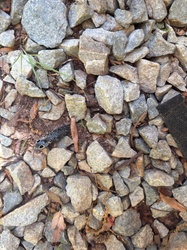
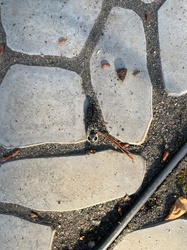
Eyed Click Beetle identified by the community
Recent Eyed Click Beetle finds identified with Bug Identifier.