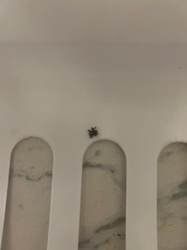
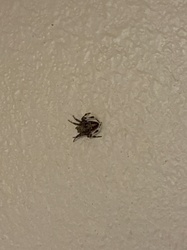
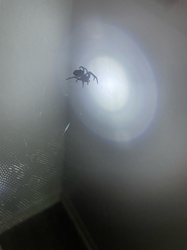
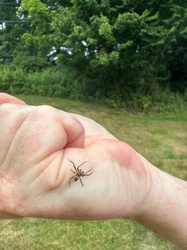
Garden Orb Weaver Spider Identification Guide
Learn how to spot this classic wheel-web-building spider by its round abdomen and nightly web-spinning habit.
Read the full Garden Orb Weaver Spider encyclopedia entry →Key Visual Features
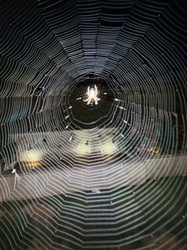
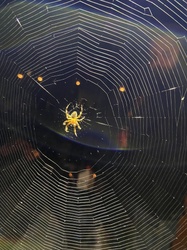
Garden orb weavers are the spiders most people picture when they think of a spider web — large, round, and often marked with bold patterns, they are famous for spinning the classic circular "wheel" web.
- Size: Females are considerably larger than males, with bodies ranging from about 1 to 2.5 centimeters, not counting the legs; males are noticeably smaller and slimmer.
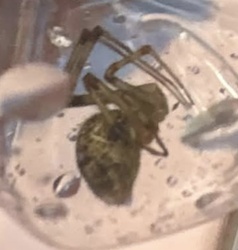
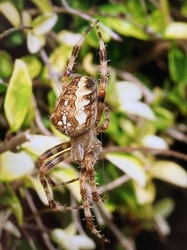
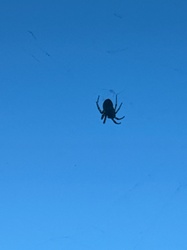
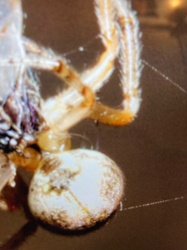
- Body shape: A rounded, often bulbous abdomen set behind a smaller, distinct head-thorax region (cephalothorax).
- Color and pattern: Highly variable by species — shades of brown, tan, gray, orange, or cream, frequently with intricate folium (leaf-shaped) patterns, spots, or zigzag markings across the abdomen.
- Legs: Long, banded legs, often held in pairs radiating outward while the spider sits at the hub of its web.
- Eyes: Eight small eyes arranged in two rows, though difficult to see without close inspection.
Where and When You'd See Them
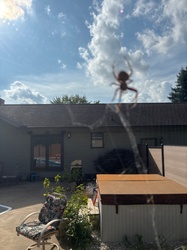
Garden orb weavers are common in gardens, meadows, woodland edges, and around porches and eaves from summer into fall, when they reach full adult size. They typically spin large, symmetrical wheel-shaped webs between plants, shrubs, fences, or structures, often rebuilding the web each evening and taking it down at dawn. Because they are most active builders after dusk, the spider itself is often seen resting at the center of its web at night, while during the day it may hide nearby with a signal thread connected to the web.
Similar-Looking Bugs
- Banana spiders / golden orb weavers: Build similarly shaped webs but tend to have elongated, cylindrical abdomens and golden-toned silk, versus the rounder abdomen of garden orb weavers.
- Wolf spiders: Have a similar brown mottled coloring but a flatter, more robust body built for hunting on the ground, and they do not spin webs.
- Barn spiders: Very closely related and easily confused, but often found specifically around buildings with slightly different abdomen patterning.
- Jumping spiders: Much smaller and stockier, with large forward-facing eyes and no web-building behavior of this kind.
Quick ID Checklist
- Round, often patterned abdomen behind a smaller cephalothorax
- Large, symmetrical, wheel-shaped web rebuilt nightly
- Long, banded legs radiating from the web's hub
- Most active and visible after dusk
- Found in gardens, meadows, and near structures in summer and fall
Frequently asked questions
How can I tell a garden orb weaver from a golden orb weaver?
Garden orb weavers usually have a rounder, more bulbous abdomen, while golden orb weavers tend to have a longer, more cylindrical abdomen and golden-tinted silk.
What time of day are garden orb weavers easiest to spot?
They are most visible after dusk and overnight, since many rebuild their circular web each evening and sit at its center while it is in use.
What kind of web does a garden orb weaver build?
A large, symmetrical, wheel-shaped web with spokes radiating from a central hub, typically strung between plants, shrubs, or structures.
Are male and female garden orb weavers easy to tell apart?
Yes — females have a noticeably larger, rounder abdomen, while males are smaller and slimmer overall.
Garden Orb Weaver Spider identified by the community
Recent Garden Orb Weaver Spider finds identified with Bug Identifier.