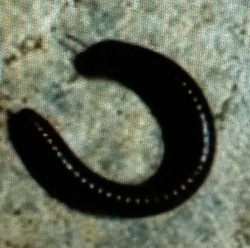
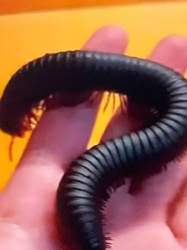
Giant African Millipede Identification Guide
Identify the giant African millipede by its long cylindrical body and dense rows of short legs.
Read the full Giant African Millipede encyclopedia entry →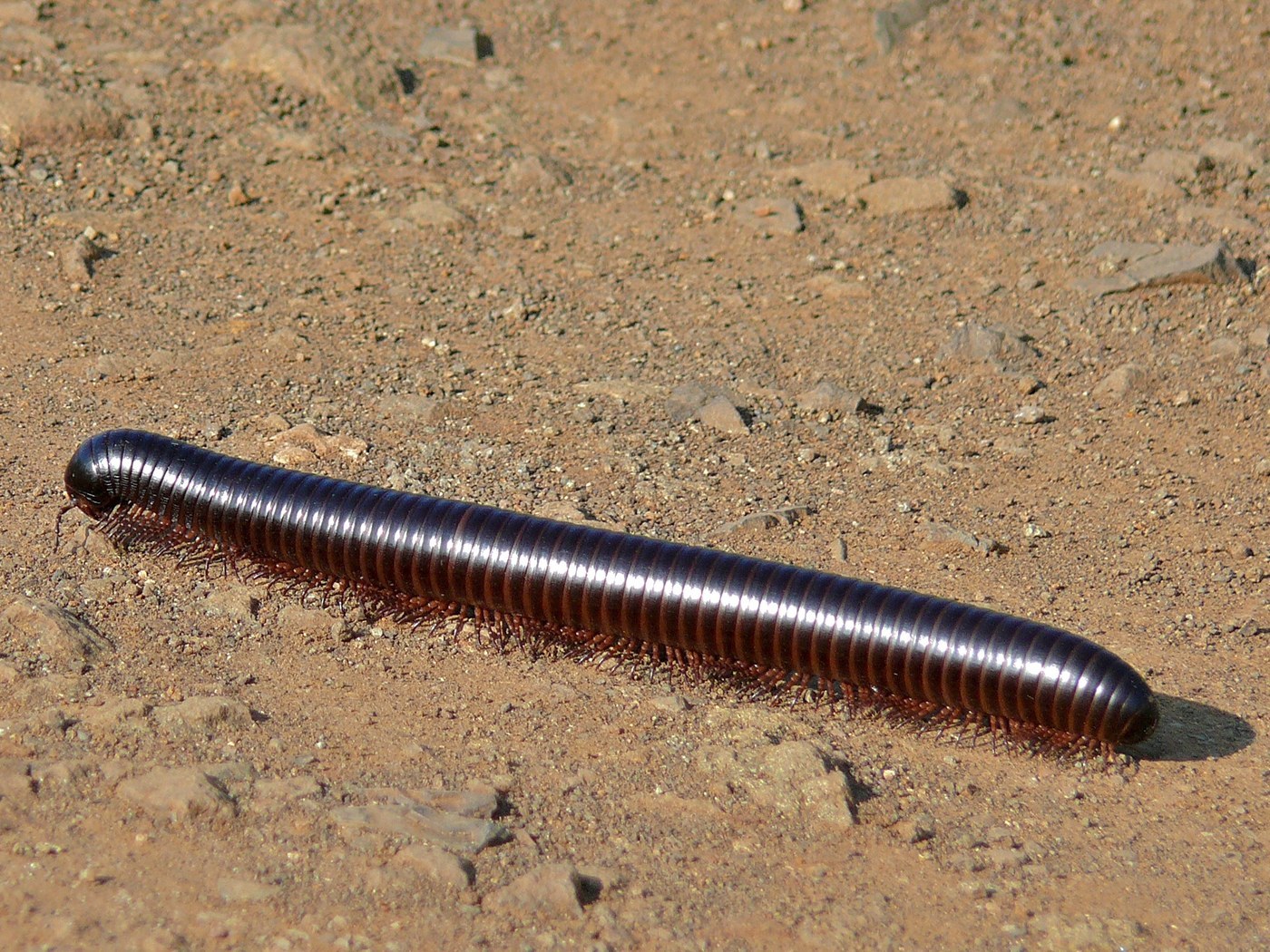
Key Visual Features
The giant African millipede is one of the largest millipede species and has a distinctive thick, cylindrical build.
- Size: Adults commonly reach 8–11 inches (20–28 cm) in length, among the largest millipedes in the world.
- Color: Typically dark brown to black body segments, often with reddish-brown to orange-tinted legs and leg joints that provide subtle contrast.
- Body shape: Long, thick, and cylindrical (round in cross-section), made up of many hardened, ring-like segments.
- Legs: Two pairs of legs per body segment, adding up to well over 200 legs on a mature individual, arranged in dense, closely spaced rows along the underside.
- Wings/antennae: No wings; a short pair of antennae at the head, used to feel out the surroundings.
- Markings: The body generally shows uniform dark coloring segment to segment, with the many short legs creating a rippling visual effect as the animal walks.
Where and When You'd See Them
This species is native to lowland tropical forests of East Africa, where it lives among leaf litter, decaying logs, and loose soil. It is most active during humid conditions and after rainfall, when it can be seen moving slowly across the forest floor. During dry spells it burrows into soil or leaf litter to stay in a moist microhabitat.
Similar-Looking Bugs
- Giant centipedes are flattened rather than cylindrical, have only one leg pair per segment, and move much faster.
- Pill millipedes are far shorter and can roll into a tight ball, unlike the long, non-rolling body of the giant African millipede.
- Smaller millipede species share the same cylindrical, two-legs-per-segment body plan but are a fraction of the size.
- Wireworms are segmented but have only six true legs and a much smaller, more slender body.
Quick ID Checklist
- Long, thick, cylindrical body, often 8–11 inches
- Two pairs of legs per body segment, hundreds of legs total
- Dark brown to black segments, sometimes with reddish leg tones
- Short antennae, no wings, round (not flattened) cross-section
- Found in leaf litter and soil of tropical East African forests, most active in humid conditions
Frequently asked questions
How many legs does a giant African millipede have?
With two pairs of legs on most body segments, a mature adult can have well over 200 legs in total.
How can I tell a giant African millipede from a giant centipede?
The millipede has a rounded, cylindrical body with two leg pairs per segment and moves slowly, while the centipede is flattened, has one leg pair per segment, and moves quickly.
What size does a giant African millipede reach?
Adults typically grow to about 8 to 11 inches in length, making it one of the largest millipede species.
Where is the giant African millipede found?
It is native to lowland tropical forests in East Africa, living in leaf litter, decaying wood, and loose soil.
Giant African Millipede identified by the community
Recent Giant African Millipede finds identified with Bug Identifier.