Great Golden Digger Wasp Identification Guide
Recognize this large, rust-and-black ground-nesting wasp by its golden fuzz and burrowing habits in sandy garden soil.
Read the full Great Golden Digger Wasp encyclopedia entry →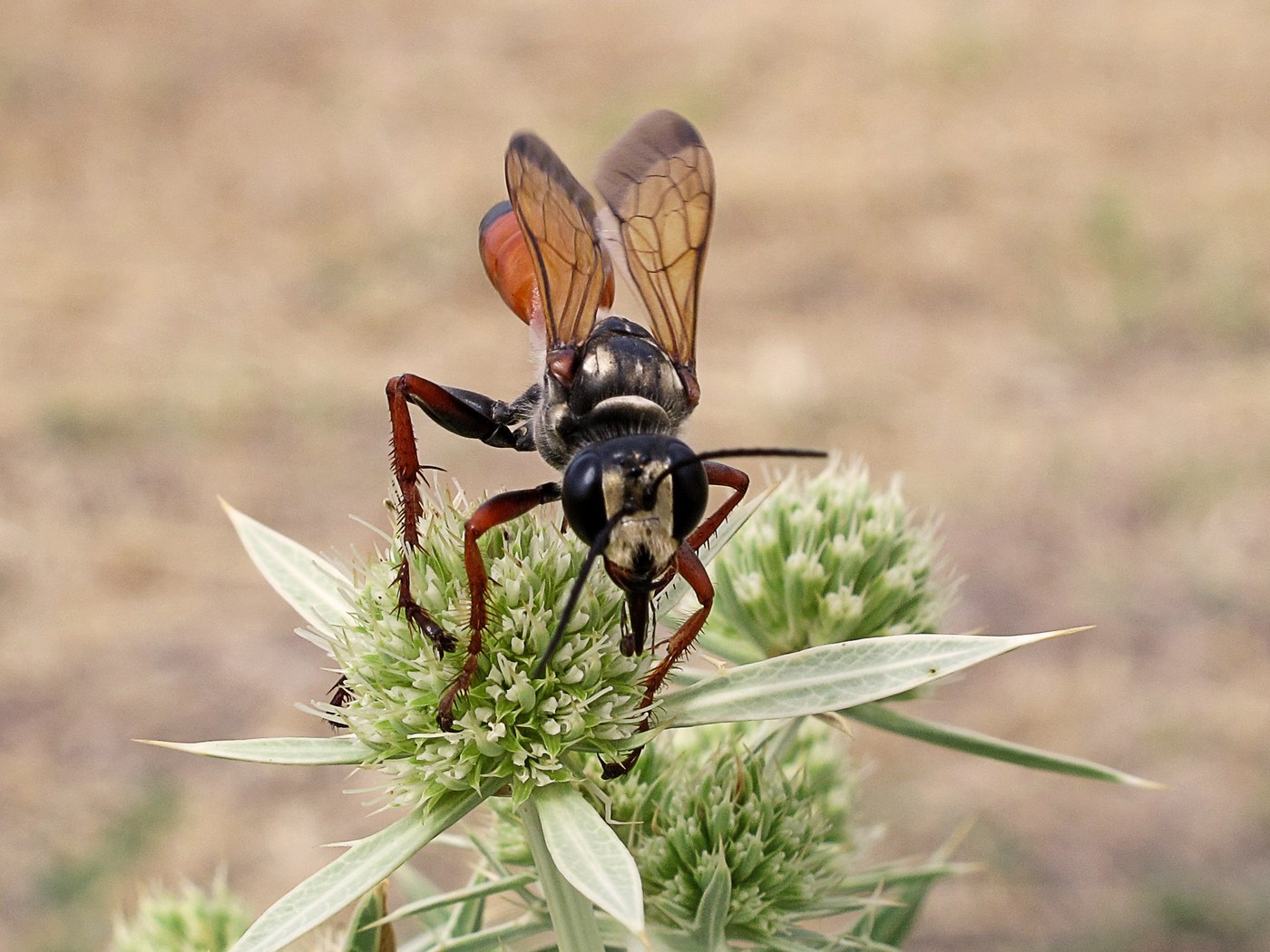
Key Visual Features
The great golden digger wasp is one of the larger solitary wasps you're likely to encounter, with a striking two-tone color scheme.
- Size: Large-bodied, around 20–28 mm (0.8–1.1 inches) long.
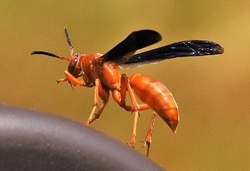
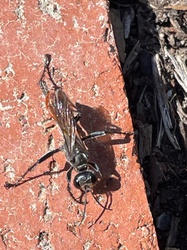
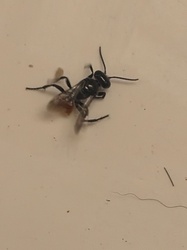
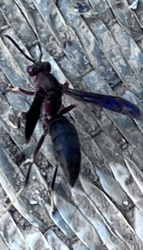
- Color: A rusty orange-red head, thorax, and front legs contrast sharply with a smooth black abdomen; fine golden hairs cover the upper thorax, giving it a shimmering look in sunlight.
- Body shape: Robust and elongated, with a distinct narrowed waist and a somewhat wasp-typical tapered abdomen.
- Wings: Amber to smoky-tinted, held flat over the back at rest.
- Legs: Long, orange-red, and well-suited for digging, often dusted with soil.
- Antennae: Dark, thin, and constantly moving while the wasp investigates the ground.
Where and When You'll See One
This species is a ground-nester and is most often seen close to bare soil.
- Look in sunny areas with sandy or loose, well-drained soil: garden beds, path edges, and open lawns.
- Females dig short vertical burrows, often visible as small mounds of loose dirt with a single entrance hole.
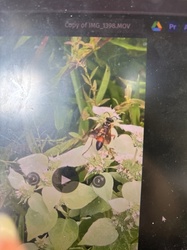
- Adults are active on warm days in mid to late summer, frequently seen visiting flowers such as mountain mint, milkweed, and Queen Anne's lace for nectar.
- Because they are solitary, you'll typically see just one or a few individuals working independently rather than a swarming group.
Similar-Looking Bugs
- Cicada killer wasp: Considerably larger and heavier-bodied, with yellow-and-black abdominal banding rather than a solid black abdomen.
- Sand wasps: Generally smaller, with black-and-yellow or black-and-white banding instead of the golden digger's solid orange-and-black split.
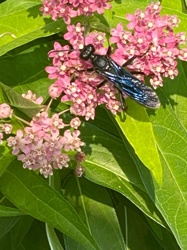
- Great black wasp: Entirely black or with dark bluish wings, lacking the rusty orange thorax and legs.
- Paper wasps: Slimmer overall, with banded abdomens and a nest-building rather than burrowing lifestyle.
Quick ID Checklist
- Rust-orange head, thorax, and legs paired with a smooth black abdomen
- Fine golden hair sheen across the upper body in good light
- Large size, close to an inch long
- Seen alone near a small burrow entrance in sandy, bare soil
- Frequently visiting flat-topped summer flowers for nectar
Frequently asked questions
Why is it called 'golden' if the abdomen is black?
The name refers to the fine golden hairs covering the thorax and the orange-red coloring of the head and legs, which together give the wasp a golden glow in sunlight even though the abdomen itself is black.
Does this wasp live in a colony?
No, it is solitary; each female digs and provisions her own individual burrow without cooperating with other wasps.
How can I tell it apart from a cicada killer?
Cicada killers are noticeably bulkier with yellow bands across a mostly black abdomen, while the great golden digger wasp has a solid black abdomen paired with an orange-red thorax and legs.
Where do these wasps typically nest?
They dig burrows in sunny patches of loose, sandy, or well-drained soil, often visible as small dirt mounds with a single entrance hole.
Great Golden Digger Wasp identified by the community
Recent Great Golden Digger Wasp finds identified with Bug Identifier.