Ground Spider Identification Guide
Identify a ground spider by its flattened, dark body, fast scuttling movement, and habit of hiding under stones and bark.
Read the full Ground Spider encyclopedia entry →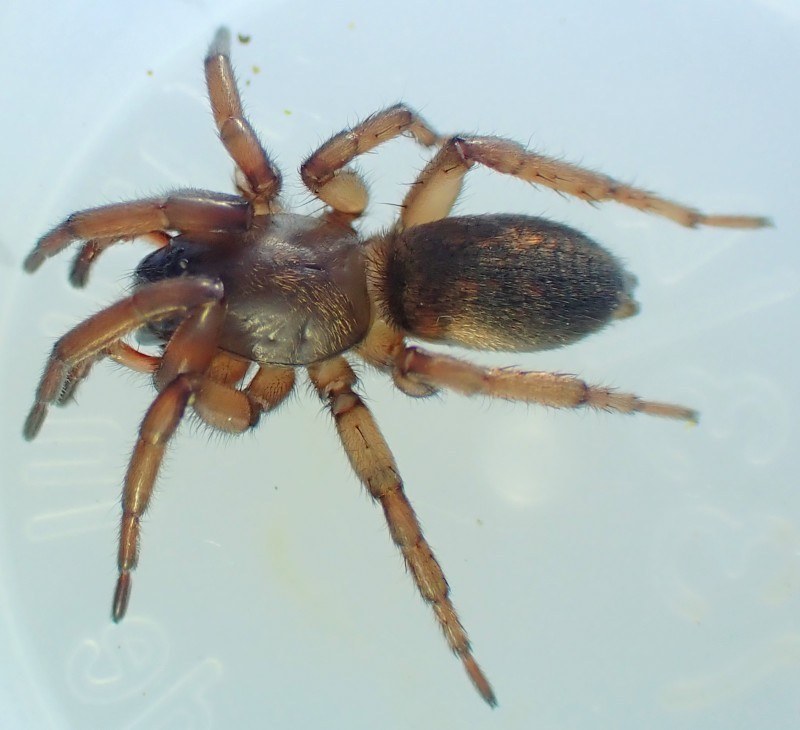
Key Visual Features
Ground spiders are a large family of fast-moving, night-active hunters adapted to life on and near the soil surface.
- Size: Body length typically 4-12 mm depending on species.
- Color: Usually uniform dark brown, gray, or black, sometimes with a subtle sheen; a few species show faint mottling on the abdomen.
- Body shape: Distinctly flattened from top to bottom, an adaptation for squeezing into narrow gaps under bark, stones, and debris.
- Eyes: Eight eyes arranged in two rows across the front of the head, generally small and not strongly differing in size from each other.
- Legs: Eight legs, ending in a pair of claws typical of hunting spiders; the last pair of spinnerets is often visible and cylindrical, projecting slightly beyond the abdomen tip, a helpful field mark for this family.
- Movement: Fast, low, scuttling gait close to the ground, quite different from the slower stalking of some other hunting spiders.
Where and When You'd See It
Ground spiders live in leaf litter, under stones, loose bark, logs, and other ground debris in gardens, woodlands, and grassy areas. They are primarily nocturnal, sheltering during the day beneath a rock or piece of bark inside a flattened silk retreat, then emerging after dark to hunt actively on the soil surface.
Similar-Looking Bugs
- Wolf spiders: Larger and more robust, with a distinctive eye pattern featuring two very large middle eyes, unlike the more evenly sized eyes of ground spiders.
- Sac spiders: Similarly active hunters but usually paler in color and less flattened, sheltering in rolled leaves rather than under stones.
- Woodlice or ground beetles: Could be mistaken for a dark, flattened ground spider at a glance, but have a different number of legs and lack a spider's two-part body.
Quick ID Checklist
- Flattened, dark brown to black body
- Fast, low, scuttling movement across open ground
- Protruding cylindrical spinnerets visible at the abdomen tip
- Found under stones, bark, and leaf litter during the day
- Mostly nocturnal, active hunters rather than web builders
Behavior Notes
During daylight, ground spiders remain hidden inside a simple silk retreat beneath cover objects, only emerging at night to actively search the ground surface for small invertebrate prey rather than waiting in a trap web.
Frequently asked questions
What body shape helps identify a ground spider?
A notably flattened body, which allows it to squeeze into narrow spaces under stones, bark, and other ground debris.
Where should I look to find a ground spider during the day?
Under rocks, loose bark, logs, or leaf litter, where it shelters in a flattened silk retreat until nightfall.
How can I tell a ground spider from a wolf spider?
Ground spiders are generally smaller, flatter, and have more evenly sized eyes, while wolf spiders are bulkier with two very large, prominent middle eyes.
Do ground spiders build webs to catch prey?
No, they are active nocturnal hunters that chase prey across the soil surface rather than relying on a trapping web.
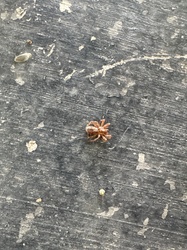
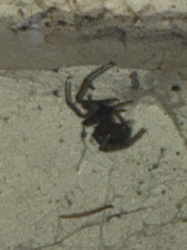
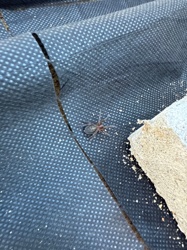
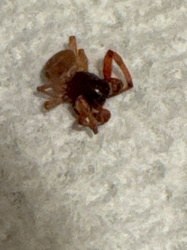
Ground Spider identified by the community
Recent Ground Spider finds identified with Bug Identifier.