Hobo Spider Identification Guide
Identify the hobo spider by its brown, chevron-marked body and funnel-shaped web tucked low to the ground.
Read the full Hobo Spider encyclopedia entry →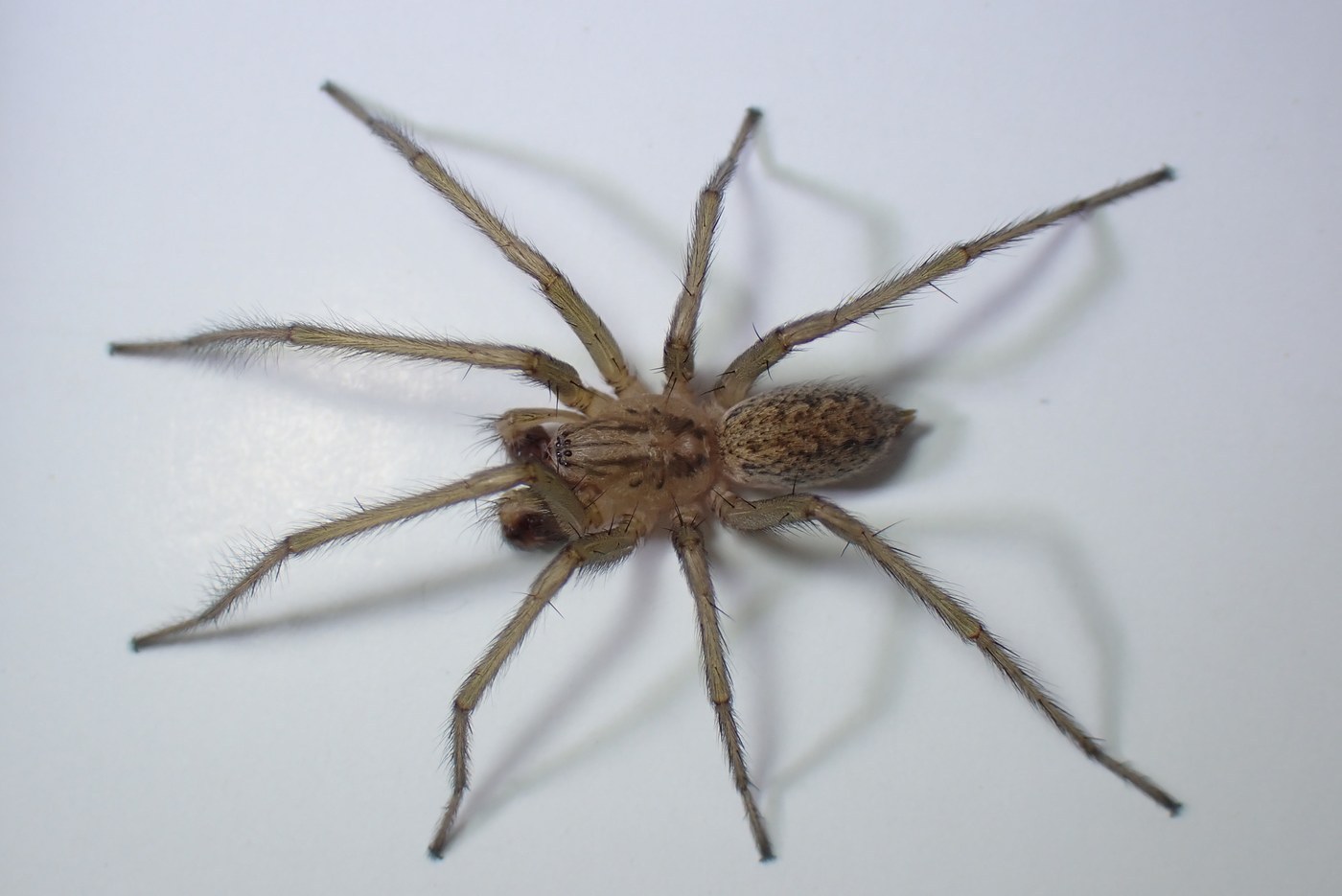
Key Visual Features
The hobo spider is a fast-moving funnel-web builder with a fairly plain but distinctive pattern:
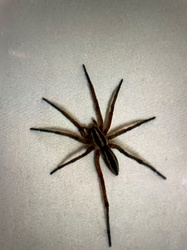
- Color: Brown to grayish-brown body, often with a herringbone or chevron pattern of darker markings running down the abdomen.
- Size: Body length around 0.5-0.75 inches, with a leg span that can reach up to 2 inches.
- Legs: Long, uniformly colored brown legs without obvious banding or rings, which helps separate it from some similar species.
- Eyes: Eight eyes of roughly equal size arranged in two rows, without one pair standing out dramatically.
- Body shape: A somewhat elongated abdomen with a slightly glossy sheen, tapering toward the rear where the spinnerets are visible.
Where and When You'll See One
Hobo spiders build funnel-shaped webs with a wide, flat sheet leading back into a narrow, tubular retreat, typically low to the ground in grass, woodpiles, rock walls, and along building foundations. They are found primarily in the Pacific Northwest of the United States and parts of Canada. Males are more frequently seen wandering indoors in late summer and early fall, when they leave their webs to search for mates.
Similar-Looking Spiders
- Grass spiders: Very similar funnel-web builders with a comparable body shape, but grass spiders often have more distinct longitudinal stripes and slightly longer spinnerets visible at the rear.
- Wolf spiders: Also fast-moving and brown, but wolf spiders do not build funnel webs and instead hunt actively on the ground or from a burrow.
- Giant house spiders: Closely related and very similar in appearance, but tend to be larger overall with slightly different markings; the two are often confused even by experts.
Quick ID Checklist
- Brown body with a herringbone or chevron pattern on the abdomen
- Plain brown legs without obvious banding
- Funnel-shaped web with a flat sheet and tubular retreat, low to the ground
- Fast, straight-line running behavior when disturbed
- Found in the Pacific Northwest, especially around foundations and woodpiles
Frequently asked questions
How can I tell a hobo spider's web from an orb weaver's web?
A hobo spider's web is a flat, non-sticky sheet that funnels back into a narrow silk tube, quite different from the circular, spiral-patterned web of an orb weaver.
What is the best way to distinguish a hobo spider from a grass spider?
Look closely at the abdomen pattern and spinnerets — grass spiders often show more defined stripes and noticeably longer spinnerets at the rear of the abdomen.
Why do I see more hobo spiders indoors in the fall?
Mature males leave their webs during late summer and early fall to search for females, which is when they're most likely to wander into homes.
Do hobo spiders build their webs high off the ground?
No, their funnel webs are typically built low, in grass, along foundations, or tucked into rock piles and woodpiles rather than up in vegetation or eaves.
Hobo Spider identified by the community
Recent Hobo Spider finds identified with Bug Identifier.