
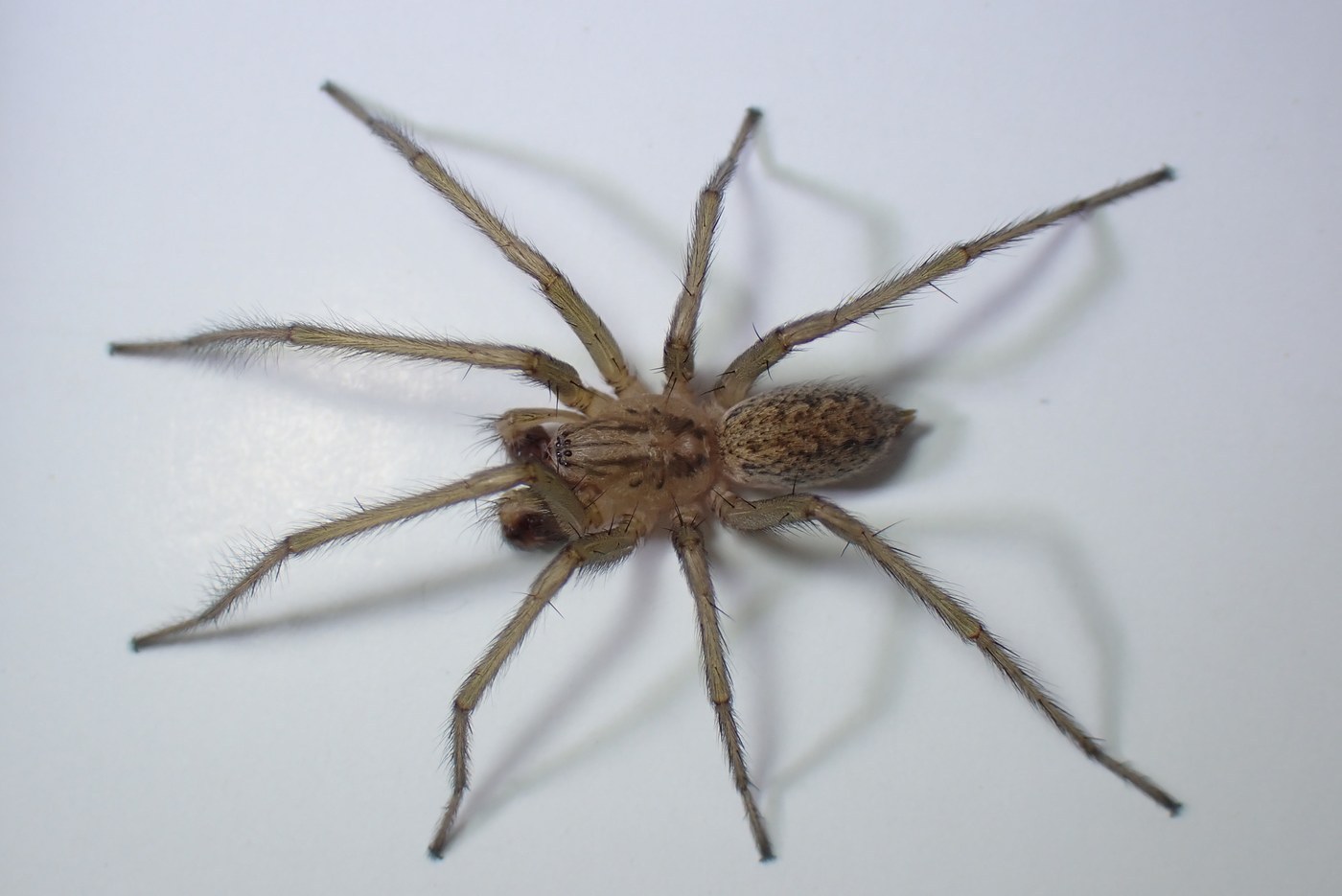
Hobo Spider
Eratigena agrestis
A fast-running, brown funnel-web spider with a chevron pattern down its abdomen, the hobo spider builds a flat, non-sticky sheet web that narrows into a tunnel retreat where it waits for prey.
- Size
- Body 7-14 mm; leg span up to 45 mm
- Habitat
- Ground-level funnel webs in grassy fields, foundations, and basements of the Pacific Northwest and Europe
- Danger
- Bites
Spotted a bug like this?
Identify any bug or insect from a photo, free.
Overview
The hobo spider is a member of the funnel-weaver family, native to Europe and introduced to the Pacific Northwest of the United States, where it has become established in Washington, Oregon, Idaho, and neighboring areas. It has a brown, somewhat drab appearance with a pattern of chevron or arrow-shaped markings running down the top of its abdomen, though this pattern can be subtle and is often obscured by fine hairs.
This spider constructs a distinctive funnel web: a flat, non-sticky horizontal sheet of silk that narrows at one end into a tubular retreat, often tucked into a crack, window well, or dense ground vegetation. Rather than relying on sticky silk to trap prey, the hobo spider relies on speed, rushing out from its funnel retreat to grab insects that stumble onto the sheet.
Hobo spiders are ground-dwelling and are most often encountered in late summer and early autumn, when mature males wander in search of females and may end up indoors. Historically the species drew significant public attention and became widely discussed, though it is now generally regarded as a common house spider similar to other funnel weavers.
How to Identify
- Brown to tan body with a faint chevron or herringbone pattern down the abdomen, often hard to see under fine hairs
- Long, uniformly colored legs without obvious banding or spines
- No visible markings on the legs; eyes are small and clustered, difficult to distinguish without magnification
- Web: flat, horizontal sheet of silk leading to a funnel-shaped tunnel retreat
- Lookalikes: giant house spider and other funnel weavers (very similar appearance, best distinguished by genital structures under magnification); wolf spiders (stockier, no funnel web)
Habitat & Range
Native to Europe and now established in the Pacific Northwest of North America, including Washington, Oregon, Idaho, Utah, and British Columbia. It is typically found at ground level in grassy fields, along foundations, in window wells, woodpiles, and basements, favoring cool, humid, ground-level spaces over elevated ones.
Behavior & Diet
The hobo spider is a sit-and-wait predator that relies on its funnel-shaped retreat, dashing out to seize insects that land on the flat sheet web and then retreating to consume them in the tunnel. It does not use sticky silk, instead depending on speed to subdue prey such as crickets, beetles, and other ground-dwelling insects. Males become notably more active and wander widely in late summer while searching for mates, which is when they are most often seen indoors.
Life Cycle
Females lay eggs in a silken sac hidden within or near the funnel retreat, typically in autumn, with spiderlings emerging the following spring. Young spiders molt repeatedly over one to two years as they grow toward maturity. In most populations there is one generation per year, with adults most commonly observed from mid to late summer through autumn; the species overwinters primarily as eggs or immature spiders in sheltered ground-level sites.
Frequently asked questions
How can I recognize a hobo spider?
Look for a brown spider with a subtle chevron pattern on the abdomen and unmarked legs, building a flat sheet web that leads into a funnel-shaped tunnel retreat at ground level.
Where do hobo spiders typically build their webs?
They favor ground-level sites such as grassy fields, foundations, window wells, and basements, spinning a horizontal funnel web rather than a vertical orb.
When are hobo spiders most active?
Mature males wander in search of mates during late summer and early autumn, which is when they are most frequently seen, including indoors.
What do hobo spiders eat?
They prey on ground-dwelling insects such as crickets and beetles that wander onto their sheet web.
Hobo Spider guides
In-depth guides for identifying, understanding, and living alongside Hobo Spider.
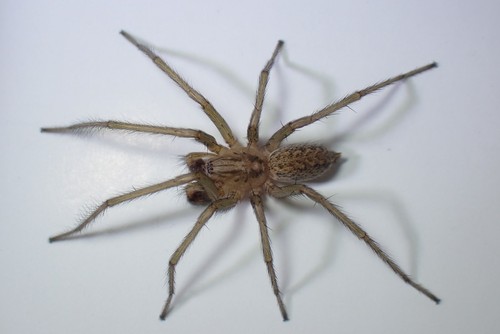
Hobo Spider identified by the community
Real finds identified with Bug Identifier.
Other bugs you may enjoy
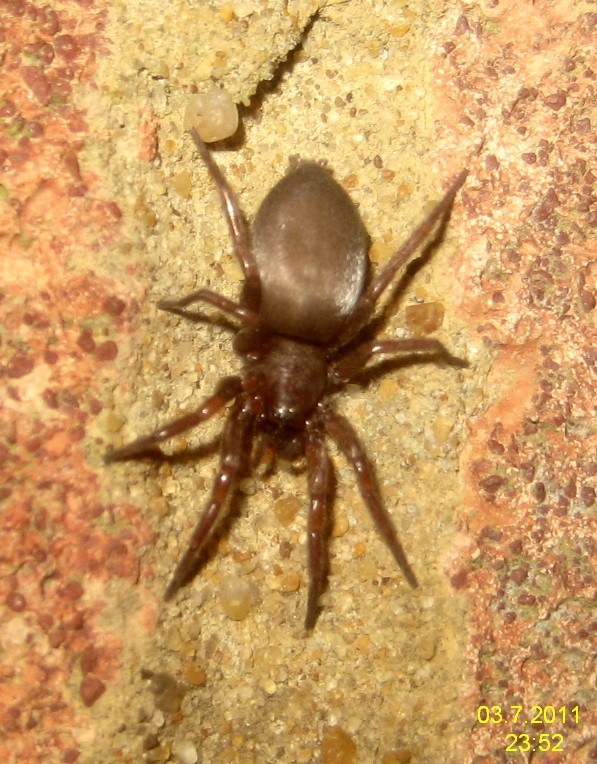
Woodlouse Spider
Damp leaf litter, under logs, stones, and mulch
Wolf Spider
Gardens, grasslands, forests, leaf litter, ground burrows
Wandering Spider
Tropical and subtropical forest floor, foliage, and banana plants
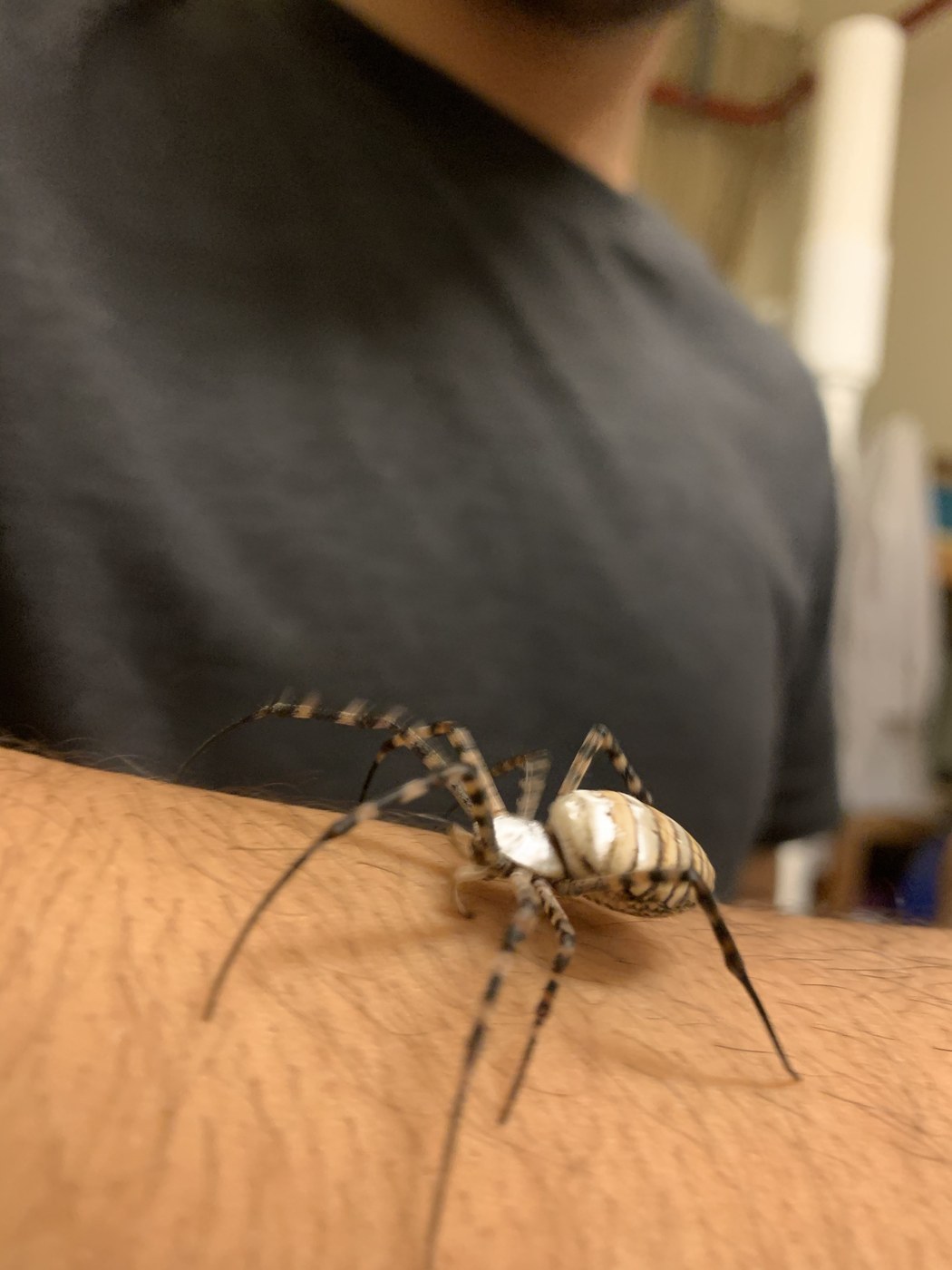
Banded Garden Spider
Tall grass, meadows, and gardens with open sunny vegetation
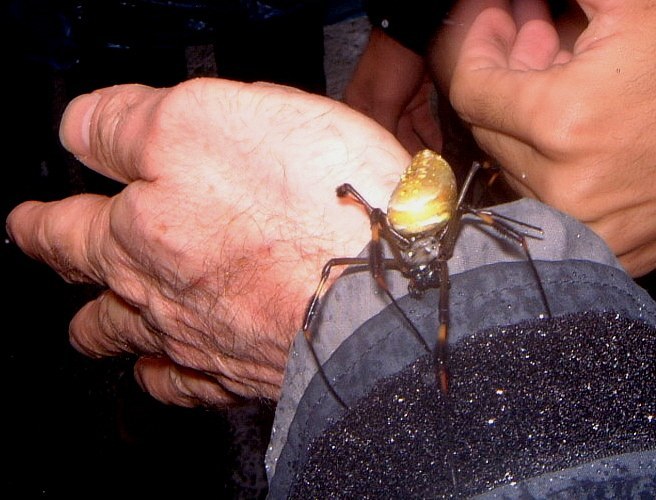
Banana Spider
Wooded trails, forest edges, and gardens across the southeastern U.S. and the American tropics
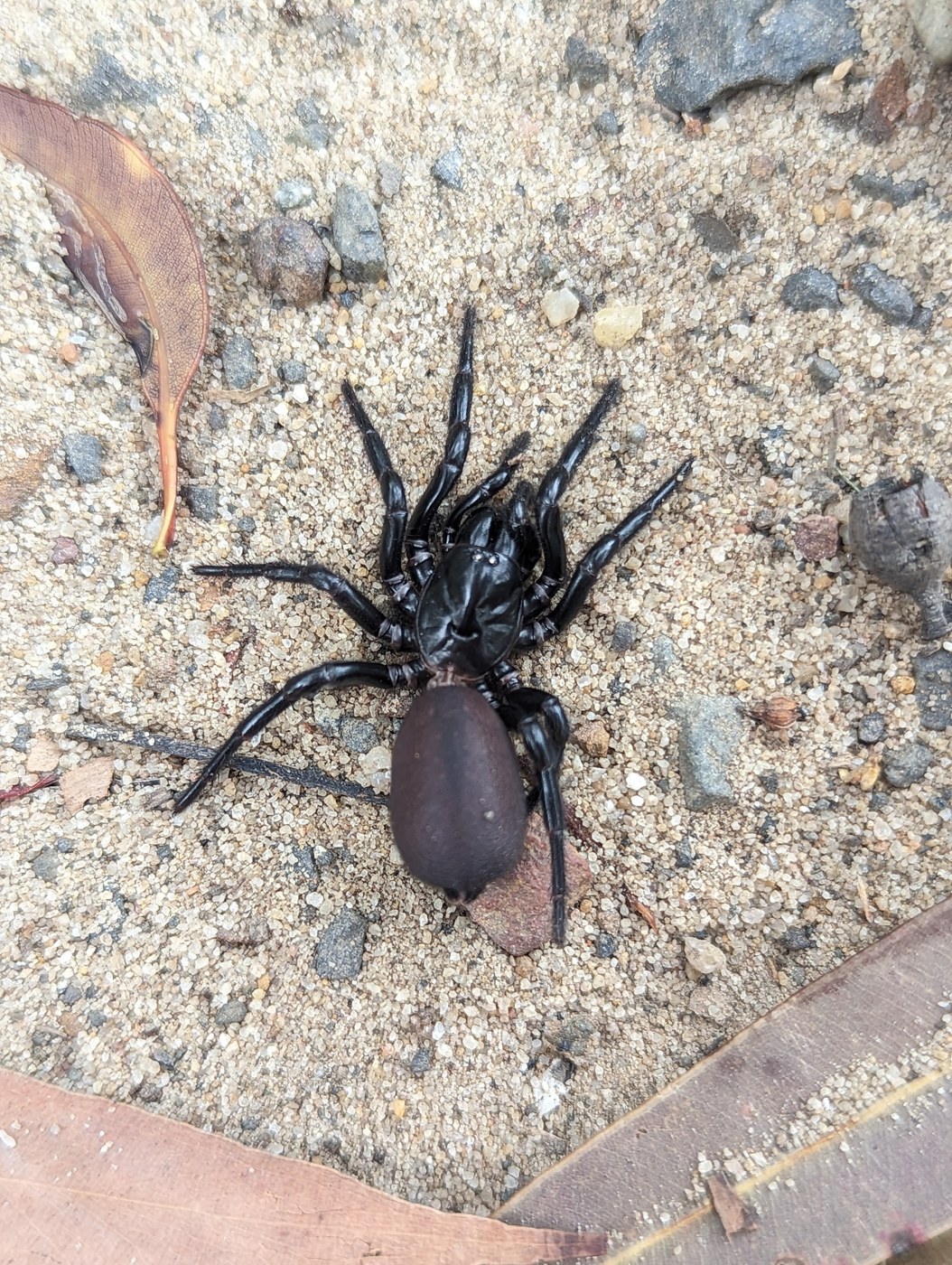
Sydney Funnel-web Spider
Burrows in moist soil, gardens, and forested gullies around the Sydney basin of eastern Australia
Trapdoor Spider
Self-dug silk-lined burrows with a camouflaged door, in dry, well-drained soil worldwide
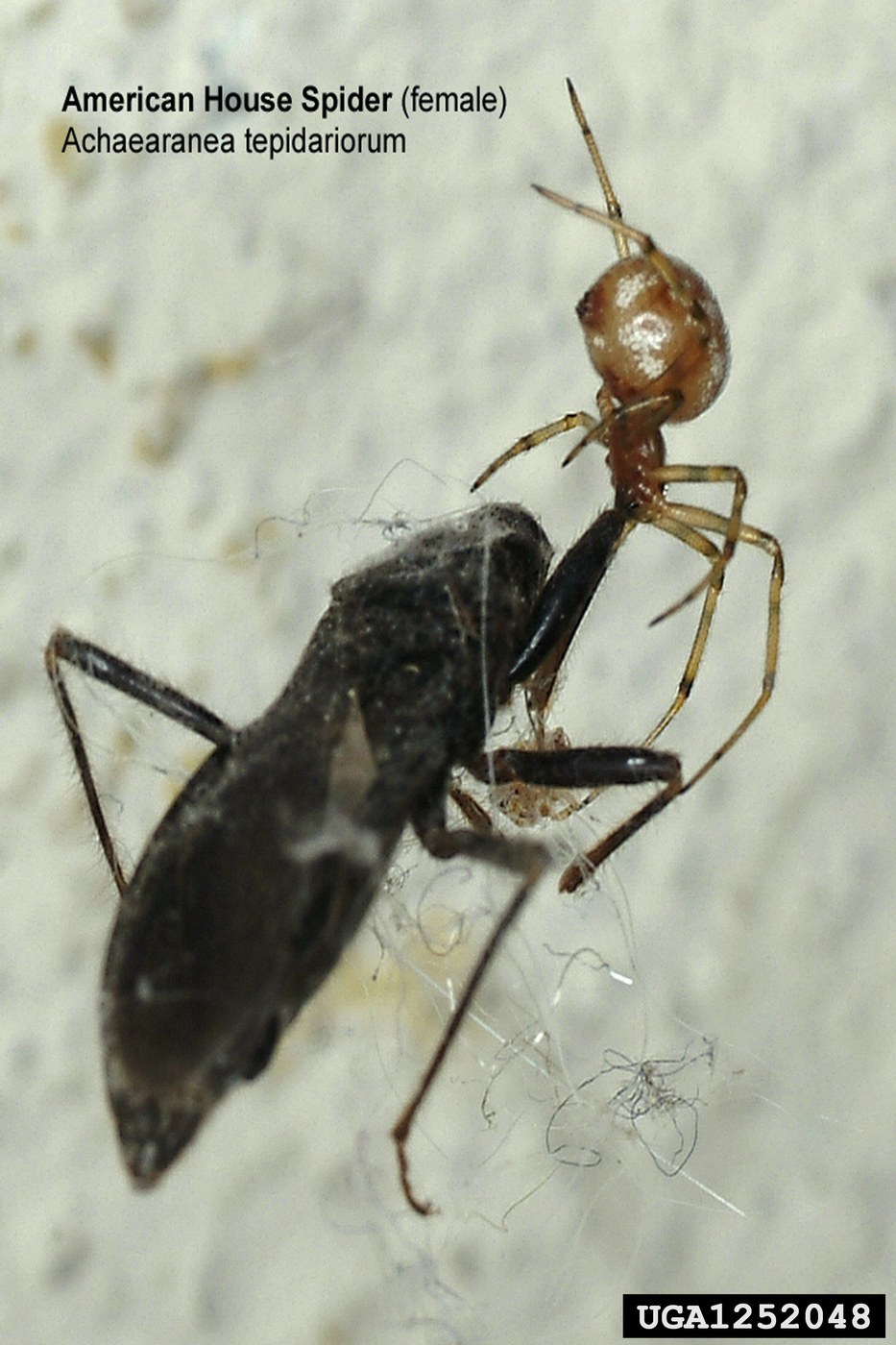
American House Spider
Corners, basements, garages, and outbuildings worldwide
Tube Web Spider
Wall crevices, bark, rockeries, and masonry
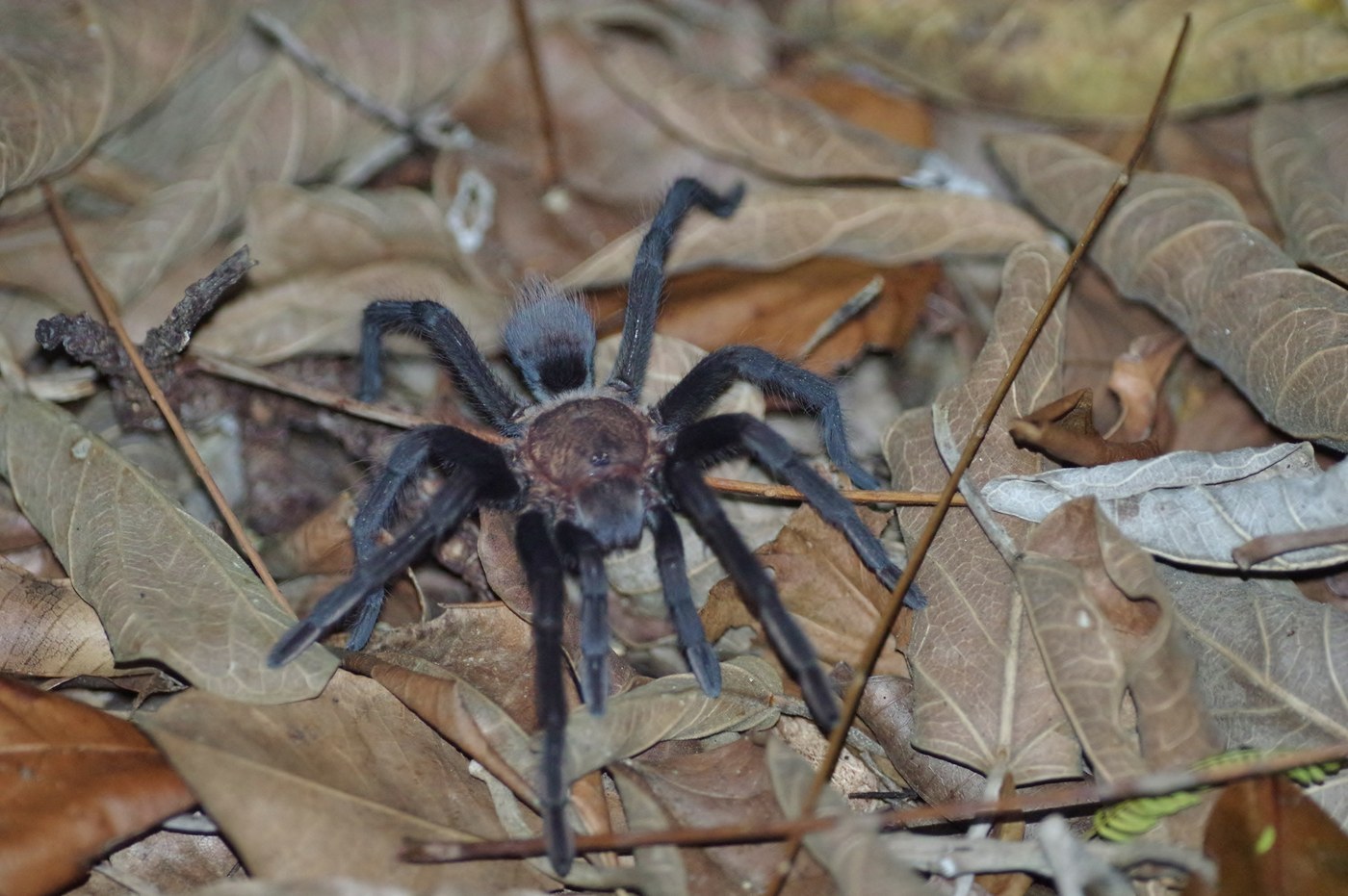
Tarantula
Burrows, rock crevices, and tree hollows in deserts, grasslands, and tropical forests worldwide
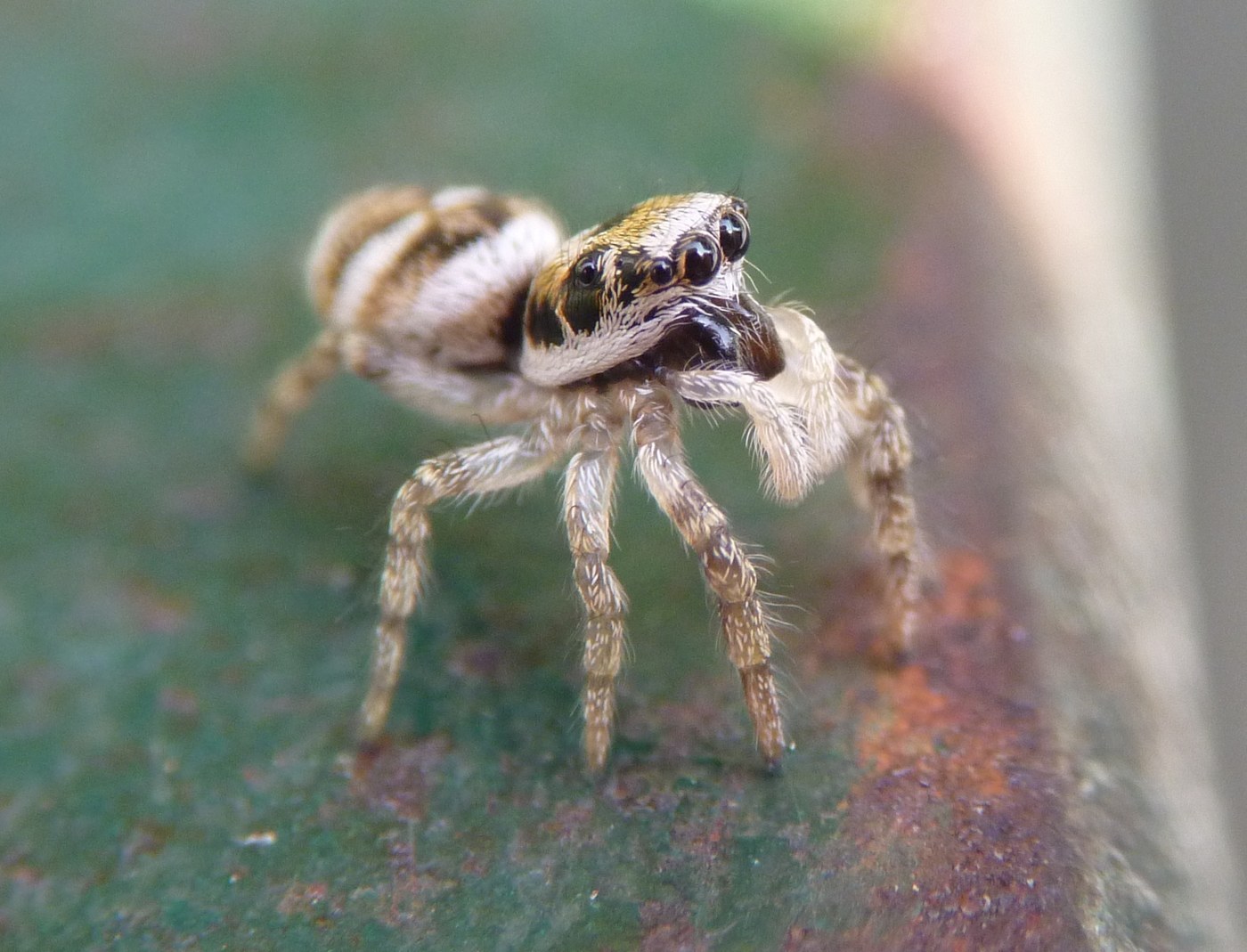
Zebra Jumping Spider
Sunny walls, fences, tree bark, and building exteriors
Wall Spider
Cracks and crevices on exterior and interior walls