Horse Fly Identification Guide
Recognize a horse fly by its large size, robust build, and strikingly patterned iridescent eyes.
Read the full Horse Fly encyclopedia entry →Key Visual Features
Horse flies are large, sturdy flies known for their strong flight and distinctive eyes.
- Size: Among the larger common flies, ranging from about 1 to 2.5 cm (0.4 to 1 inch) in body length depending on species.
- Body shape: Broad, robust body with a thick thorax and a somewhat flattened, tapering abdomen.
- Eyes: Very large compound eyes that often cover most of the head, frequently showing bright, iridescent green, purple, or striped patterns while the fly is alive.
- Wings: A single pair of clear or lightly tinted wings, sometimes with faint smoky patterning, held flat or slightly spread at rest.
- Color: Body coloring ranges from dark brown or black to gray, sometimes with lighter bands across the abdomen.
- Antennae: Short, thick antennae compared to the long, thin antennae seen in many other insects.
Where and When You'd See One
Horse flies are typically encountered outdoors in open, sunny areas, especially near livestock or standing water.
- Fields, pastures, woodland edges, and areas near ponds, streams, or wetlands where larvae develop
- Strong, fast, direct fliers, often seen circling around animals or people in sunny weather
- Most active during the warmest parts of the day in summer months
- Rarely enter buildings, generally staying in open outdoor spaces
Similar-Looking Bugs
- Deer flies are smaller and often have dark banded or spotted wing patterns, along with narrower bodies compared to the bulkier horse fly.
- House flies are much smaller with a slimmer body and lack the large, colorful compound eyes of a horse fly.
- Bumblebees are fuzzy with distinct yellow-and-black banding and two pairs of wings, whereas horse flies have a single pair of wings and a less hairy, smoother body.
- Robber flies have a narrower, more elongated body and a distinct bearded face, differing from the broad, stout build of a horse fly.
Quick ID Checklist
- Large, robust body with a thick thorax
- Very large compound eyes, often iridescent green or striped
- Single pair of clear or lightly tinted wings
- Strong, fast, direct flight pattern
- Found in open fields or near water in warm weather
Frequently asked questions
What is the most distinctive feature of a horse fly?
Its very large, often iridescent compound eyes that cover most of the head are the most recognizable identifying feature.
How do horse flies differ from deer flies?
Horse flies are generally larger and bulkier, while deer flies are smaller with narrower bodies and often patterned or banded wings.
Where are horse flies commonly found?
They favor open, sunny areas such as fields, pastures, and spots near ponds or streams where their larvae develop.
How many wings does a horse fly have?
Like all true flies, it has a single pair of functional wings.
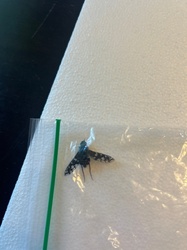
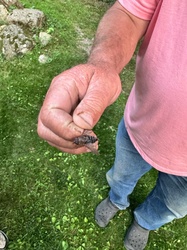
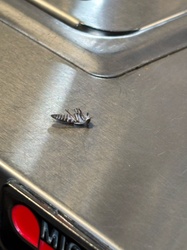
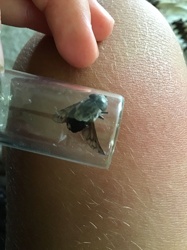
Horse Fly identified by the community
Recent Horse Fly finds identified with Bug Identifier.