House Centipede Identification Guide
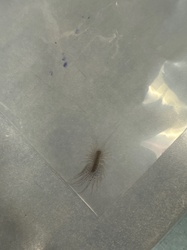
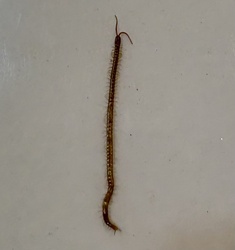
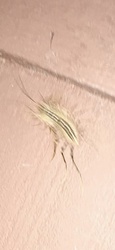
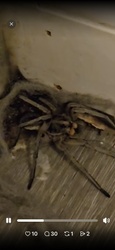
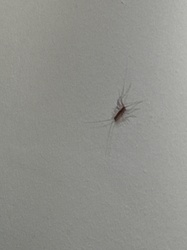
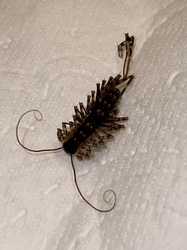
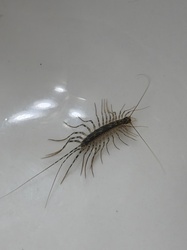
Recognize a house centipede by its long, banded legs, fast erratic movement, and flattened, elongated body.
Read the full House Centipede encyclopedia entry →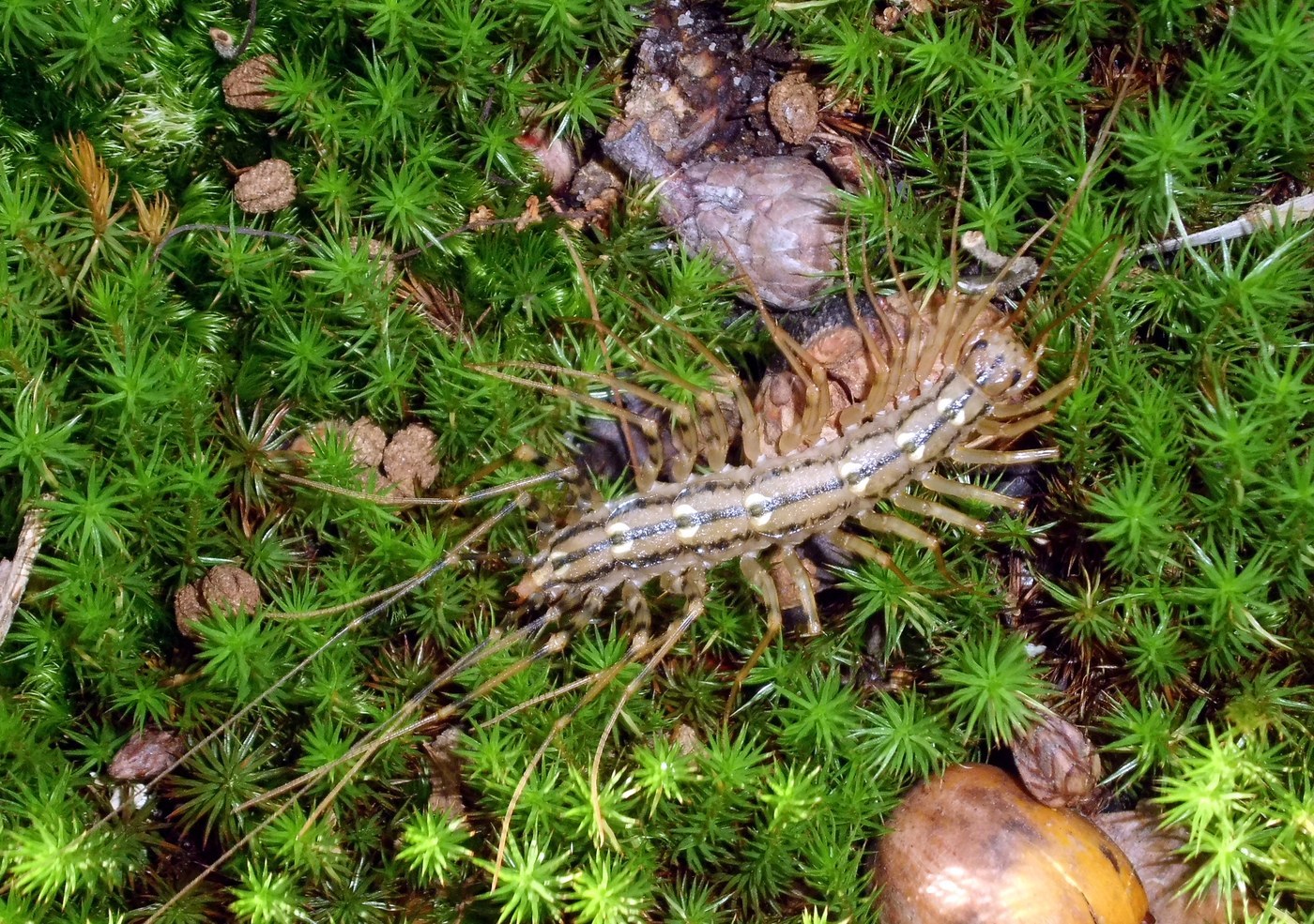
Key Visual Features
The house centipede is a distinctive many-legged arthropod easily recognized by its long legs and rapid movement.
- Size: Body length of about 1 to 1.5 inches (25–38 mm), though the long legs make it appear much larger.
- Color: Yellowish-gray to brownish-gray body with dark, longitudinal stripes running down the back.
- Body shape: Flattened and elongated, divided into many segments, built for squeezing through narrow gaps.
- Legs: Fifteen pairs of extremely long, thin legs, each banded with alternating light and dark stripes, growing progressively longer toward the rear of the body.
- Antennae: Long, thin antennae at the front, roughly as long as the body.
- Movement: Extremely fast, often described as darting or skittering, capable of quick direction changes.
Where and When You'll See Them
House centipedes favor damp, dark environments such as basements, bathrooms, closets, and crawl spaces, where they hide in cracks, under objects, or in drains during the day. They are nocturnal, most active at night when they move quickly across floors and walls. Indoors, they can be encountered at any time of year due to stable temperature and moisture conditions, though outdoor populations are most active in warm, humid months.
Similar-Looking Bugs
- Millipedes: Have a more rounded, cylindrical body with two pairs of short legs per segment, moving slowly rather than darting quickly.
- Other centipede species: Larger outdoor centipedes tend to have shorter, thicker legs and a more uniform brown or reddish color without the banded leg pattern.
- Silverfish: Share a similar habitat but have a much shorter set of six legs near the front and long tail bristles instead of numerous long legs along the body.
Quick ID Checklist
- Flattened body about 1–1.5 inches long, striped
- Fifteen pairs of extremely long, banded legs
- Long thin antennae at the front
- Extremely fast, erratic, darting movement
- Found in damp, dark areas like basements and bathrooms, nocturnal
Frequently asked questions
How many legs does a house centipede have?
It has fifteen pairs of legs, totaling thirty legs, which are notably longer than those of most other centipedes and grow progressively longer toward the rear of the body.
How is a house centipede different from a millipede?
House centipedes have long, widely spaced legs and move very quickly, while millipedes have a rounder body with many short legs packed closely together and move at a much slower pace.
Why does a house centipede move so fast?
Its long legs allow for rapid, darting movement across surfaces, which is a natural trait of the species and helps it navigate quickly through tight spaces and open floors alike.
Where in a house are house centipedes usually found?
They favor damp, dark areas such as basements, bathrooms, and closets, since these spots offer the humidity and hiding places the species prefers during the day.
House Centipede identified by the community
Recent House Centipede finds identified with Bug Identifier.