
House Centipede
Scutigera coleoptrata
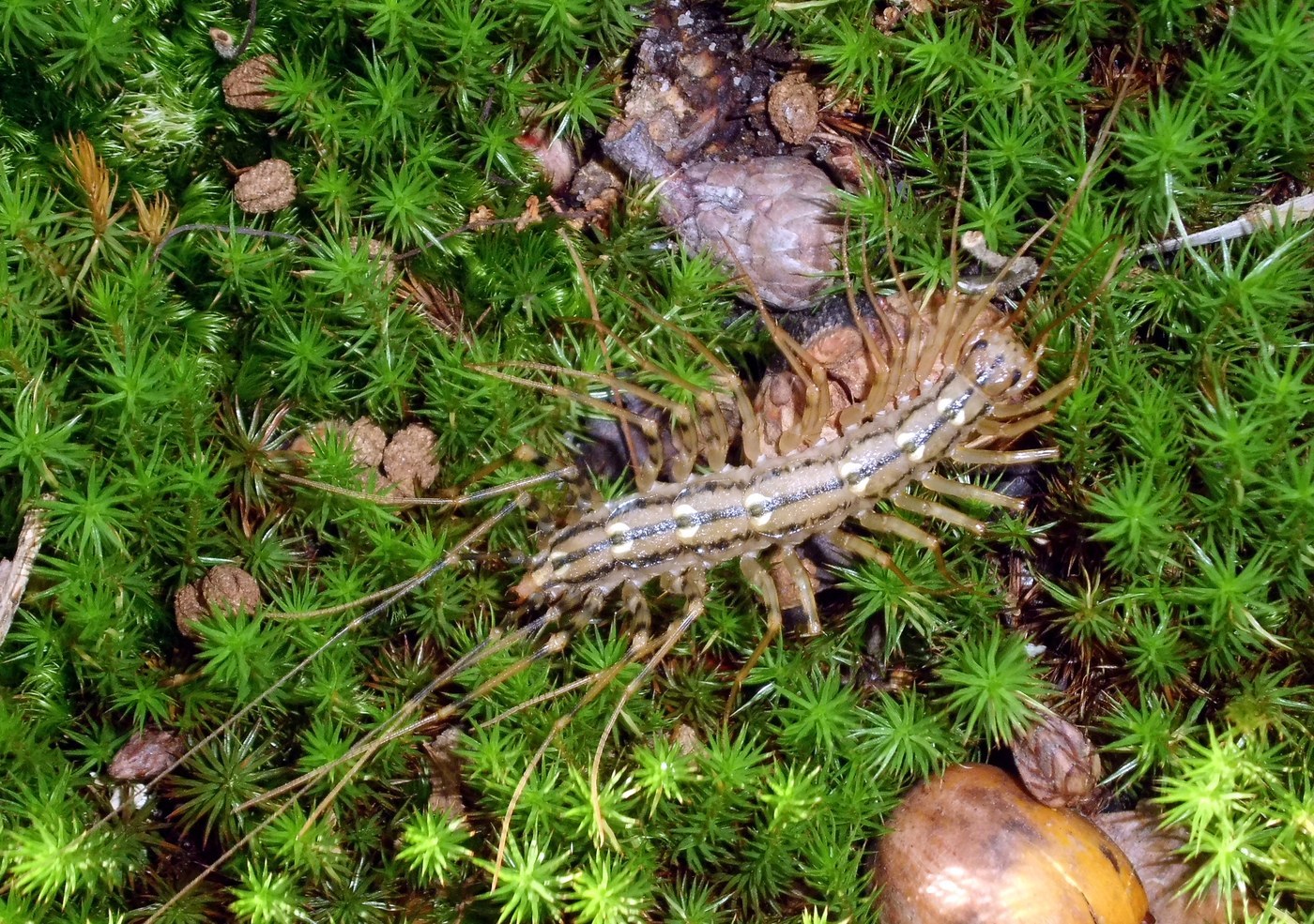
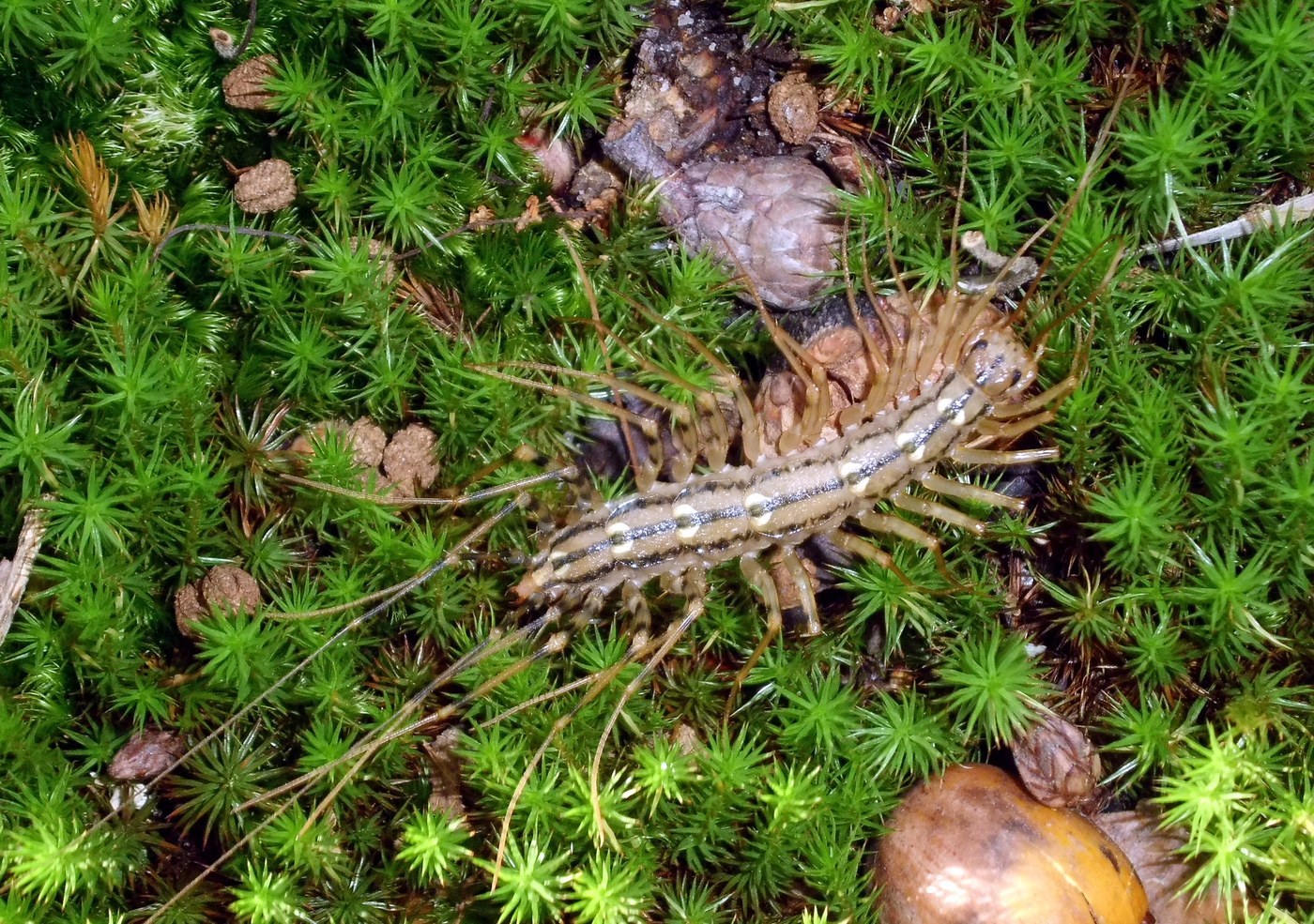
A fast, wiry arthropod with 15 pairs of extremely long, banded legs that make it look far bigger than its actual body size, often seen darting across bathroom or basement floors at night.
- Size
- 25–35 mm body (legs add much more)
- Habitat
- Damp basements, bathrooms, leaf litter
- Danger
- Bites
Spotted a bug like this?
Identify any bug or insect from a photo, free.
Overview
The house centipede is a fast-moving, long-legged arthropod in the class Chilopoda, order Scutigeromorpha, most often represented by the species Scutigera coleoptrata. Unlike the flattened, many-segmented centipedes found under logs outdoors, house centipedes have a shorter body with extremely long, banded legs that make them look far larger and more delicate than their actual body size suggests.
It belongs to the same broad group as other centipedes (subphylum Myriapoda) but is unusual for a myriapod in having compound eyes and being genuinely comfortable indoors. Native originally to the Mediterranean region, it has spread with human structures to much of the temperate world.
Ecologically it is a nocturnal predator, and its presence in a home is usually a sign that other small insects are also present nearby. It plays a quiet but useful role as a natural check on populations of silverfish, spiders, and other small indoor arthropods.
How to Identify
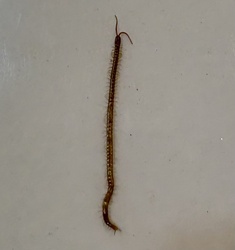
- Body: grayish-yellow with three dark longitudinal stripes running down the back; body length about 25–35 mm.
- Legs: 15 pairs of extremely long, thin, banded legs, each pair longer than the one before it, giving a fringed silhouette.
- Antennae: long, thread-like, roughly as long as the body.
- Movement: extremely fast, erratic sprints rather than a steady crawl.
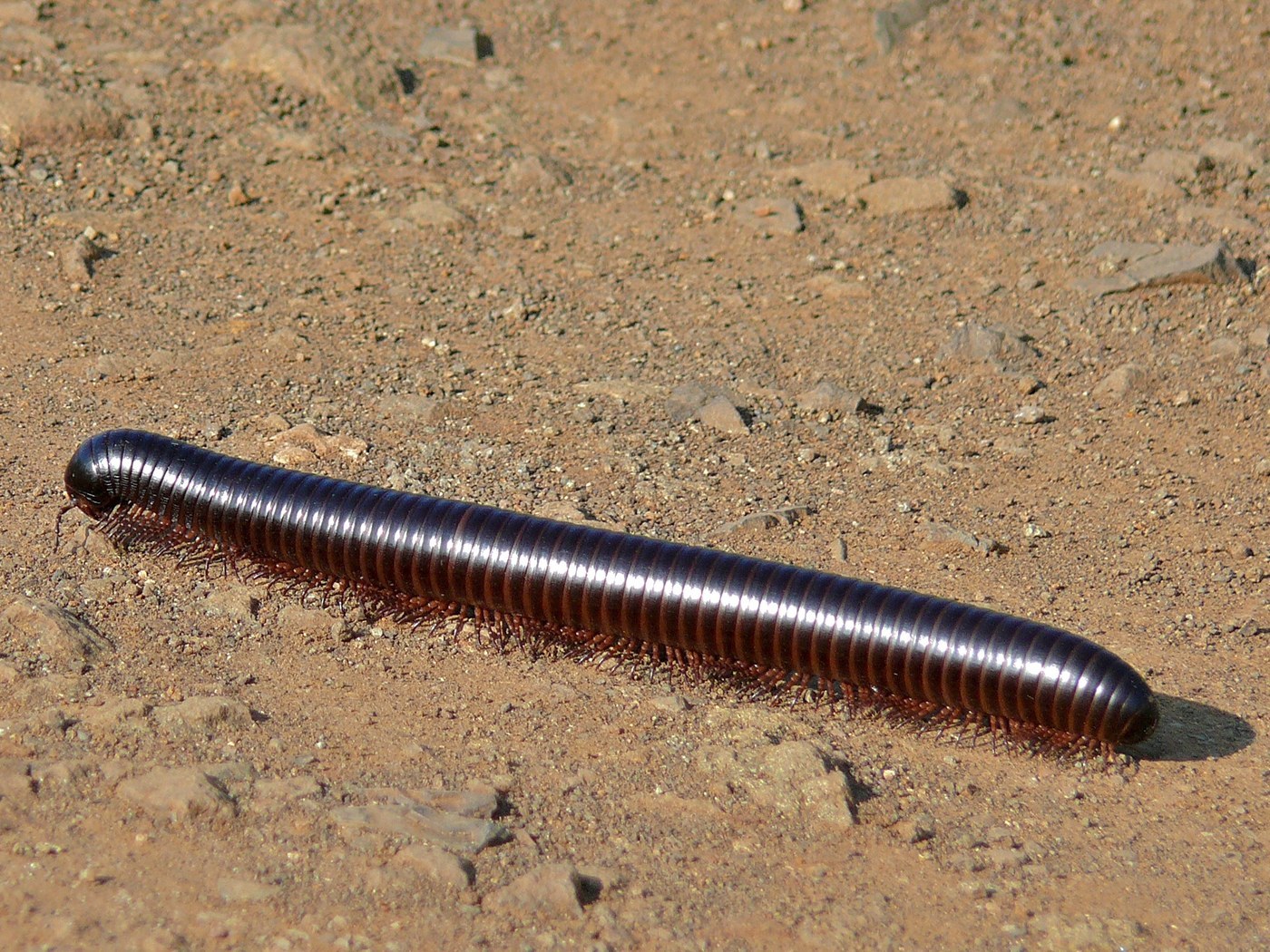
- Lookalikes: easily confused with other centipede species, but banded legs, speed, and indoor habitat are distinctive; true millipedes have two pairs of legs per segment and move slowly by comparison.
Habitat & Range
House centipedes favor damp, dark environments—basements, bathrooms, closets, and crawl spaces—where humidity stays high. Outdoors they can be found under stones, mulch, and leaf litter. They occur across much of North America, Europe, and other temperate regions with mild winters.
Most active at night, they hide in cracks and crevices by day and emerge after dark to hunt. Populations tend to peak in late summer and early fall when both temperatures and prey abundance are highest.
Behavior & Diet
House centipedes are solitary, nocturnal predators that actively chase down prey rather than building webs or traps. They feed on small household and garden invertebrates such as spiders, silverfish, and cockroach nymphs, using speed and a pair of venom claws beneath the head to subdue prey.
When disturbed, a house centipede relies on its speed to flee to cover, and it can also shed a leg if grabbed, a defense called autotomy that helps it escape a predator. It can bite in defense if handled, though this is uncommon behavior for the species.
Life Cycle
House centipedes undergo a gradual developmental process called anamorphic development, in which young hatch from eggs with fewer legs and pairs of legs are added at each molt until the adult leg count is reached. Eggs are laid singly in damp soil or crevices.
Individuals molt multiple times over one to three years before reaching sexual maturity, and adults can live several years—unusually long for an arthropod this size. There is no pupal stage; development is direct, and adults are active year-round indoors where temperatures stay stable.
Frequently asked questions
Is a house centipede the same as a millipede?
No—centipedes have one pair of legs per body segment and are fast predators, while millipedes have two pairs per segment and are slow-moving decomposers.
How many legs does a house centipede have?
Adults have 15 pairs (30 legs total), though the long legs make the number look higher at a glance.
Where indoors would I find one?
Damp, low-traffic spots such as basements, bathrooms, and closets, especially at night.
Do house centipedes build webs?
No, they are active hunters that chase down prey rather than trapping it in silk.
House Centipede guides
In-depth guides for identifying, understanding, and living alongside House Centipede.
House Centipede identified by the community
Real finds identified with Bug Identifier.
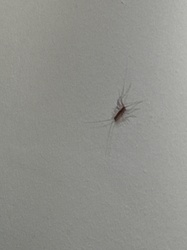
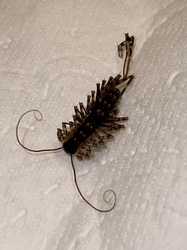
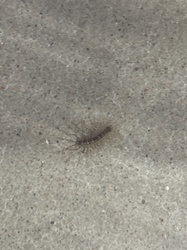
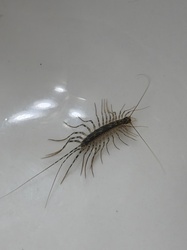
Other bugs you may enjoy
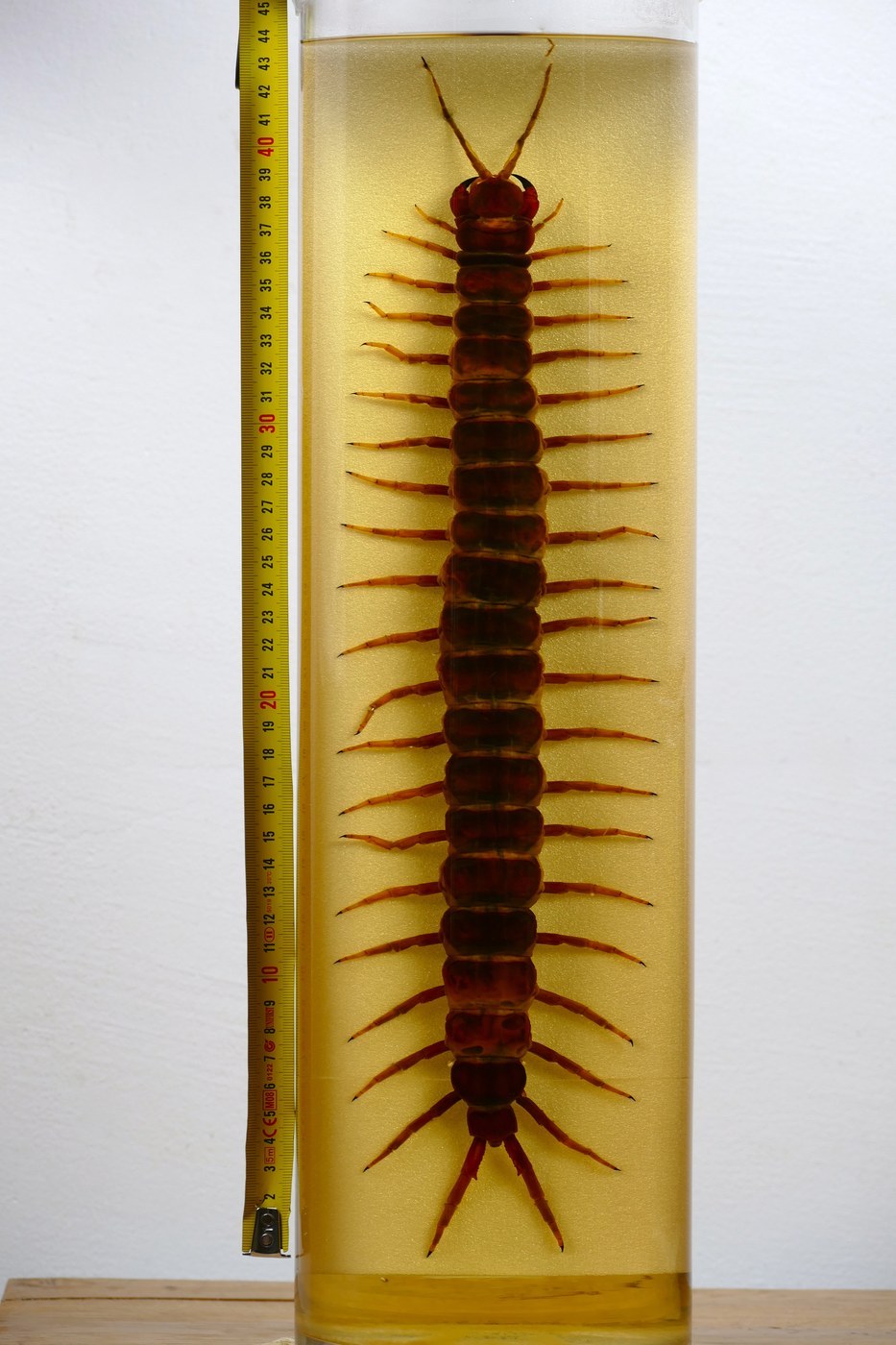
Amazonian Giant Centipede
Tropical rainforests and caves of northern South America and nearby Caribbean islands
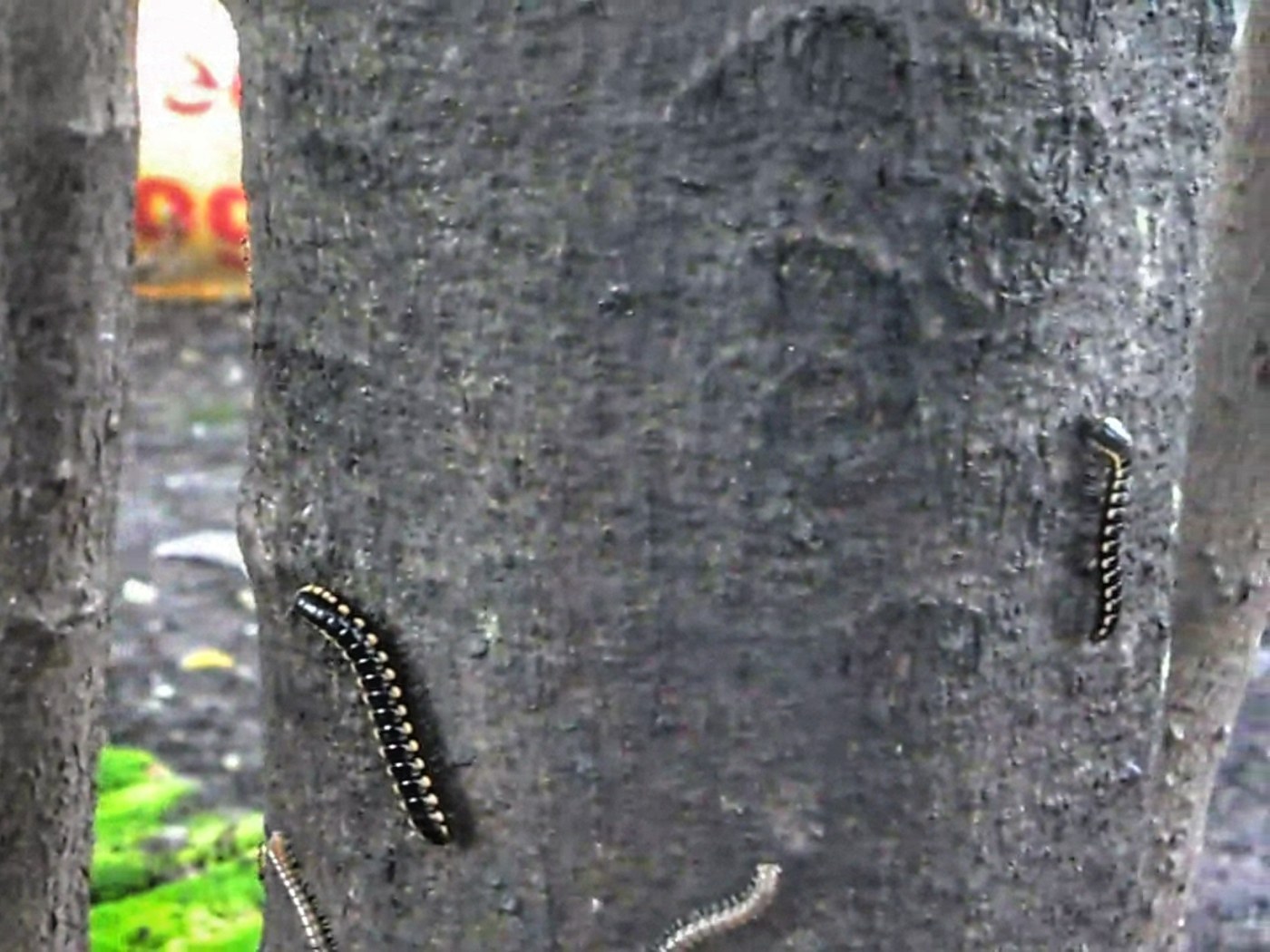
Yellow-spotted Millipede
Moist coniferous and mixed forests of the Pacific Northwest
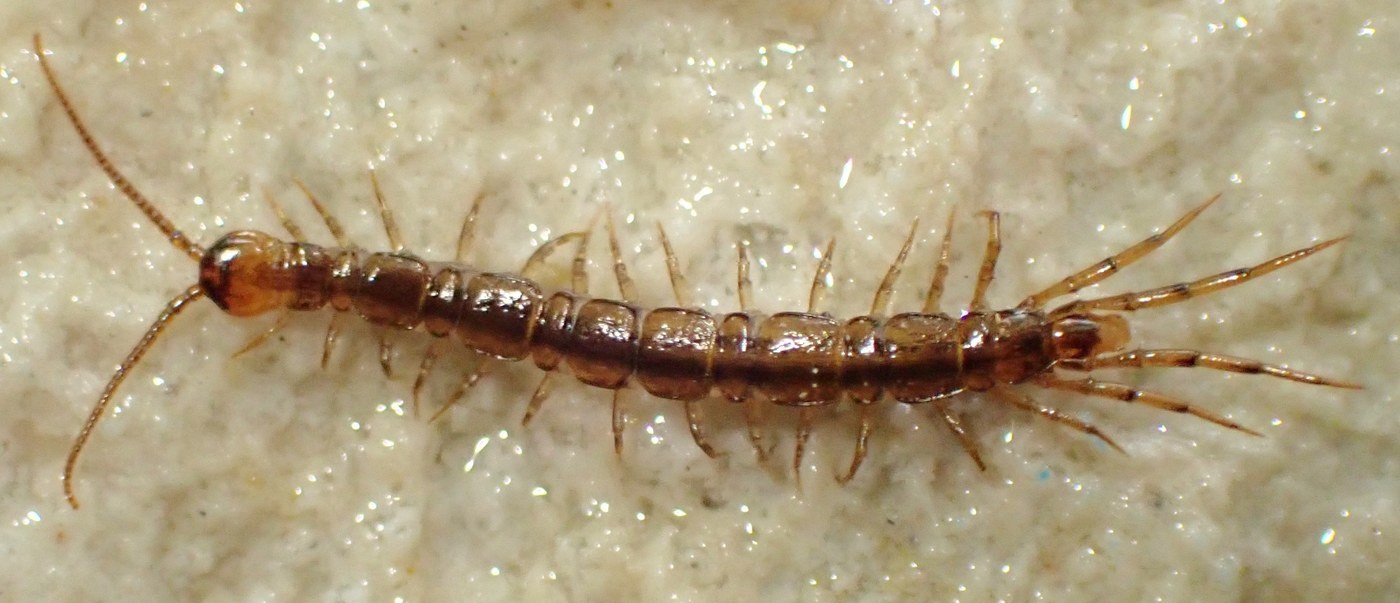
Stone Centipede
Under stones, bark, and soil in gardens and woodlands
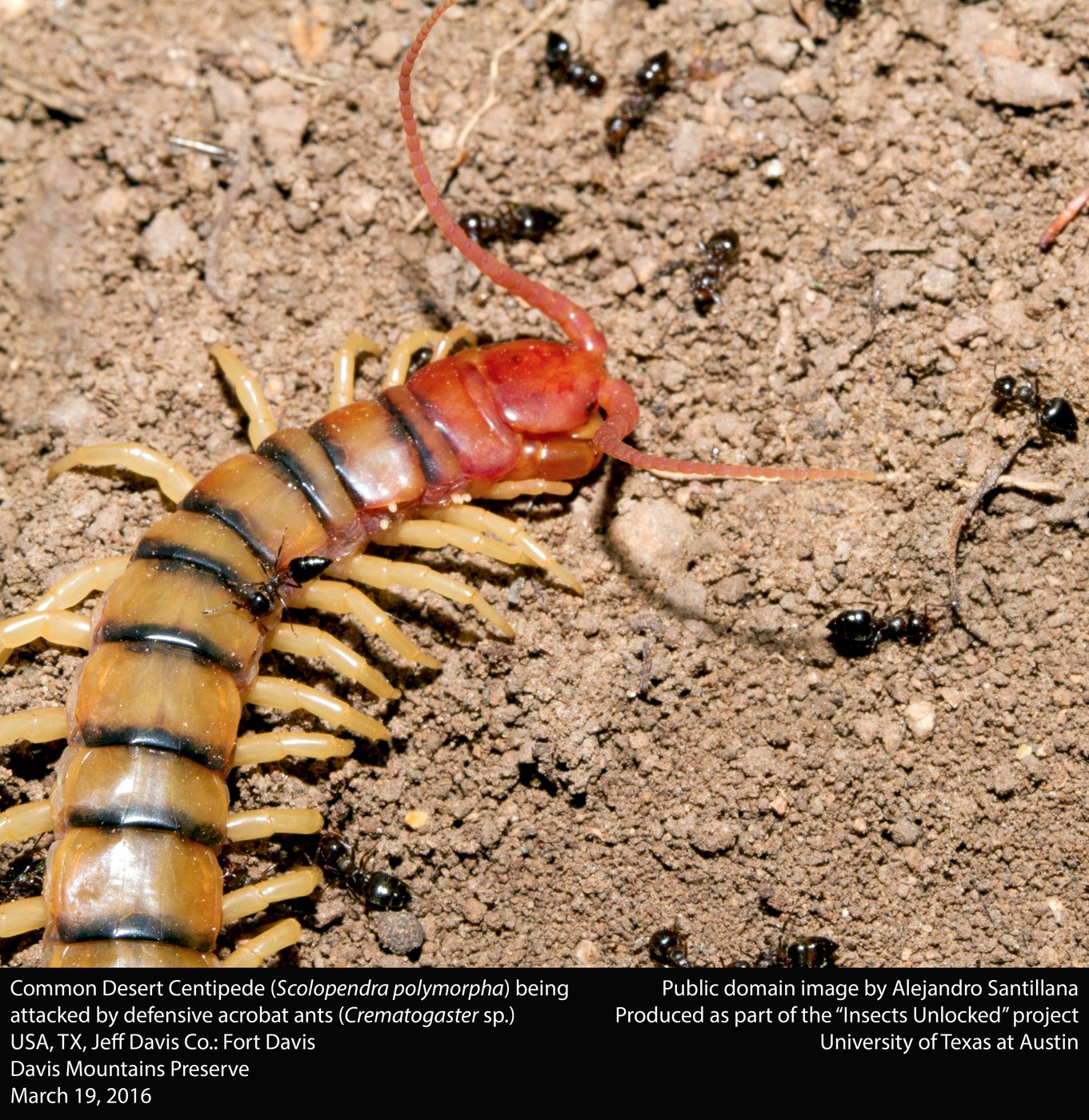
Tiger Centipede
Arid deserts, scrubland, and rocky terrain of the southwestern US and Mexico
Pill Millipede
Leaf litter, forest floors, and moist soil in temperate and tropical regions
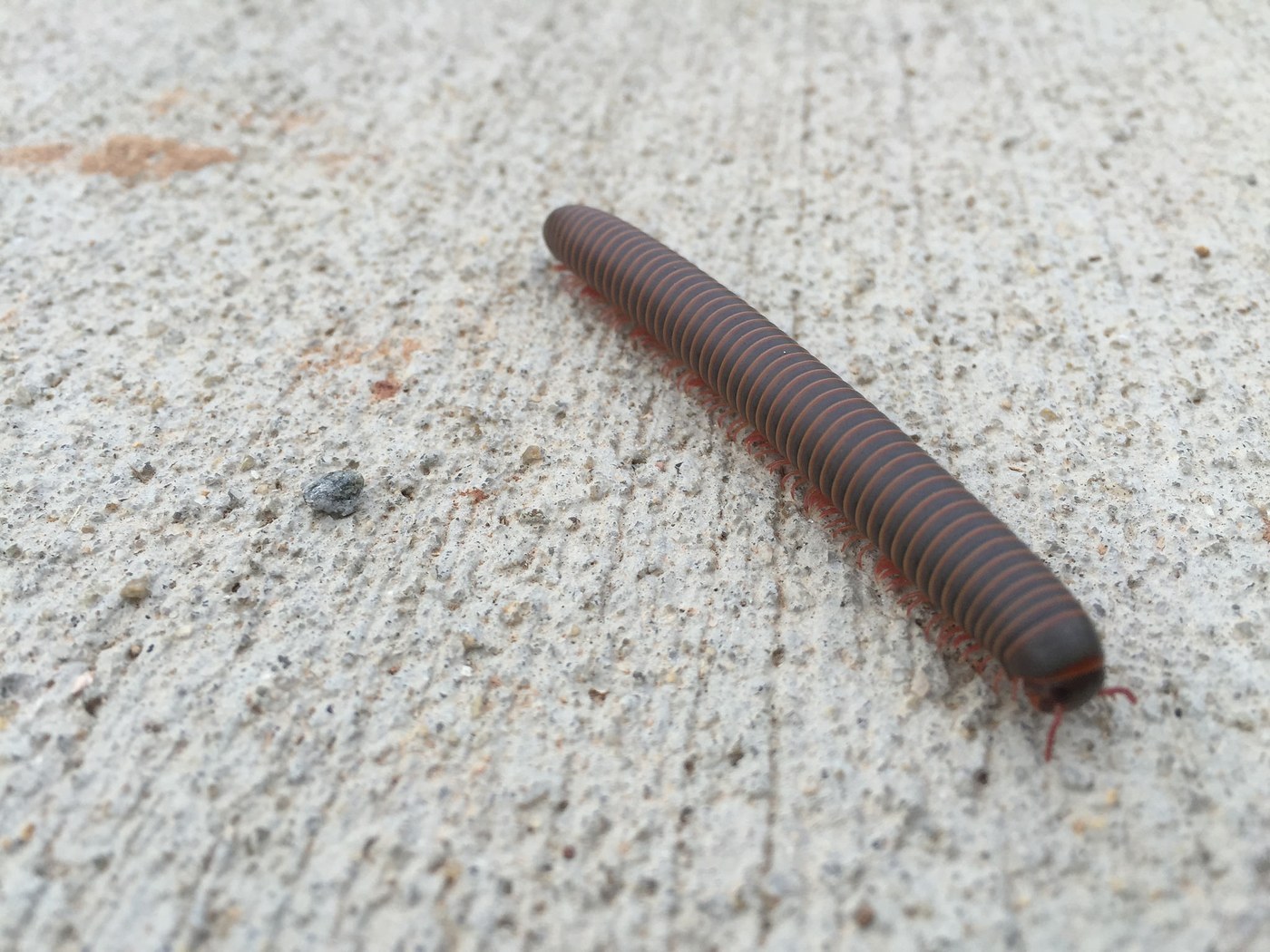
Millipede
Leaf litter, mulch, damp soil, and under logs, bark, and stones
Soil Centipede
Deep soil, leaf litter, and decaying wood
Snake Millipede
Moist soil, leaf litter, and decaying plant material
Flat-backed Millipede
Leaf litter, mulch, and damp soil in gardens and woodlands
Giant Centipede
Tropical, subtropical, and warm temperate forests, deserts, and grasslands worldwide
Giant African Millipede
Tropical forests and moist lowlands of East Africa
Centipede
Damp, dark places such as basements, bathrooms, leaf litter, and under rocks and logs