Hoverfly Identification Guide
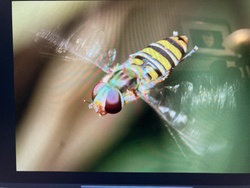
Identify a hoverfly by its wasp-like yellow-and-black banding and its unmistakable hovering flight.
Read the full Hoverfly encyclopedia entry →Key Visual Features
Hoverflies mimic the coloring of wasps and bees but have distinct fly features once you know what to look for.
- Size: Varies by species, generally 8 to 15 mm in body length.
- Body shape: Slender to moderately stout body, often narrower at the waist than a bee but without the pinched wasp waist.
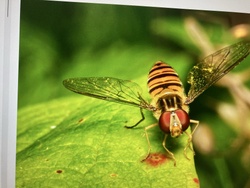
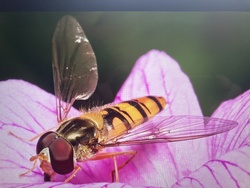
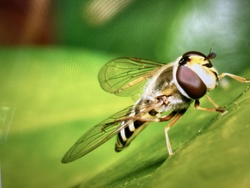
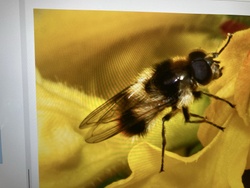
- Color: Yellow-and-black or orange-and-black banding across the abdomen, closely resembling wasps or bees as a form of mimicry.
- Wings: One pair of clear wings — the defining trait separating them from true wasps and bees, which have two pairs.
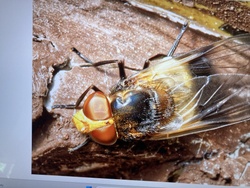
- Eyes: Large compound eyes that often nearly meet at the top of the head, giving a distinctive rounded-head look.
- Antennae: Short, stubby antennae, much shorter than the long antennae typical of bees and wasps.
Where and When You'd See One
Hoverflies are common visitors to gardens and flowering areas.
- Found around flowers, gardens, meadows, and areas with abundant blooming plants
- Known for their ability to hover motionless in midair before darting quickly to a new spot
- Most active during warm, sunny days from spring through fall
- Often seen close to flower heads, feeding at blossoms
Similar-Looking Bugs
- Bees have four wings, longer antennae, and a fuzzier body, and do not hover with the same still, stationary precision as a hoverfly.
- Wasps have a narrow pinched waist and four wings, while hoverflies have a single pair of wings and a less constricted waist.
- Yellowjackets show a similar yellow-and-black pattern but have a much narrower waist and longer, bent antennae compared to a hoverfly.
- House flies lack the yellow-and-black banding and are generally a dull gray color throughout.
Quick ID Checklist
- Single pair of clear wings (versus two pairs in bees and wasps)
- Yellow-and-black or orange-and-black banded abdomen
- Ability to hover motionless in midair
- Short, stubby antennae
- Found actively visiting flowers in gardens or meadows
Frequently asked questions
How can I tell a hoverfly from a wasp?
Hoverflies have a single pair of wings and short antennae, while wasps have two pairs of wings, a narrow pinched waist, and longer antennae.
Why do hoverflies look like bees or wasps?
Their yellow-and-black banding mimics the coloring of stinging insects, which is a form of visual mimicry, even though hoverflies are true flies.
What is the easiest behavior to spot a hoverfly by?
Their ability to hover perfectly still in midair before darting quickly away is a distinctive behavior not typically seen in bees or wasps.
Where are hoverflies commonly found?
They are frequently seen around flowers, gardens, and meadows, feeding at blossoms on warm, sunny days.
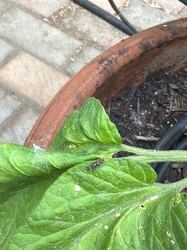
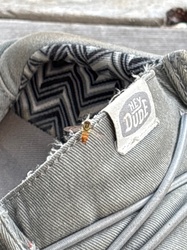
Hoverfly identified by the community
Recent Hoverfly finds identified with Bug Identifier.