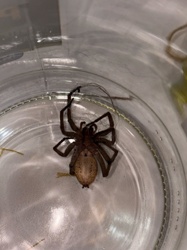
Huntsman Spider Identification Guide
Identify this large, flat-bodied spider by its crab-like sideways leg posture and fast, scuttling movement.
Read the full Huntsman Spider encyclopedia entry →Key Visual Features
Huntsman spiders stand out for their size and distinctive leg arrangement:
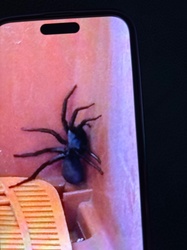
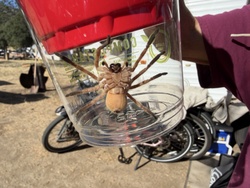
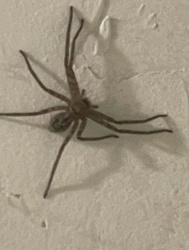
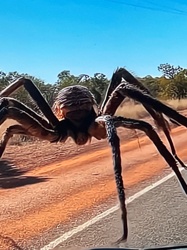
- A large leg span, often 4 to 5 inches or more in bigger species, but with a notably flattened, less bulky body compared to tarantulas
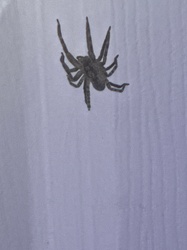
- Legs that extend outward and twist forward in a crab-like posture, rather than the more vertical leg arrangement of many other spiders
- A flattened body shape that lets them squeeze into narrow gaps such as bark crevices or wall cracks
- Coloring generally in greys, browns, or tans, sometimes with subtle banding on the legs
- Relatively long legs compared to the body, covered in fine hairs but not as densely furred as a tarantula
- Eyes arranged in two rows across the front of the head
Where and When You'd See It
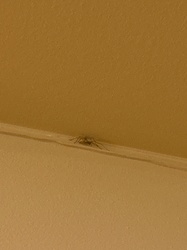
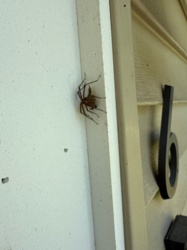
Huntsman spiders favor spots like tree bark, under loose bark, rock crevices, and sometimes the walls or ceilings of sheds, garages, and homes, particularly in warmer climates. They are active hunters rather than web builders, and are most often seen at night or when disturbed from a daytime hiding spot. Their fast, sideways-scuttling movement is often the first thing people notice.
Similar-Looking Bugs
- Wolf spiders have a more upright leg posture and a stockier, hairier body, and they carry egg sacs attached to their spinnerets, a behavior not shown by huntsman spiders.
- Tarantulas are bulkier and more densely hairy, with thicker legs and slower, more deliberate movement compared to a huntsman's quick scuttle.
- Fishing spiders have a similar flattened build and long legs but are usually found near water and often have paler stripes running down the body.
Quick ID Checklist
- Flattened body with a wide, crab-like leg stance
- Very fast, sideways scuttling movement
- Large leg span relative to a slim body
- No web present — an active hunter, not a trap builder
- Found on bark, in crevices, or on walls/ceilings
Frequently asked questions
What movement pattern helps identify a huntsman spider?
Its fast, sideways, crab-like scuttle combined with legs that curve forward from a flattened body is a strong identifying behavior distinct from most other large spiders.
How is a huntsman different from a tarantula?
Huntsman spiders have a flatter body, less dense hair, and faster movement, while tarantulas are bulkier, more heavily furred, and move more slowly.
Does a huntsman spider build a web?
No, huntsman spiders are active hunters that chase down prey rather than relying on a web to trap it.
Where indoors are huntsman spiders typically found?
They are often seen on walls or ceilings, particularly in garages, sheds, or homes in warmer climates, having wandered in from bark or crevices outside.
Huntsman Spider identified by the community
Recent Huntsman Spider finds identified with Bug Identifier.