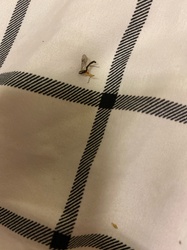
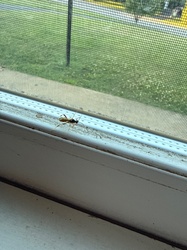
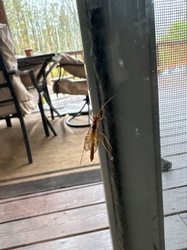
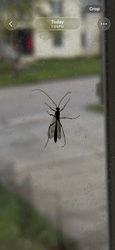
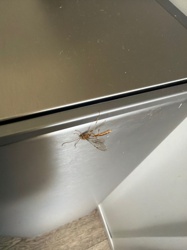
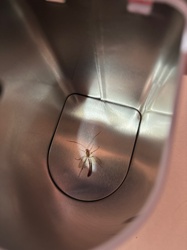
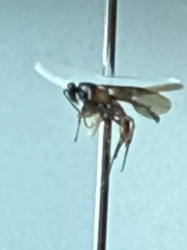
Ichneumon Wasp Identification Guide
Identify these slender, long-antennaed wasps, some sporting an extra-long egg-laying tail, that patrol gardens and woodlands for hosts.
Read the full Ichneumon Wasp encyclopedia entry →Key Visual Features
Ichneumon wasps form one of the largest wasp families, with enormous variation, but several traits recur across most species.
- Size: Ranges widely from about 8 mm to over 40 mm depending on species, generally slimmer and often longer-bodied than similarly sized wasps.
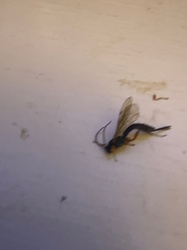
- Color: Highly variable — solid black, black with orange or red patches, or black-and-yellow banding; wing color can range from clear to smoky brown or amber.
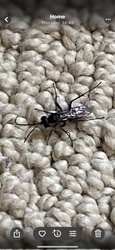
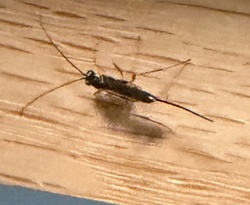
- Body shape: Slender, elongated, with a narrow waist and a smoothly tapering abdomen that often curves slightly.
- Wings: Membranous and often held flat or slightly angled over the back; larger species show more visible wing venation.
- Legs: Long and thin, proportionate to the elongated body.
- Antennae: A hallmark feature — long, thread-like, and often as long as or longer than the entire body, held forward and constantly probing.
- Ovipositor: In many species a slender, needle-like egg-laying tube extends from the abdomen tip, in some species several times the length of the body.
Where and When You'll See One
Ichneumon wasps are found wherever their insect and spider hosts occur.
- Look on tree bark, dead wood, and leaf litter, where females probe with their long antennae and ovipositor searching for hidden host larvae.
- Common in gardens, woodlands, and meadows, especially around flowering plants where adults feed on nectar.
- Active from spring through fall, with many species most visible on warm, still days.
- Species with extremely long ovipositors are often seen drilling into dead or decaying wood, searching for wood-boring beetle larvae beneath the surface.
Similar-Looking Bugs
- Braconid wasps: Closely related and similar in shape but generally smaller, with shorter antennae relative to body length and simpler wing venation.
- Spider wasps: Have a similarly slender build but shorter antennae and long, spiny legs adapted for hunting spiders on the ground rather than probing wood or foliage.
- Sawflies: Lack the constricted wasp waist entirely, giving them a more continuous, uninterrupted body outline.
- Giant ichneumon look-alikes vs. horntails: Horntails (wood wasps) have a thick, cylindrical, non-constricted body, unlike the ichneumon's narrow waist.
Quick ID Checklist
- Slender body with a narrow waist and long, tapering abdomen
- Antennae as long as or longer than the body, held forward
- Highly variable coloring, from solid black to orange-and-black patterns
- Sometimes shows an extremely long, thread-like ovipositor at the rear
- Found probing bark, dead wood, or foliage rather than building a nest
Frequently asked questions
What is the long thread trailing behind some ichneumon wasps?
That thread-like structure is the ovipositor, an egg-laying tube some females use to reach hidden host larvae inside wood or plant tissue; it is not a stinger in the way people usually imagine.
How do I tell an ichneumon wasp from a braconid wasp?
Ichneumon wasps are typically larger with proportionally longer antennae, and their wing venation is generally more complex than that of the smaller-bodied braconids.
Why does the wasp keep tapping its antennae on wood or bark?
Females use their long antennae to detect vibrations and chemical cues from host insect larvae hidden beneath the surface before attempting to lay an egg.
Do all ichneumon wasps have a long ovipositor?
No, ovipositor length varies enormously between species; some have short, barely visible ovipositors while others have ones several times the length of their body.
Ichneumon Wasp identified by the community
Recent Ichneumon Wasp finds identified with Bug Identifier.