Imperial Moth Identification Guide
Learn to recognize this large yellow-and-purple silk moth by its wing pattern, size, and seasonal appearance.
Read the full Imperial Moth encyclopedia entry →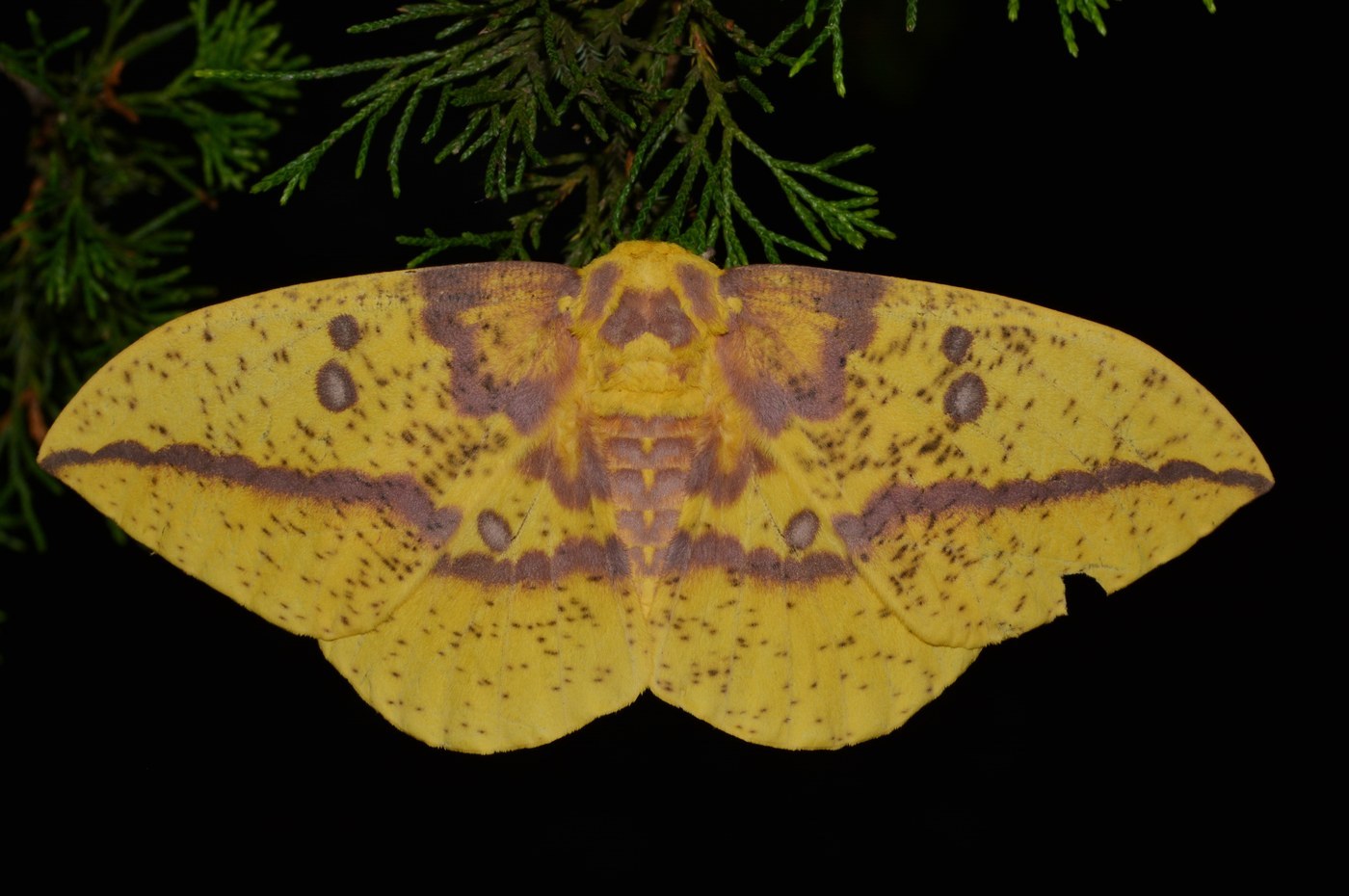
Key Visual Features
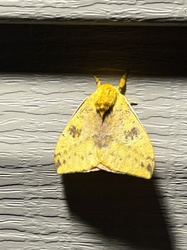
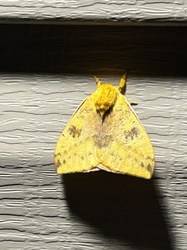
The Imperial Moth is one of the largest moths in North America, with a wingspan that typically runs 3 to 7 inches (7.5 to 18 cm). Its coloring is highly variable but usually shows:
- Rich yellow wings splashed with irregular patches, streaks, and speckles of reddish-purple or rusty brown
- A stout, furry body covered in yellow and purple-pink "hair"-like scales
- Broad, rounded forewings and hindwings, each with a small, faint eyespot near the outer margin
- Feathery, comb-like (bipectinate) antennae, more pronounced in males
- Short, thick legs partly hidden by body fur
- Males tend to have more purple/brown shading overall, while females are often paler and more yellow
At rest, the wings are held flat and outstretched or slightly tented, showing off the full pattern rather than folding tightly like some other moths.
Where and When You'll See It
Imperial Moths range across much of the eastern and central United States, into southern Ontario, and south into parts of Mexico and Central America. They favor deciduous and mixed woodlands, parks, and suburban areas with mature trees such as oak, maple, pine, and sweetgum. Adults are nocturnal and strongly attracted to porch lights and streetlights, so most sightings happen at night in summer, roughly June through September depending on latitude (further south, there may be two generations). During the day, the resting adults blend remarkably well with dead leaves or bark.
Similar-Looking Moths
- Regal Moth (Hickory Horned Devil's adult form): Also large, but the Regal Moth has more gray-orange wings with distinct yellow spots and a more angular wing shape, lacking the Imperial Moth's soft mottled purple wash.
- Other giant silk moths (Saturniidae): Luna and Polyphemus moths have prominent eyespots and green or brown coloring rather than yellow-and-purple mottling, making them easy to rule out.
- Sphinx moths: Have narrower, more triangular wings and streamlined bodies, lacking the Imperial Moth's fluffy, robust build.
Quick ID Checklist
- Very large moth (3–7 inch wingspan) with a heavy, furry body
- Yellow base color mottled with purple-brown patches and speckles
- Faint small eyespots on both wing pairs
- Feathery antennae, more feathered in males
- Seen at night near lights in summer, in wooded or suburban settings
Frequently asked questions
How can I tell a male from a female Imperial Moth?
Males usually show more extensive purple-brown shading across the wings and have noticeably broader, feathery antennae, while females tend to be paler yellow with less purple and thinner antennae.
What time of year are Imperial Moths most commonly seen?
Adults are most often spotted from late spring through early fall, generally June to September, with timing varying by region and sometimes producing two generations in warmer southern areas.
Why do Imperial Moths look so different from one individual to the next?
The species shows a wide range of natural variation in how much purple-brown patterning covers the yellow wings, so two individuals from the same area can look quite different while still being the same species.
Where is the best place to look for an Imperial Moth?
Check porch lights, streetlights, and building exteriors near deciduous or mixed woodlands after dark, since adults are strongly nocturnal and drawn to artificial light sources.
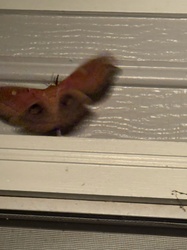
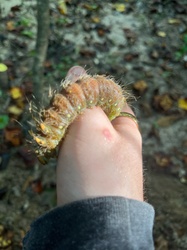
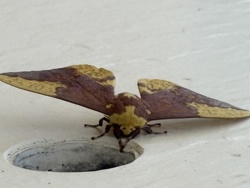
Imperial Moth identified by the community
Recent Imperial Moth finds identified with Bug Identifier.