
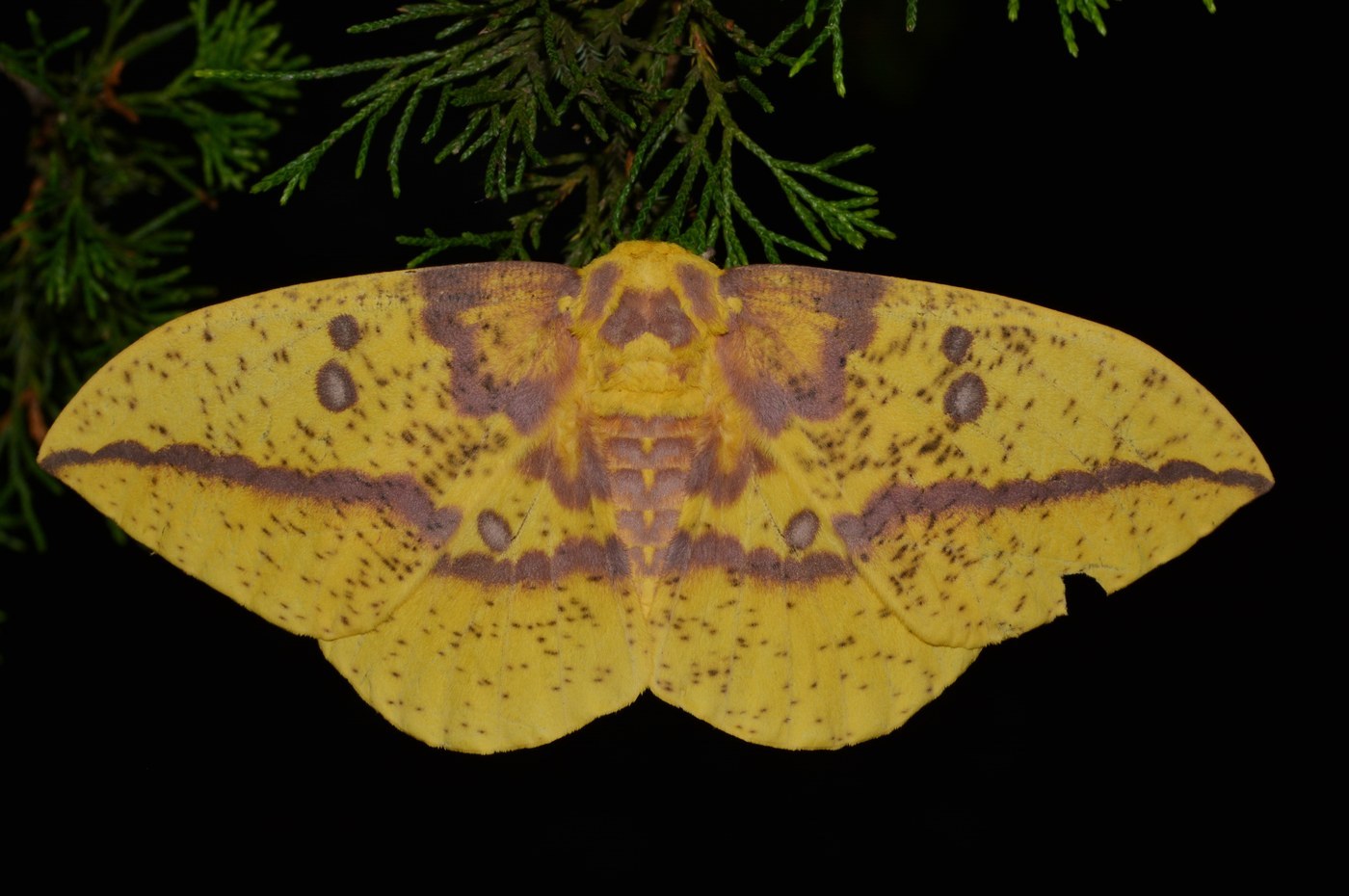
Imperial Moth
Eacles imperialis
One of the largest and most variably patterned silk moths in North America, with broad yellow wings mottled in shades of purple, brown, and pink, and a caterpillar that can grow to impressive size on a wide range of forest trees.
- Size
- 3–7 in wingspan
- Habitat
- Deciduous and mixed forest, woodland edges
- Danger
- Harmless
Spotted a bug like this?
Identify any bug or insect from a photo, free.
Overview
The imperial moth is a member of the giant silk moth family (Saturniidae), a group known for some of the largest and most spectacular moths in the world. It is native to eastern and central North America and is notable both for its large size and for the considerable variation in wing color and pattern seen among individuals, ranging from nearly all yellow to heavily mottled with purple-brown shading.
Like other giant silk moths, adults lack functional mouthparts and do not feed at all, living only long enough to mate and lay eggs on stored energy reserves from the larval stage. This gives adults a very short lifespan, typically just a matter of days, focused entirely on reproduction.
The species is ecologically significant as one of the larger insect herbivores in eastern forests, with its caterpillars feeding on the foliage of numerous common tree species and its adults serving as a food source for nocturnal predators such as bats and owls.
How to Identify
- Broad, rounded wings in yellow, often mottled or shaded with purple-brown, pink, or rust-colored patches; pattern intensity and extent vary considerably between individuals.
- Large, heavy-bodied moth with a wingspan commonly reaching 3 to 5 inches and occasionally up to 7 inches in large females.
- Feathery antennae, more pronounced in males, used to detect female pheromones.
- Caterpillar is large and variable in color from green to brown to nearly black, covered in short spines and long fine hairs, with a pair of prominent curved horn-like spines behind the head.
Habitat & Range
Found across eastern and central North America, from southern Canada through the eastern and southeastern United States, in deciduous and mixed forests, woodland edges, and wooded suburban areas. Adults are nocturnal, most active on warm summer nights, and are often attracted to outdoor lighting.
Behavior & Diet
Adults do not feed at all, having no functional mouthparts, and instead rely entirely on fat reserves built up during the caterpillar stage to survive the few days needed to locate a mate and reproduce. Females release pheromones at night to attract males, which use their large feathery antennae to detect scent from considerable distances. Caterpillars are generalist folivores, feeding on the leaves of many common trees including maple, oak, pine, and sweetgum, and can reach a large size before pupating.
Life Cycle
Eggs are laid on host tree foliage and hatch into caterpillars that feed and molt through five instars, growing substantially in size and often changing color as they mature. Fully grown larvae burrow into the soil to pupate without spinning a cocoon, an unusual trait among silk moths. The species overwinters as a pupa underground, with adults emerging in summer; there are one to two generations per year depending on latitude.
Frequently asked questions
Why do the wing patterns vary so much between individuals?
Wing coloration in this species ranges naturally from mostly plain yellow to heavily shaded with purple-brown mottling, a variation seen across the population rather than indicating different species.
Does the adult moth eat anything?
No, adults have no functional mouthparts and do not feed; they live only a short time on energy reserves stored during the caterpillar stage.
How big can the caterpillar get?
It can grow quite large and heavy-bodied before pupating, reflecting the substantial size of the adult moth it will become.
Does it pupate in a cocoon like other silk moths?
No, unlike many silk moths it pupates in an underground chamber in the soil rather than spinning an external cocoon.
Imperial Moth guides
In-depth guides for identifying, understanding, and living alongside Imperial Moth.
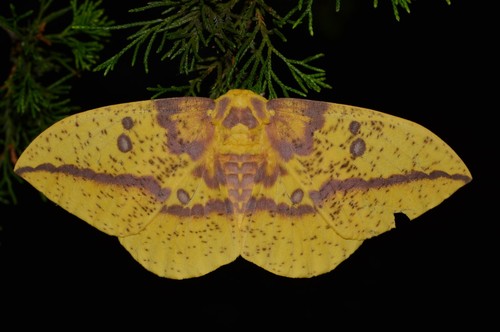
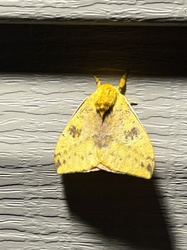
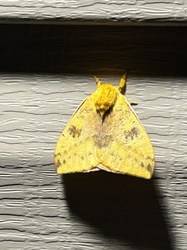
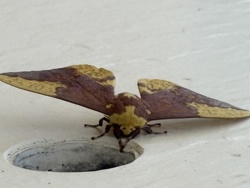
Imperial Moth identified by the community
Real finds identified with Bug Identifier.
Other bugs you may enjoy
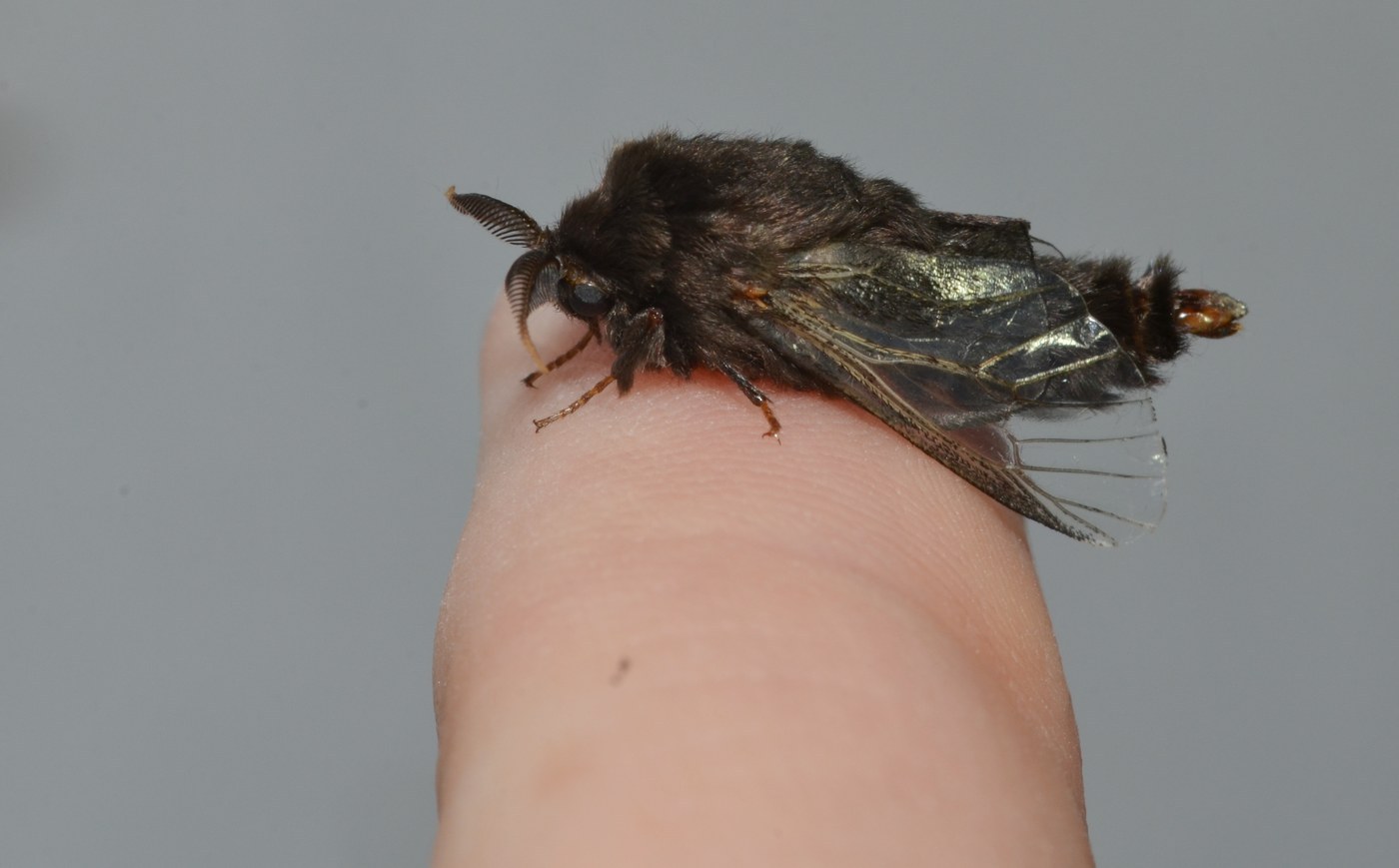
Bagworm Moth
Coniferous and deciduous trees, shrubs, hedges
Antheraea Silkmoth
Deciduous forests, woodland edges, orchards
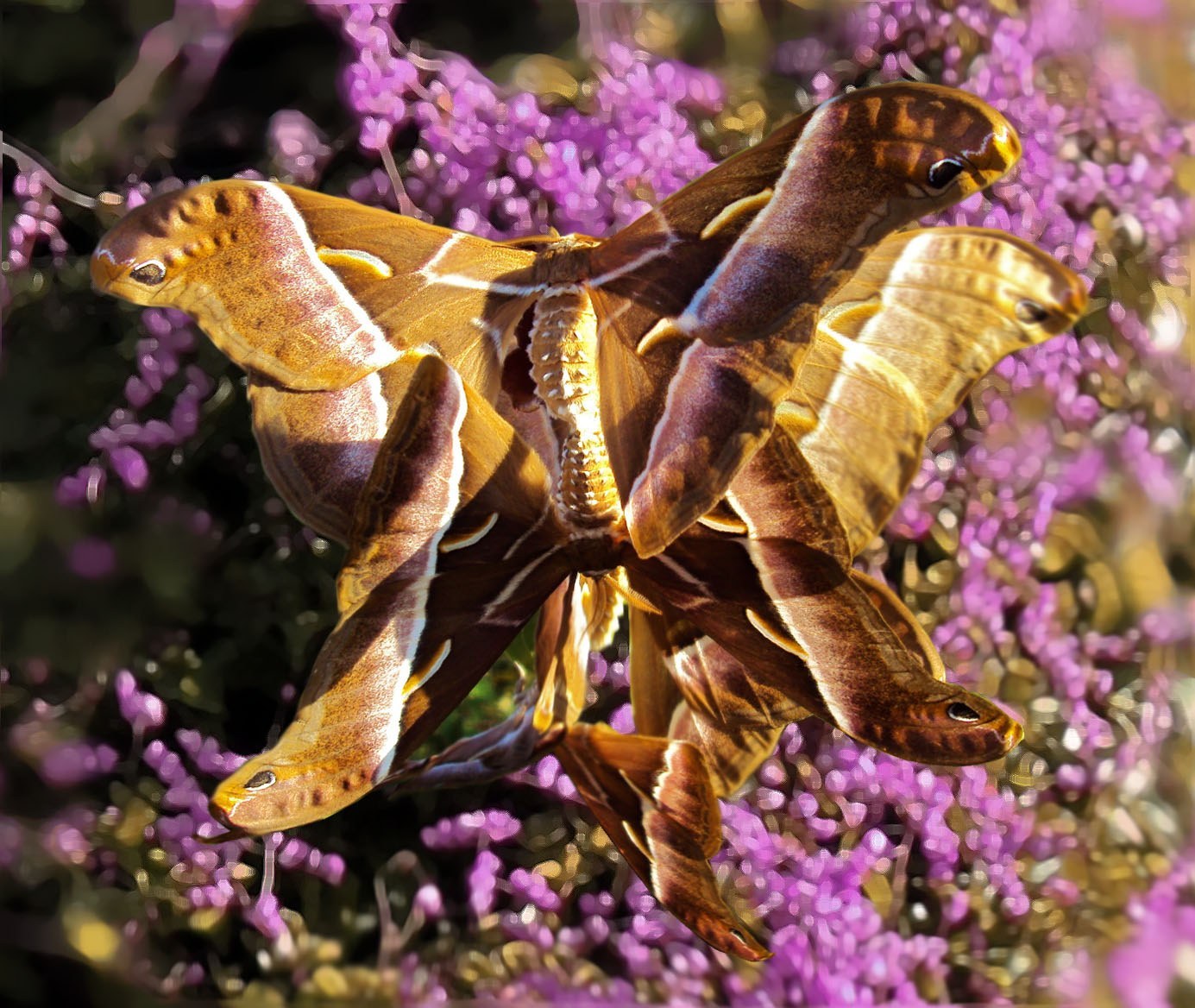
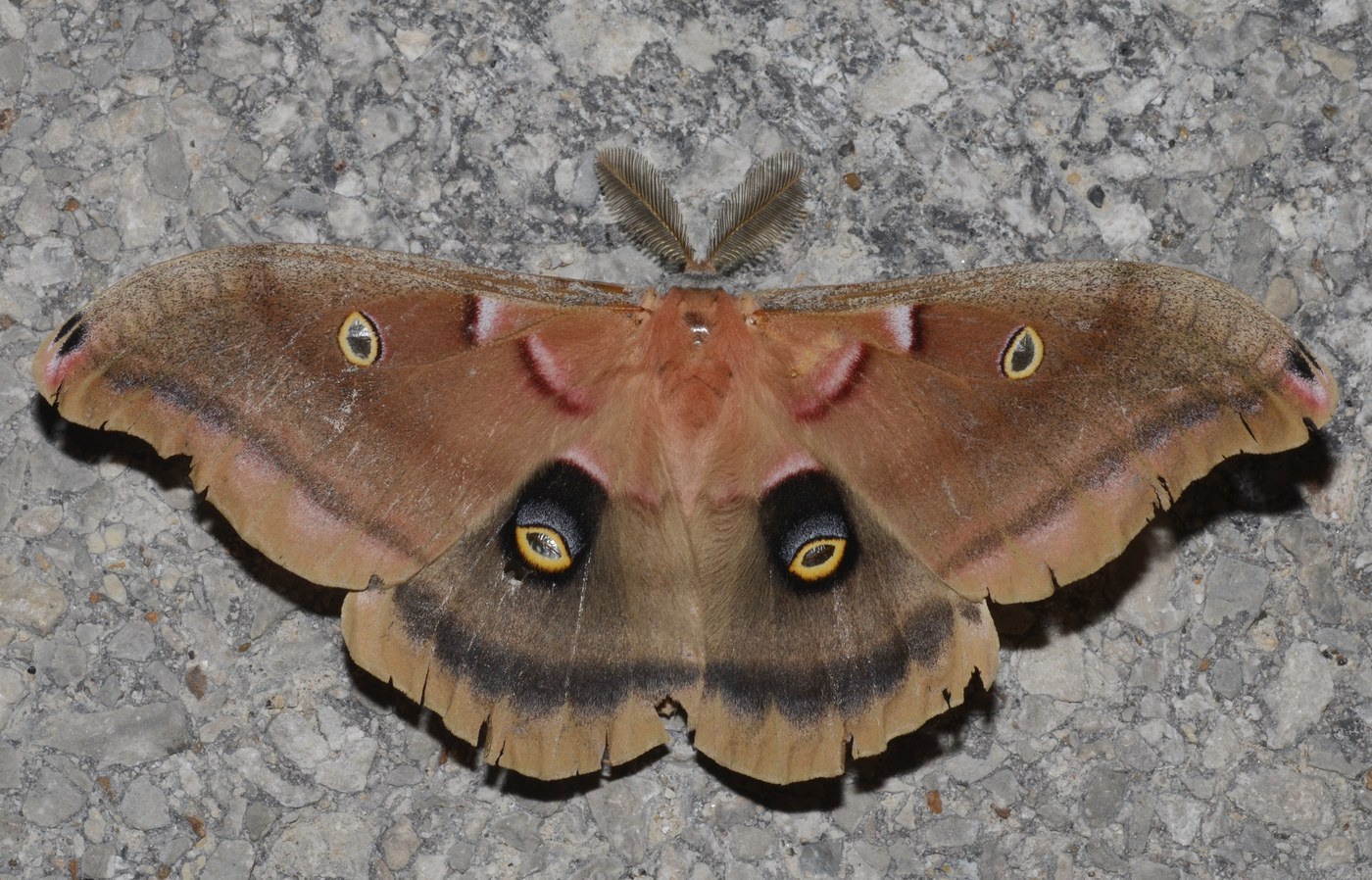
Ailanthus Silkmoth (Cynthia Moth)
Urban parks, wastelands, and woodland edges with tree-of-heaven; native to Asia, introduced in North America and Europe
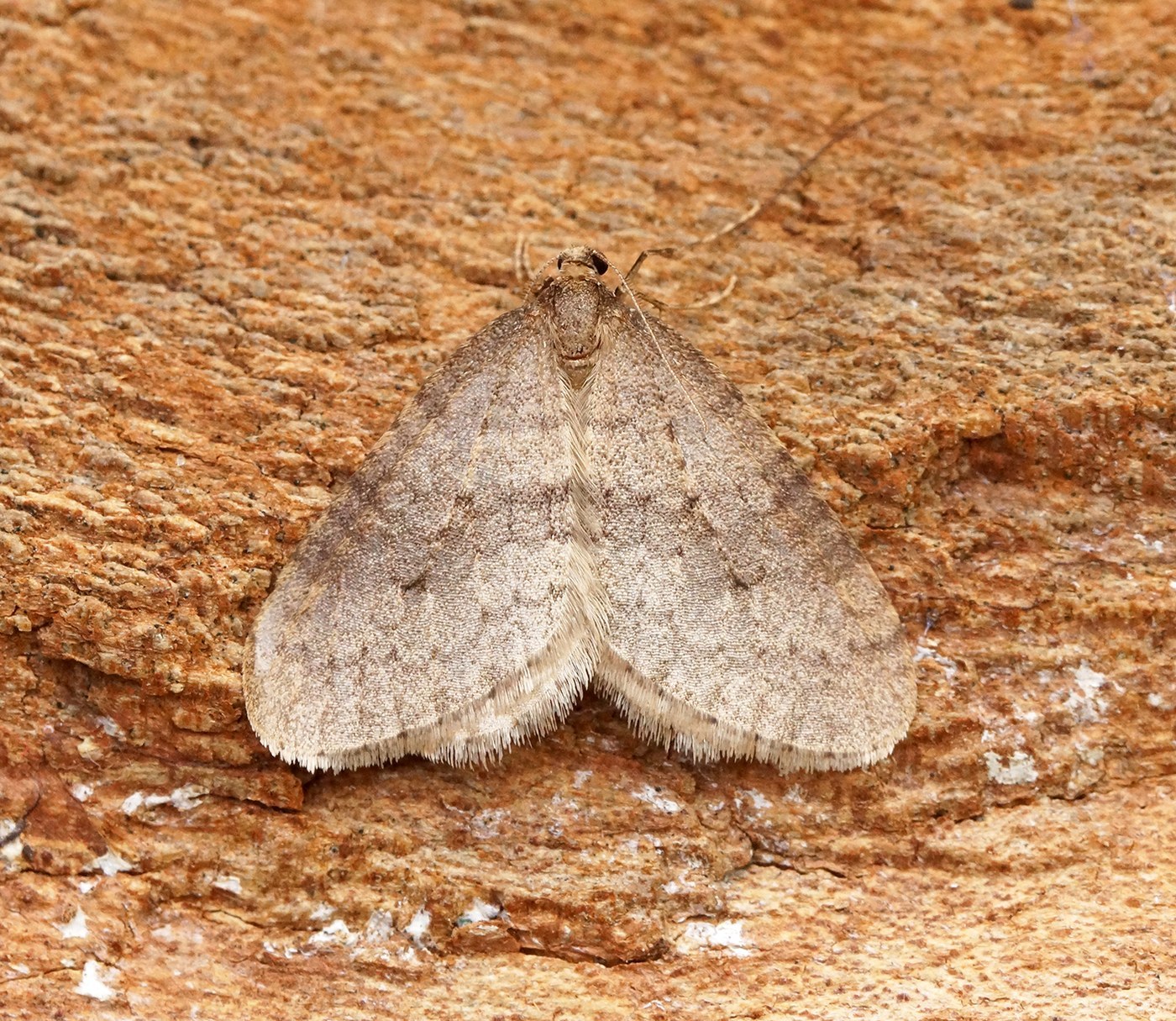
Winter Moth
Deciduous woodland, orchards, gardens, hedgerows
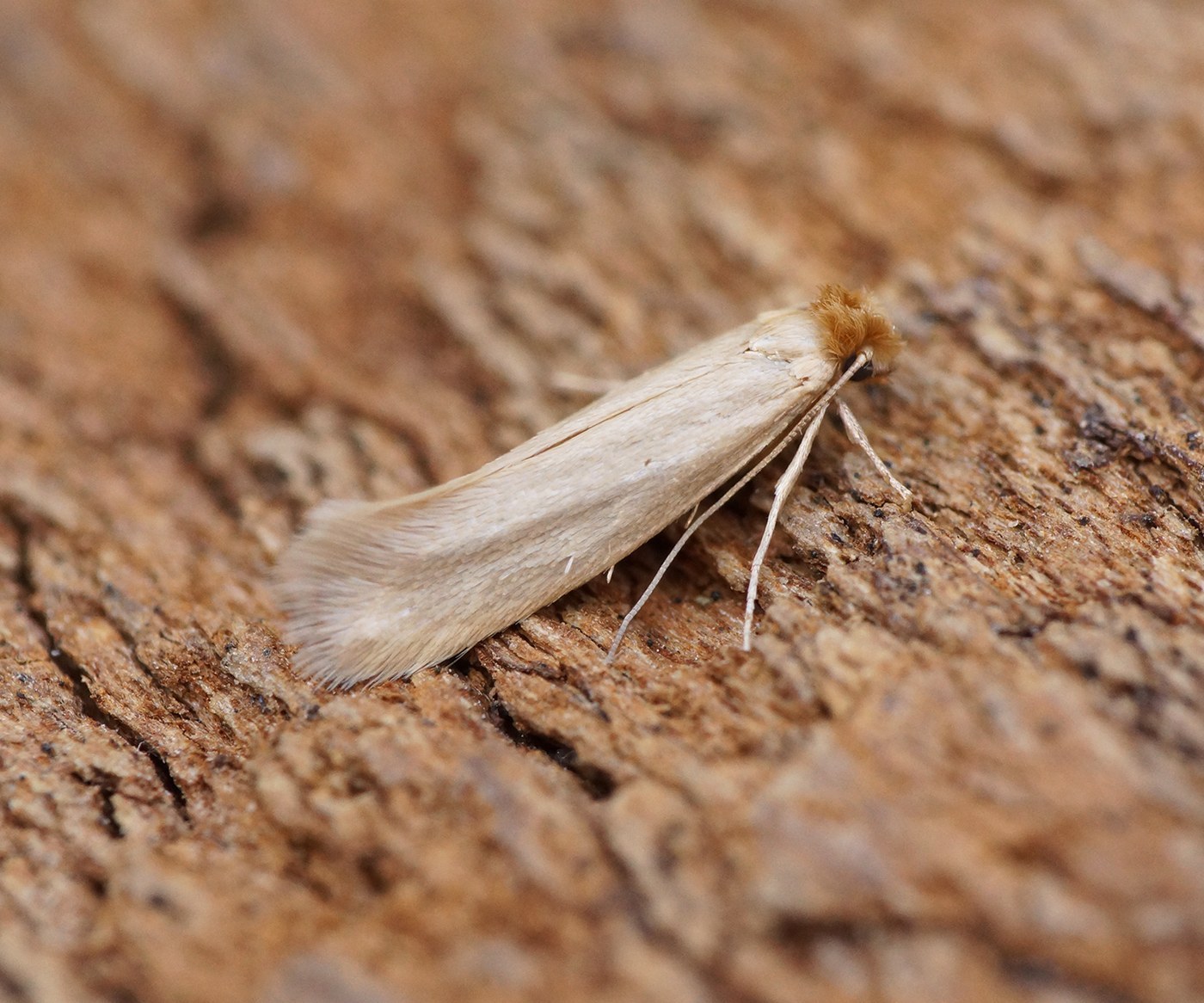
Webbing Clothes Moth
Dark closets, storage areas, and animal nests worldwide
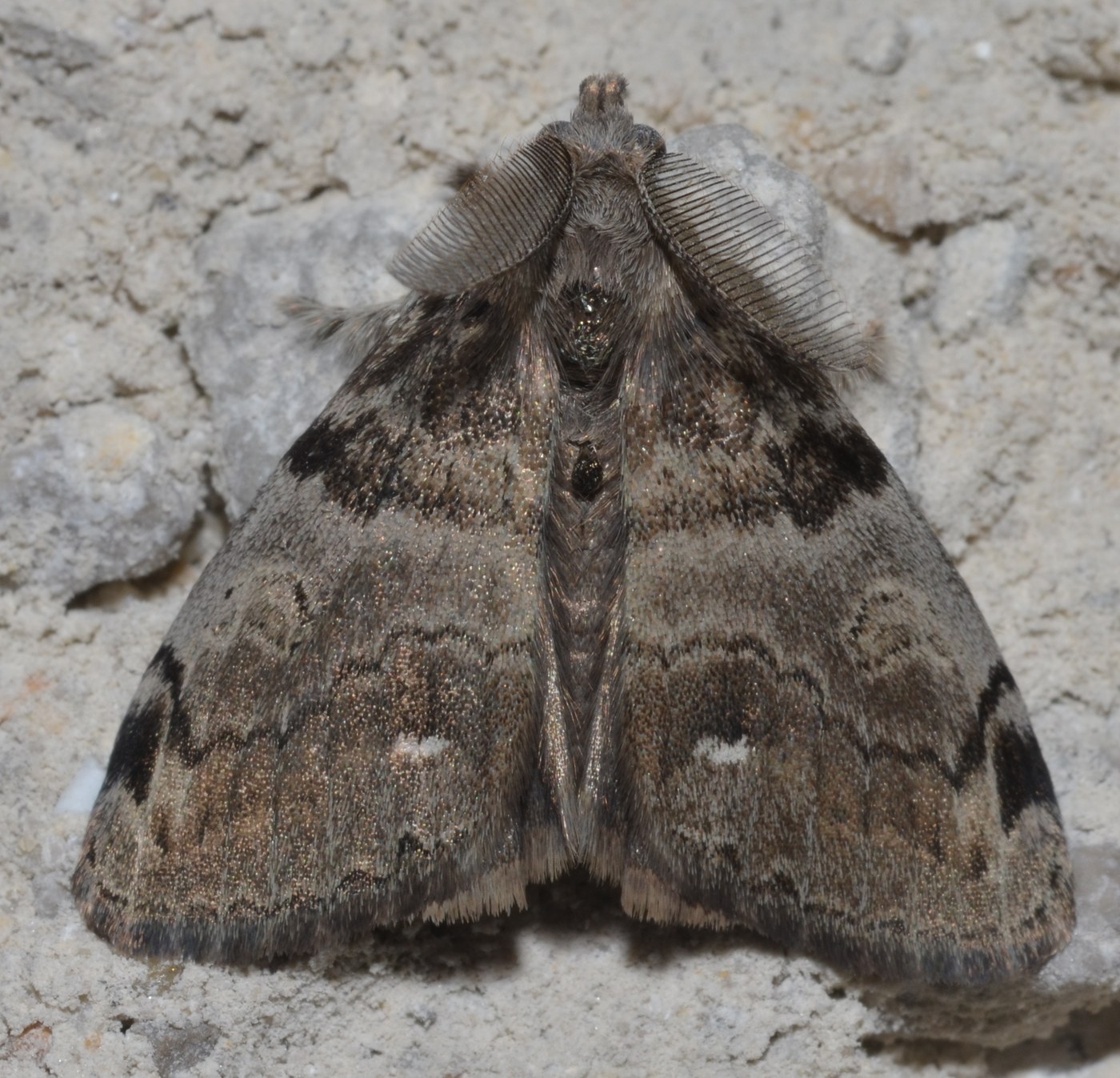
Tussock Moth
Deciduous forests, parks, gardens
Wax Moth
Beehives, apiaries, stored beeswax and comb
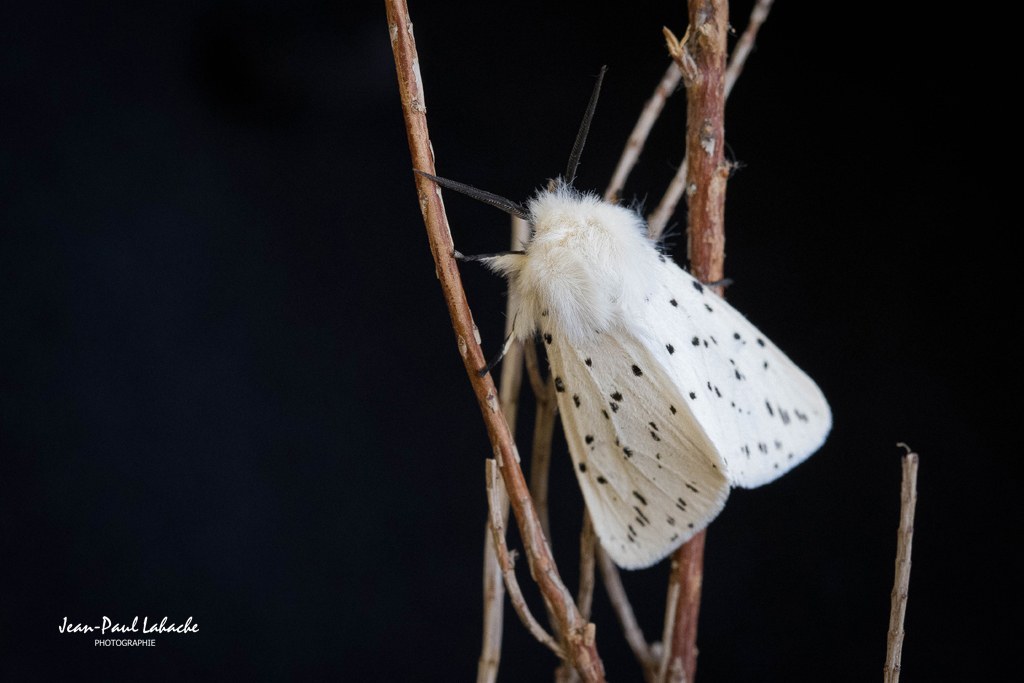
White Ermine Moth
Gardens, meadows, hedgerows
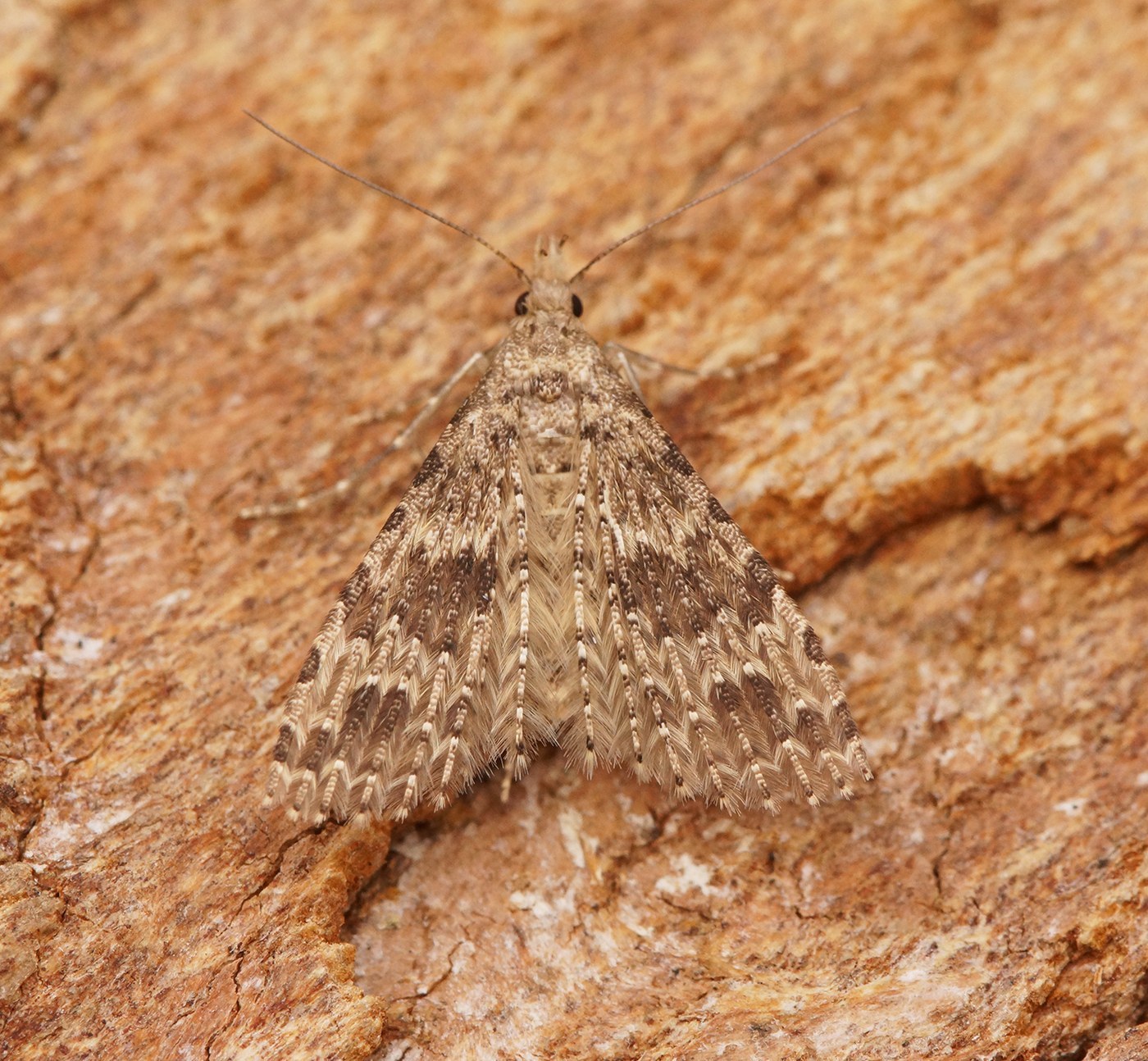
Twenty-plume Moth
Gardens, hedgerows, near honeysuckle
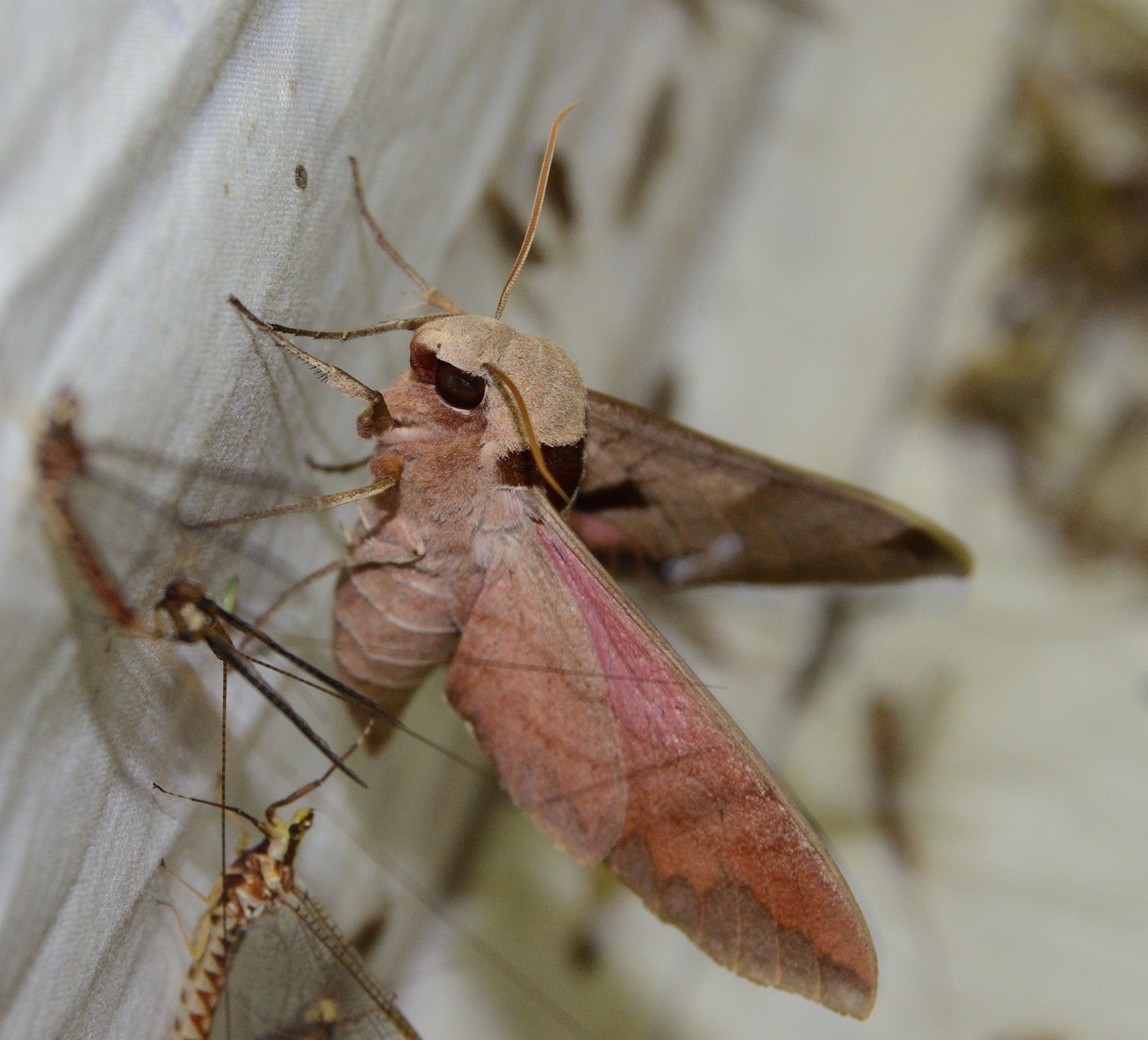
Achemon Sphinx Moth
Vineyards, woodland edges, gardens with wild grape
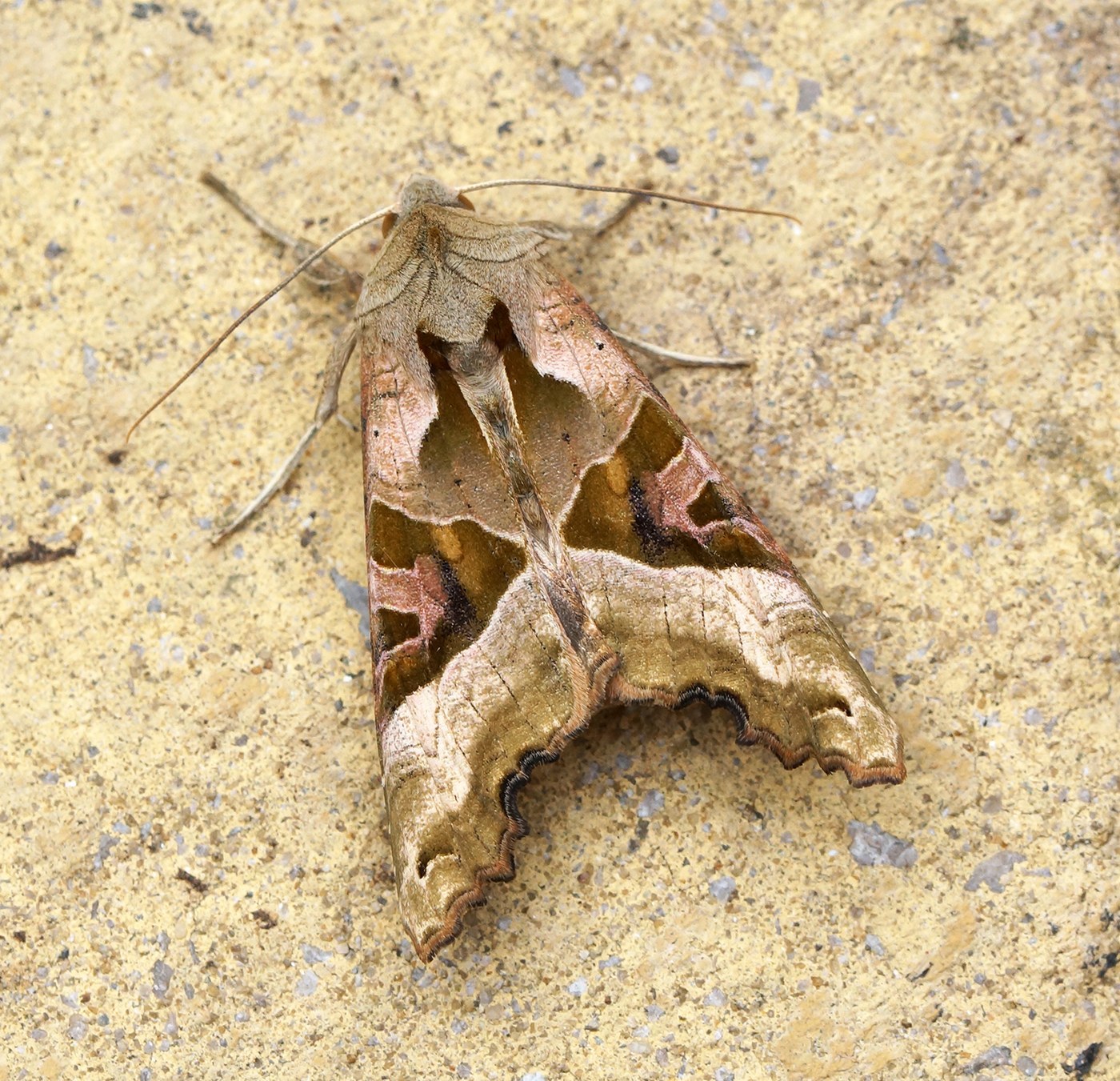
Angle Shades Moth
Gardens, hedgerows, woodland edges, urban parks
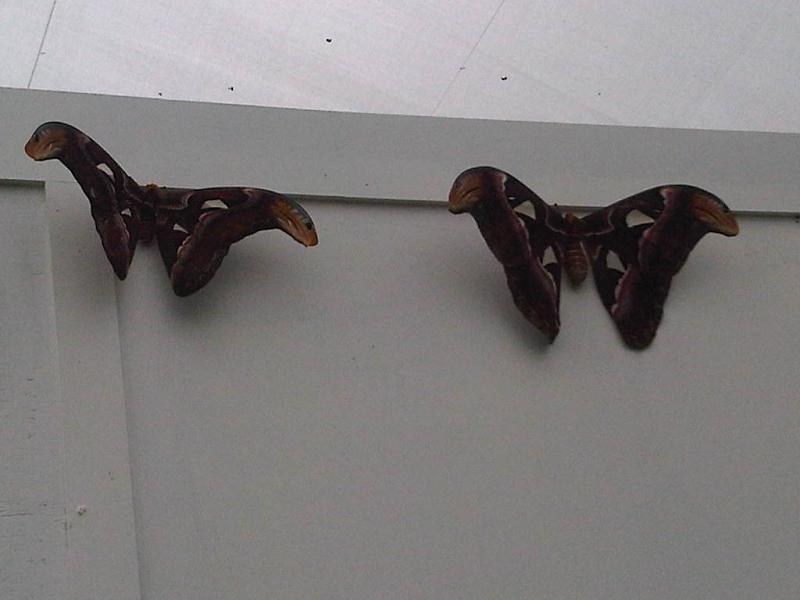
Atlas Moth
Tropical and subtropical lowland forests of Southeast Asia