Isabella Tiger Moth (Woolly Bear) Identification Guide
Recognize the banded woolly bear caterpillar and its plain orange-tan adult moth stage.
Read the full Isabella Tiger Moth (Woolly Bear) encyclopedia entry →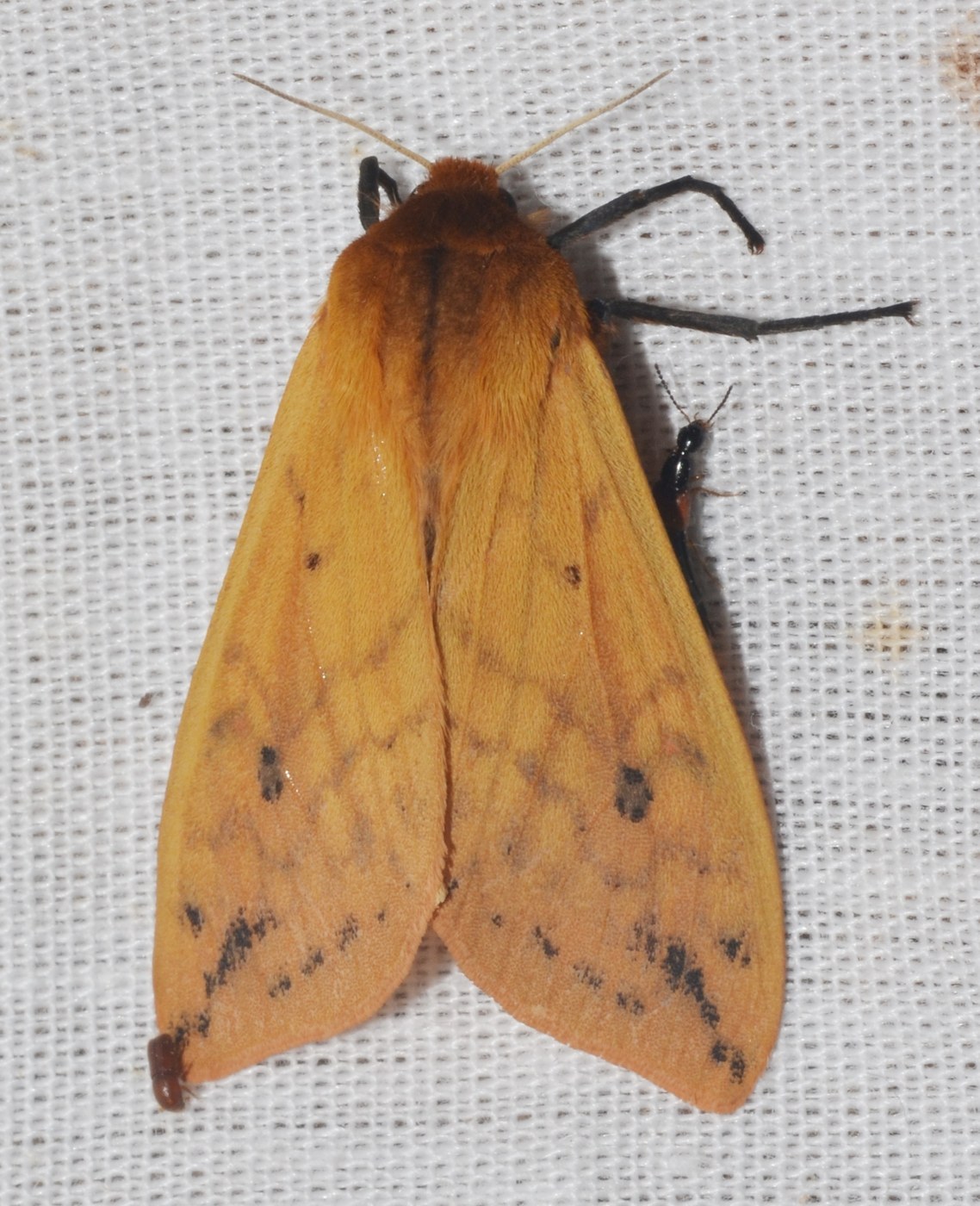
Key Visual Features
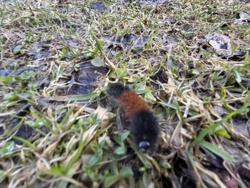
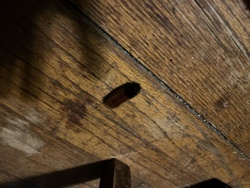
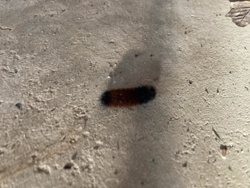
The Isabella tiger moth (Pyrrharctia isabella) is best known in its caterpillar form, called the woolly bear, which is densely covered in short, bristly hairs (setae) arranged in a distinctive banding pattern: black at both the head and tail ends, with a reddish-brown band across the middle segments. The width of the reddish-brown band can vary between individuals depending on age and how many times the caterpillar has molted. When disturbed, a woolly bear characteristically curls tightly into a ball. The adult moth looks quite different: a stout, furry-bodied moth with a wingspan of about 1.5 to 2 inches, with dull yellow-orange to tan wings scattered with small, irregular black spots, and a fuzzy, similarly colored body.
Where and When You'll See It
Woolly bear caterpillars are a familiar autumn sight, often seen crossing roads, sidewalks, and driveways as they search for sheltered spots to spend the winter in a partly dormant state, resuming activity and feeding again the following spring before pupating. They're found in gardens, fields, and woodland edges wherever a variety of low-growing plants are available as food. The adult moth is nocturnal, attracted to lights, and most active from late spring through summer, after the overwintered caterpillar has pupated and emerged.
Similar-Looking Bugs
- Other tiger moth (Arctiidae) caterpillars: Several related "woolly" caterpillars exist with different banding patterns—some are solid black, some solid reddish-brown, or have differently proportioned bands—so band arrangement is the key feature to check.
- Giant woolly bear / other Arctia species caterpillars: Generally larger and more uniformly dark or differently patterned than the Isabella tiger moth's clean black-red-black bands.
- Adult moth vs. other yellow-orange moths: The Isabella tiger moth's plain tan-orange wings with scattered small black spots and stout furry body distinguish it from more boldly patterned relatives.
Quick ID Checklist
- Caterpillar: black bristly bands at both ends with a reddish-brown band in the middle
- Caterpillar curls into a tight ball when disturbed
- Adult moth: dull yellow-orange to tan wings with small scattered black spots
- Adult has a stout, furry body and wingspan of about 1.5–2 inches
- Caterpillars most visible in fall; adults nocturnal and active late spring–summer
Frequently asked questions
Why do woolly bear caterpillars curl into a ball?
Curling tightly is a defensive posture the caterpillar uses when disturbed, tucking its head and tail together to present a solid ring of bristles.
Do the black and reddish-brown bands ever vary in width?
Yes, the width of the middle reddish-brown band can differ between individual caterpillars depending on their age and molt stage.
What does the adult Isabella tiger moth look like compared to the caterpillar?
The adult is a plain yellow-orange to tan moth with small scattered black spots and a fuzzy body, looking quite different from the boldly banded woolly bear caterpillar.
When are woolly bear caterpillars most commonly seen?
They are most visible in autumn, when they actively wander in search of sheltered spots to spend the winter.
Isabella Tiger Moth (Woolly Bear) identified by the community
Recent Isabella Tiger Moth (Woolly Bear) finds identified with Bug Identifier.