Ladybug Identification Guide
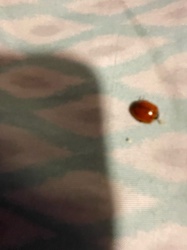
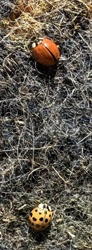
Spot a ladybug by its rounded, domed shell, bright color, and characteristic pattern of black spots.
Read the full Ladybug encyclopedia entry →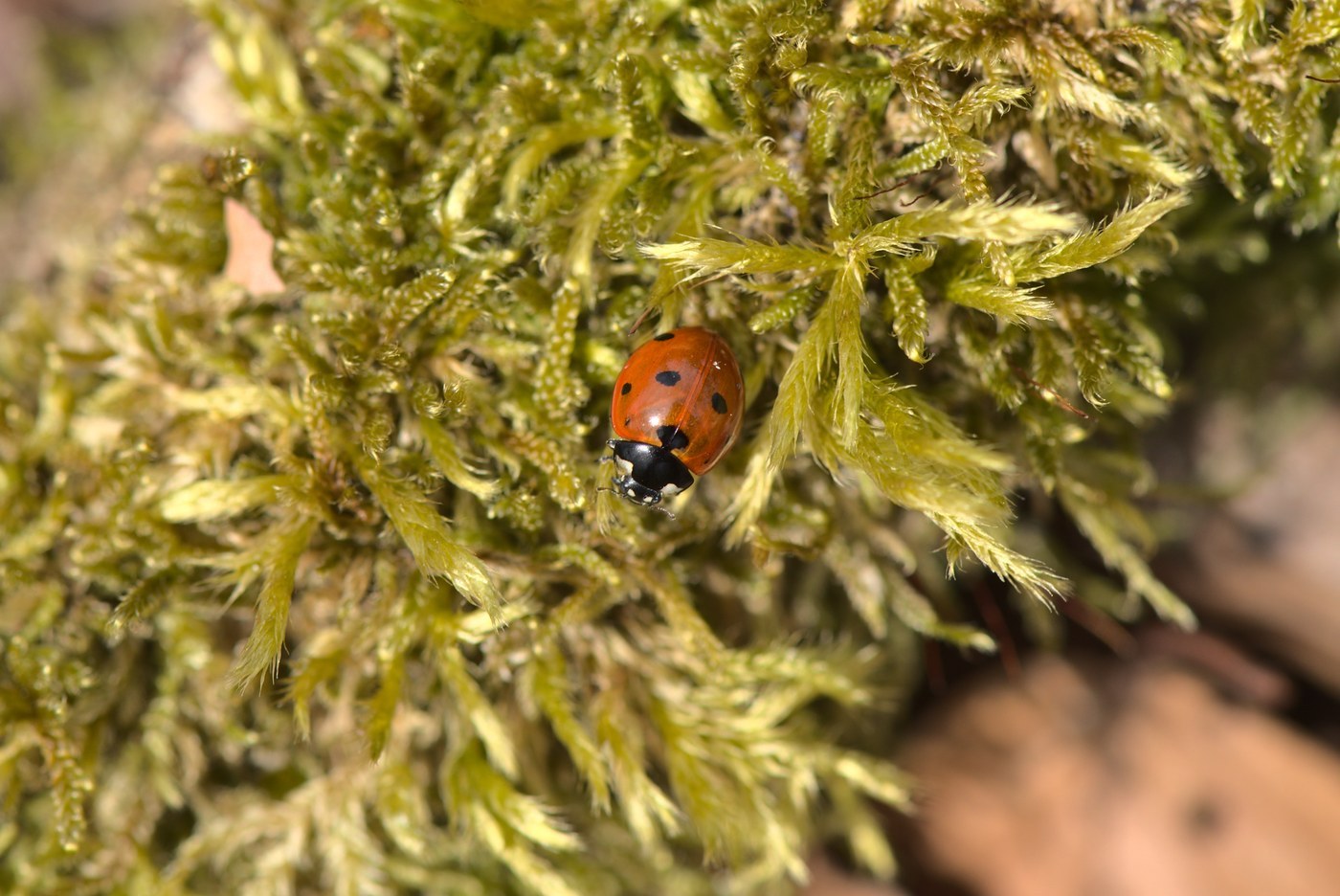
Key Visual Features
Ladybugs, also called lady beetles, are small, dome-shaped beetles known for their bright colors and spotted wing covers.
- Size: Typically 1/8 to 3/8 inch (4–10 mm) long, varying by species.
- Color: Most commonly bright red or orange, though some species are yellow, pink, or black.
- Markings: Rounded black spots on the hardened wing covers (elytra), with the number of spots varying by species — some have none, others have up to twenty or more.
- Body shape: Distinctly rounded, dome-like, almost hemispherical shape when viewed from above, with a flat underside.
- Head: Small and often partly tucked beneath a shield-like plate (pronotum), which may show a pale marking or pattern near the head.
- Legs and antennae: Short legs and short, clubbed antennae, both largely hidden beneath the rounded body at rest.
- Wings: Hardened forewings (elytra) that split down the middle and lift to reveal a folded pair of clear flight wings underneath.
Where and When You'll See Them
Ladybugs are found in gardens, fields, woodland edges, and agricultural areas, often on plants where small insects gather, since they spend much of their time foraging on foliage. They are most active during warm daylight hours in spring through fall. In cooler weather, many species cluster together in large groups to overwinter in sheltered spots such as under bark, leaf litter, rock crevices, or sometimes inside buildings, becoming visible again as temperatures warm.
Similar-Looking Insects
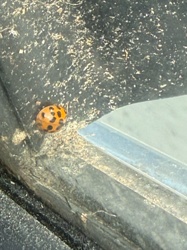
- Asian lady beetle: Very similar rounded shape and spotted pattern but often more orange than red, with a more variable number of spots and a distinct dark "M" or "W"-shaped marking on the pale pronotum behind the head.
- Squash beetles and other leaf beetles: Can share a rounded, spotted look but often have a less glossy shell and different spot arrangement or coloring, such as yellow with black stripes.
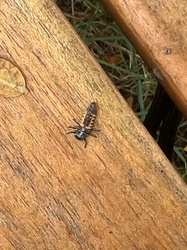
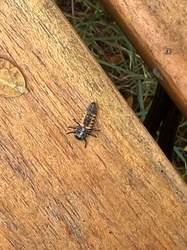
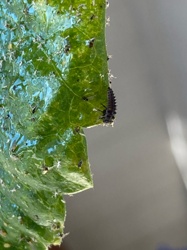
- Ladybug larvae: Look completely different from the adult — elongated, spiny, and alligator-like in shape, usually dark gray or black with orange or yellow markings.
Quick ID Checklist
- Rounded, dome-shaped body, glossy shell
- Bright red, orange, or yellow base color
- Black spots on the wing covers (number varies by species)
- Small head often tucked under a patterned pronotum
- Found on foliage in gardens and fields, clusters in cool weather
Frequently asked questions
How many spots does a ladybug have?
The number of spots varies widely by species, ranging from no spots at all to twenty or more, so spot count alone isn't enough to identify a species without also considering color and pattern.
How do I tell a ladybug from an Asian lady beetle?
Asian lady beetles tend to be more orange and typically show a small dark M- or W-shaped marking on the pale plate behind the head, a feature not usually present on native ladybugs.
What does a ladybug larva look like?
Ladybug larvae look quite different from adults — they are elongated, spiny, and somewhat alligator-shaped, usually dark gray or black with orange or yellow markings along the body.
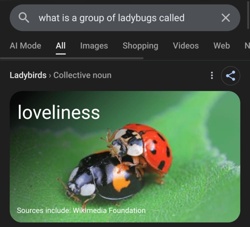
Why do ladybugs sometimes gather in large groups?
Many ladybug species cluster together in sheltered spots like bark crevices or leaf litter to pass through cooler weather, dispersing again once temperatures warm up.
Ladybug identified by the community
Recent Ladybug finds identified with Bug Identifier.