Lone Star Tick Identification Guide
A hard-bodied tick best known for the single bright white spot on the back of the adult female.
Read the full Lone Star Tick encyclopedia entry →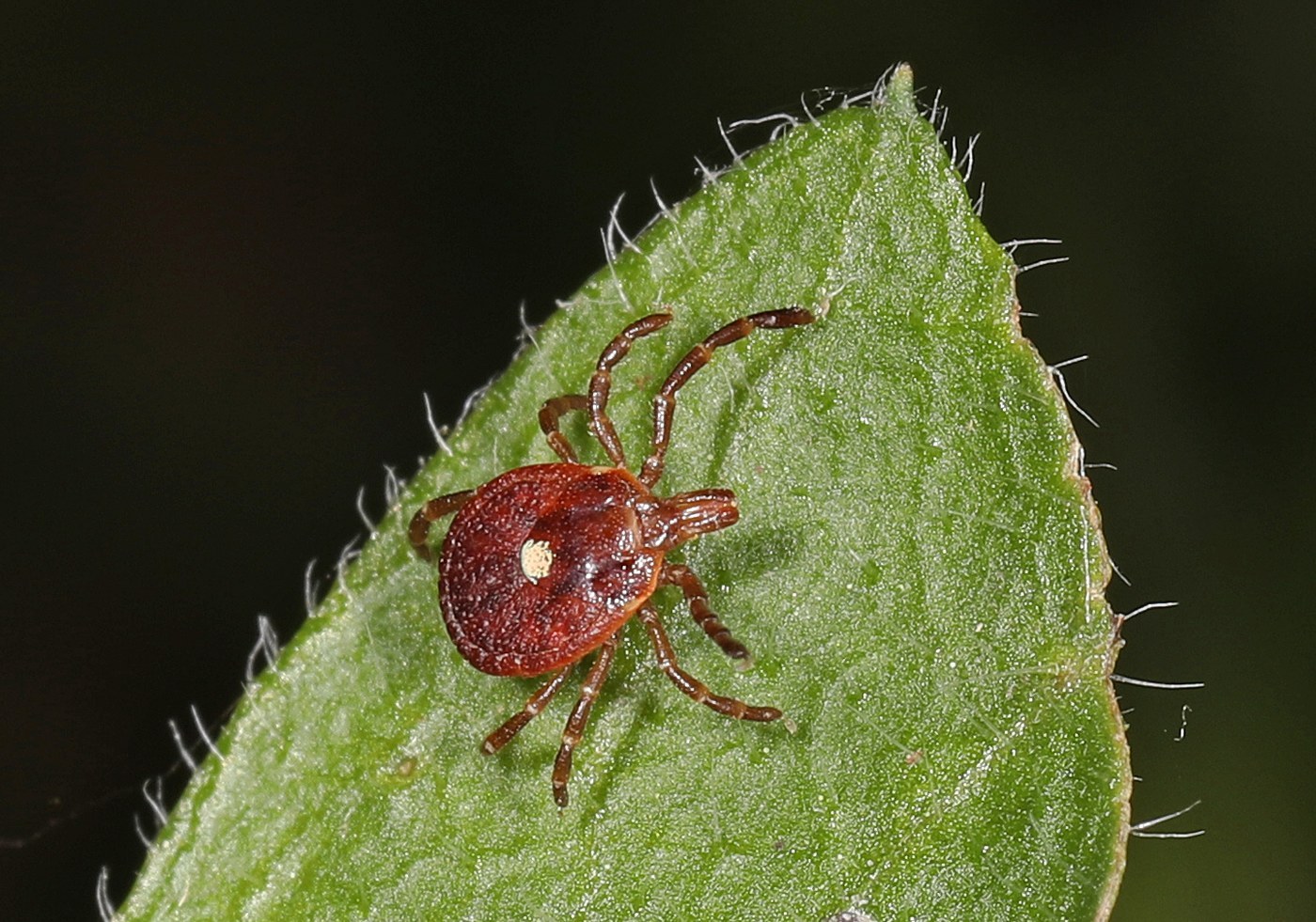
Key Visual Features
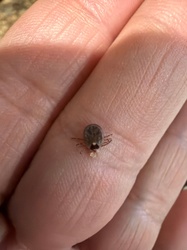
- Adult body is oval and flattened when unfed, roughly 1/8 to 3/16 inch (3-5 mm) long, with reddish-brown coloring typical of hard ticks.
- The signature feature is on adult females: a single, distinct, bright silvery-white spot or dot located centrally on the otherwise dark reddish-brown scutum (back shield) — this is the origin of the "lone star" name.
- Adult males lack the single white spot but instead often show scattered whitish streaks or spots around the outer margin of the back, a subtler and less distinct pattern than the female's single dot.
- Legs are reddish-brown and, like other hard ticks, are positioned toward the front of the body with the mouthparts projecting forward and visible from above.
- Nymphs and larvae are smaller, tan to light brown, and lack the white marking seen on adult females, making immature stages harder to distinguish from other tick species by color alone.
- After feeding, the body swells and becomes grayish, obscuring the white spot as the abdomen distends.
Where and When You'd See It
- Found across wooded areas, forest edges, and areas with dense underbrush, particularly in regions with abundant leaf litter and shaded ground cover.
- Ticks quest on low vegetation and leaf litter, waiting with front legs extended for a host to brush past.
- Active mainly from spring through fall, with different life stages (larvae, nymphs, adults) peaking at different times of the warm season.
- Known for being a notably aggressive, active tick that can be encountered even without brushing directly against tall vegetation.
Similar-Looking Bugs
- Other hard ticks, such as the American dog tick, have a mottled or marbled whitish-gray pattern spread across the entire scutum rather than a single, isolated white dot.
- Deer (blacklegged) ticks are smaller overall, darker, and lack any white spot or streaking, appearing more uniformly dark reddish-brown to black.
- Immature lone star ticks (nymphs and larvae) closely resemble other small tan ticks and are best distinguished by geography and season rather than markings alone.
Quick ID Checklist
- Reddish-brown, oval, flattened body about 1/8-3/16 inch when unfed.
- Single bright white dot centered on the back — present only on adult females.
- Adult males show scattered light streaks near the back's outer edge instead of one dot.
- Found questing on vegetation and leaf litter in wooded, brushy habitats.
- Active spring through fall; described as an unusually active, mobile tick.
Frequently asked questions
Is the white spot present on every lone star tick?
No, the single bright white dot is a feature of adult females only; adult males show scattered light streaks instead, and nymphs and larvae lack any white marking.
How do I tell a lone star tick from an American dog tick?
The lone star tick's adult female shows one isolated white dot on the back, while the American dog tick has a broader mottled or marbled whitish-gray pattern spread across the whole scutum.
Can I identify an unfed lone star tick after it has fed?
It's harder, since a fed tick swells and turns grayish, which can obscure the white spot; identification is easiest on an unfed or lightly fed tick.
Where are lone star ticks typically encountered?
They're found questing on vegetation and in leaf litter within wooded areas and brushy edges, and are known for being unusually active compared to some other tick species.
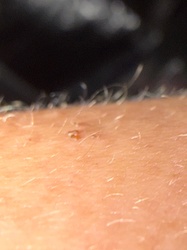
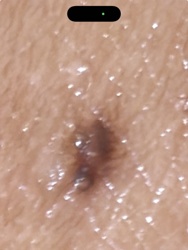
Lone Star Tick identified by the community
Recent Lone Star Tick finds identified with Bug Identifier.