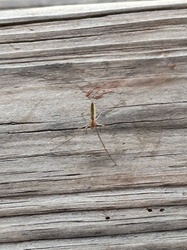
Long-jawed Orb Weaver Identification Guide
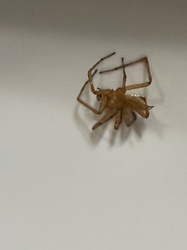
Identify a long-jawed orb weaver by its elongated jaws, slender stretched-out posture, and orb web near water.
Read the full Long-jawed Orb Weaver encyclopedia entry →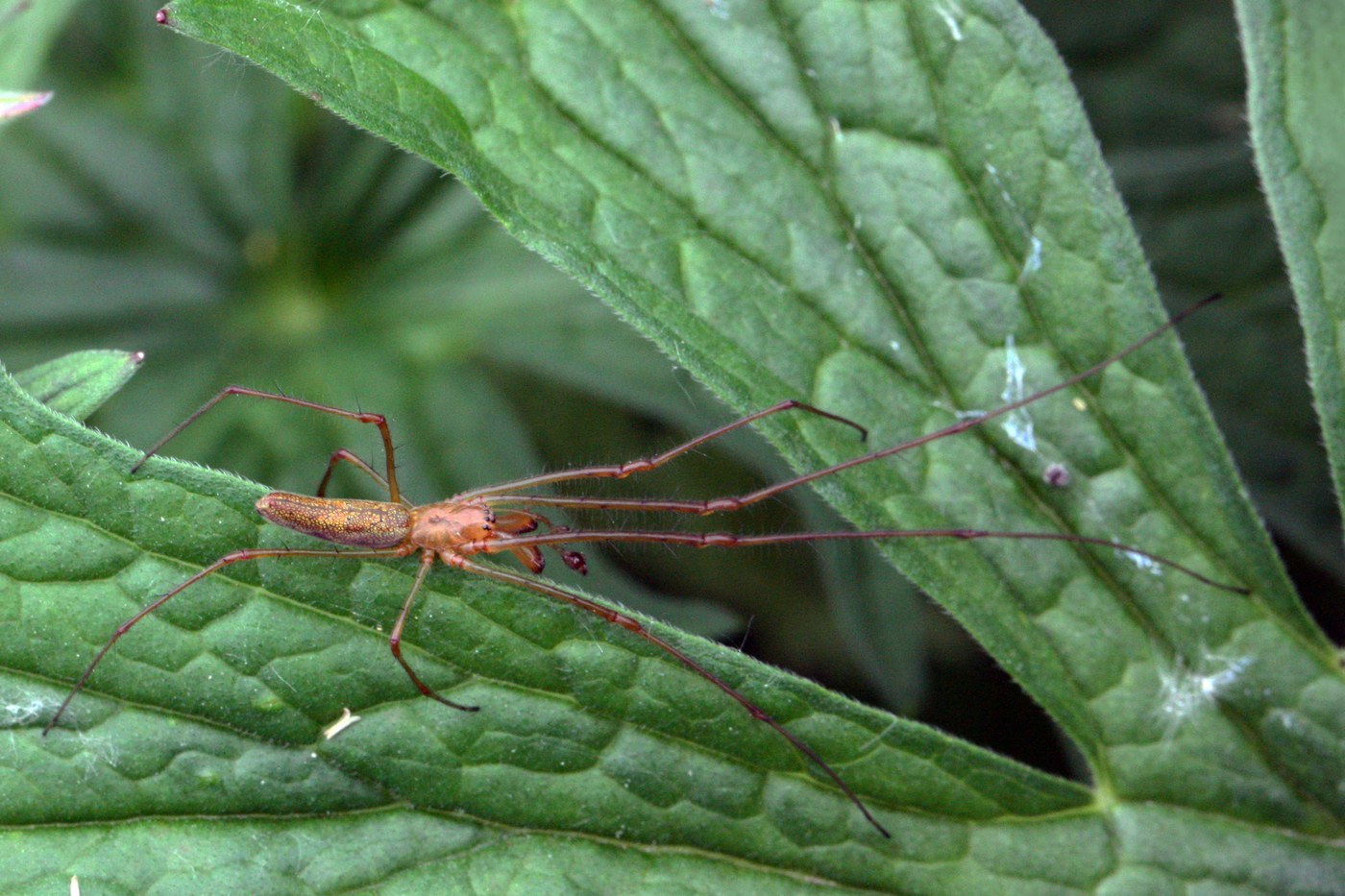
Key Visual Features
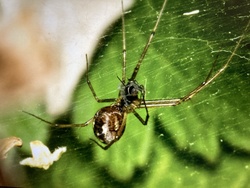
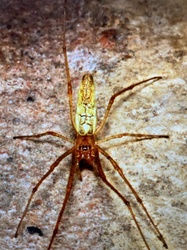
Long-jawed orb weavers are slender spiders named for their notably elongated jaws, often seen stretched out along plant stems near water.
- Size: Body length typically 5-15 mm, with an elongated, narrow build.
- Color: Often silvery, tan, or greenish-brown, with a slender, elongated abdomen that can appear almost cylindrical in some species.
- Body shape: Long and narrow overall, quite different from the rounder abdomens of many other orb weavers.
- Jaws (chelicerae): Distinctly elongated and often angled forward, especially prominent in males, giving the front of the spider a pincer-like look — this is the defining identification feature for the group.
- Eyes: Eight eyes arranged in two rows, generally small relative to body size.
- Legs: Eight long, slender legs, typically held stretched out fore-and-aft along a plant stem when the spider is at rest, making the whole animal look like a thin twig.
- Web: A fairly open, less densely spiraled orb web compared to typical garden orb weavers, often built horizontally or at a shallow angle over water or damp vegetation.
Where and When You'd See It
Long-jawed orb weavers are strongly associated with water, commonly found along the edges of ponds, streams, and marshes where they build webs across gaps in reeds, grasses, or overhanging branches. They are most visible resting in their characteristic stretched-out, stick-like pose along a stem near the water's edge during the day, and remain active building and repairing webs into the evening.
Similar-Looking Bugs
- Typical orb weavers: Build denser, more tightly spiraled webs and rest in a rounder, more compact posture at the web's hub, rather than stretched flat along a stem.
- Cellar spiders: Also have long thin legs, but lack the elongated forward jaws and build a tangled irregular web rather than an orb.
- Fishing spiders: Also found near water with long legs, but do not build orb webs and instead hunt actively from the water's surface.
Quick ID Checklist
- Elongated, forward-angled jaws, especially obvious in males
- Slender, narrow abdomen and long stretched-out legs
- Resting posture held flat and straight along a plant stem
- Open orb web built low over or near water
- Found along pond, stream, and marsh edges among reeds and grasses
Behavior Notes
When disturbed, this spider often freezes in its elongated pose along a stem, relying on its stick-like camouflage rather than fleeing immediately, before returning to repair or wait at its web.
Frequently asked questions
What is the key feature that gives the long-jawed orb weaver its name?
Its noticeably elongated, forward-angled jaws (chelicerae), which are especially pronounced in males and give the front of the spider a pincer-like appearance.
Where is this spider usually found?
Near water, such as pond edges, streams, and marshes, where it builds an open orb web across reeds, grasses, or overhanging branches.
How does its resting posture help with identification?
It typically stretches its long legs out fore-and-aft along a plant stem, creating a thin, stick-like silhouette that's quite different from the compact posture of typical orb weavers.
How is its web different from a typical garden orb weaver's web?
It tends to be more open and less densely spiraled, often built horizontally or at a shallow angle low over water or damp vegetation.
Long-jawed Orb Weaver identified by the community
Recent Long-jawed Orb Weaver finds identified with Bug Identifier.