Long-Legged Fly Identification Guide
Spot long-legged flies by their metallic green or bronze bodies, slender legs, and darting, hover-and-pounce flight.
Read the full Long-Legged Fly encyclopedia entry →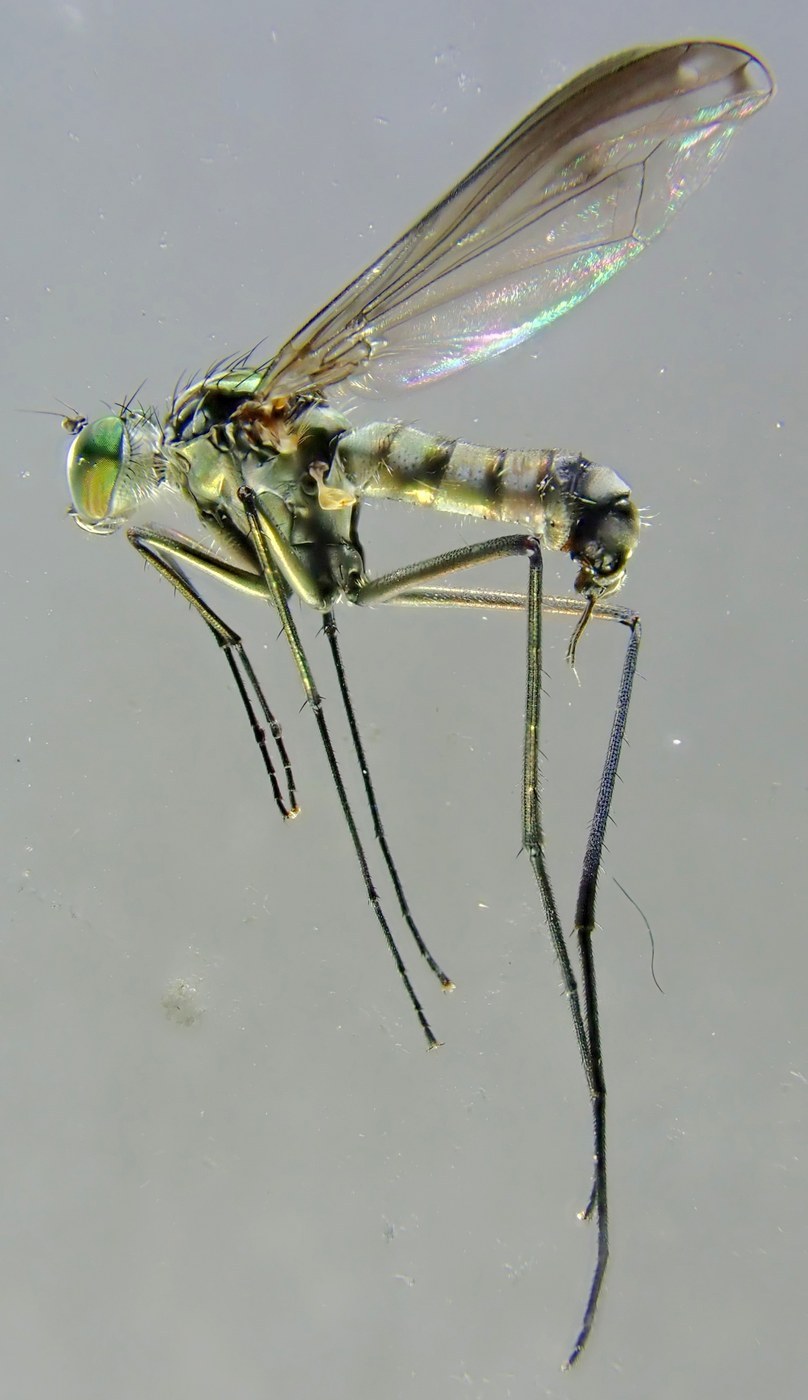
Key Visual Features
Long-legged flies (family Dolichopodidae) are small, slender flies usually under 0.3 inches long, best known for their brilliant metallic coloring.
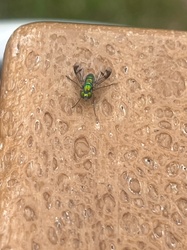
- Body: Narrow and elongated with a glossy metallic sheen in shades of green, blue, bronze, or copper that shifts with the light.
- Legs: Long, thin, and often held in an angular, spider-like stance; some species have feathered or flattened leg segments used in display.
- Eyes: Large and often occupy much of the head, giving a big-eyed appearance.
- Wings: Clear or lightly tinted, held flat or slightly spread over the abdomen at rest; some males have patterned or modified wing tips.
- Overall shape: Small, sleek, and fast-moving, with a noticeably tapered abdomen.
Where and When You'd See Them
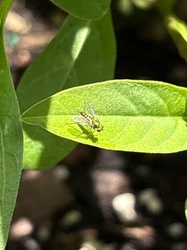
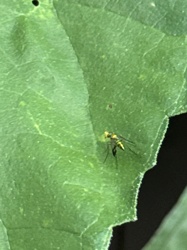
These flies are common from spring through fall in gardens, on tree trunks, fence posts, sunlit foliage, and near water such as pond edges, streambanks, and damp soil. They are most active during the warmer parts of the day, when their metallic bodies catch the light as they dart short distances between perches. Adults often rest on leaves or bark with their wings held out, periodically making quick, darting flights to intercept tiny prey before returning to a nearby perch.
Similar-Looking Bugs
- Soldier flies: Larger and broader-bodied, often with a flattened abdomen; lack the extremely long, thin legs.
- Fruit flies: Much smaller, dull-colored, and lack any metallic sheen.
- Tachinid flies: Bristly and robust rather than sleek and shiny, with shorter legs.
- Jumping spiders: Occasionally confused at a glance due to quick movements, but spiders have eight legs and no wings.
Quick ID Checklist
- Small body under a third of an inch with a bright metallic green, blue, or bronze sheen
- Very long, thin legs held in an angular stance
- Large eyes and a slender, tapered abdomen
- Quick, darting flights between perches on leaves or bark
- Found near sunlit vegetation or damp ground from spring to fall
Frequently asked questions
What gives long-legged flies their shiny color?
The metallic green, blue, or bronze appearance comes from microscopic surface structures on the exoskeleton that reflect light, rather than from pigment, which is why the color can shift depending on viewing angle.
How is a long-legged fly different from a fruit fly?
Long-legged flies are larger, have a glossy metallic body and much longer legs, while fruit flies are dull tan or brown, smaller, and have short legs.
Where are long-legged flies usually found?
They favor sunlit leaves, tree bark, fence posts, and moist areas near water, where they perch and make short darting flights.
Do long-legged flies have any distinctive behavior?
Many species perch with wings spread and make rapid short flights to intercept small prey in midair before returning to the same or a nearby perch.
Long-Legged Fly identified by the community
Recent Long-Legged Fly finds identified with Bug Identifier.