Mexican Bean Beetle Identification Guide
Identify a Mexican bean beetle by its copper-tan domed shell, 16 spots, and duller sheen than a true ladybug.
Read the full Mexican Bean Beetle encyclopedia entry →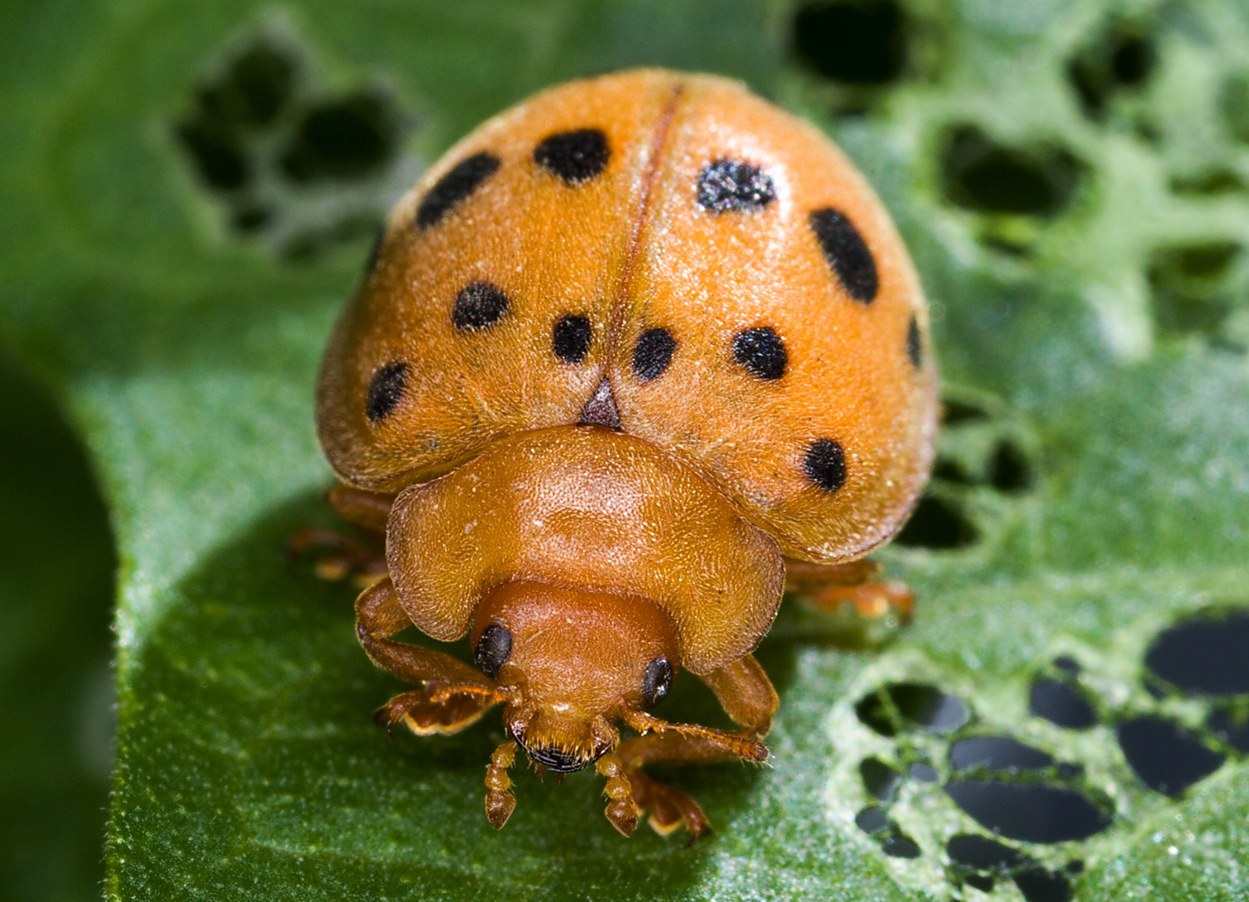
Key Visual Features
- Adult about 1/4 to 3/8 inch, oval and domed in shape, similar in silhouette to a ladybug
- Copper to yellowish-brown/tan coloring rather than the bright red-orange typical of true lady beetles
- 16 black spots arranged in three rows across the wing covers (8 spots per side), a consistent pattern useful for confirming the species
- Fine hairs give the shell a slightly fuzzy, matte look, distinguishing it from the glossy sheen of true ladybird beetles
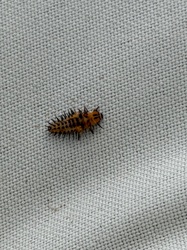
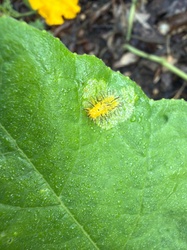
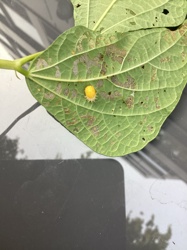
- Larvae are yellow, spiny, oval grubs covered in branching spines, quite different in appearance from the adult
- Head and legs are typically a similar tan-brown shade to the body rather than contrasting black
Where and When You'll See Them
- Found on bean plants - soybeans, snap beans, and lima beans - in gardens and farm fields
- Active in warm months, with adults and larvae typically found on the undersides of leaves feeding in groups
- Overwinters as an adult in plant debris and emerges again in spring to begin a new generation
- Multiple generations can occur within a single growing season in warmer regions
- Rarely found on plants outside the bean family, which makes host plant a useful clue
Similar-Looking Bugs
- Closely resembles ladybird (lady) beetles, especially larger orange species, but the Mexican bean beetle is copper or tan rather than bright red-orange
- Its surface looks duller and slightly fuzzy instead of glossy
- It consistently shows 16 spots arranged in three neat rows, rather than the more variable spot counts and patterns seen on ladybird beetles
- Found specifically on bean-family plant leaves rather than among aphid colonies on a wide range of plants
Quick ID Checklist
- Copper-tan domed oval body
- 16 black spots arranged in three rows
- Duller, fuzzy sheen rather than glossy
- Spiny yellow larvae
- Found on bean plant leaves
Frequently asked questions
How do I tell a Mexican bean beetle from a ladybug?
Its color leans more copper or tan than red-orange, the surface looks duller and slightly fuzzy rather than glossy, and it consistently has 16 spots in three rows.
What host plants is it found on?
Bean-family plants such as snap beans, lima beans, and soybeans.
What do the larvae look like?
Yellow, oval, and covered in branching spines, quite different from the smooth larvae of true lady beetles.
Is spot count a reliable identification trait?
Yes, this species reliably shows 16 spots, unlike more variable ladybird beetle species.
Mexican Bean Beetle identified by the community
Recent Mexican Bean Beetle finds identified with Bug Identifier.