
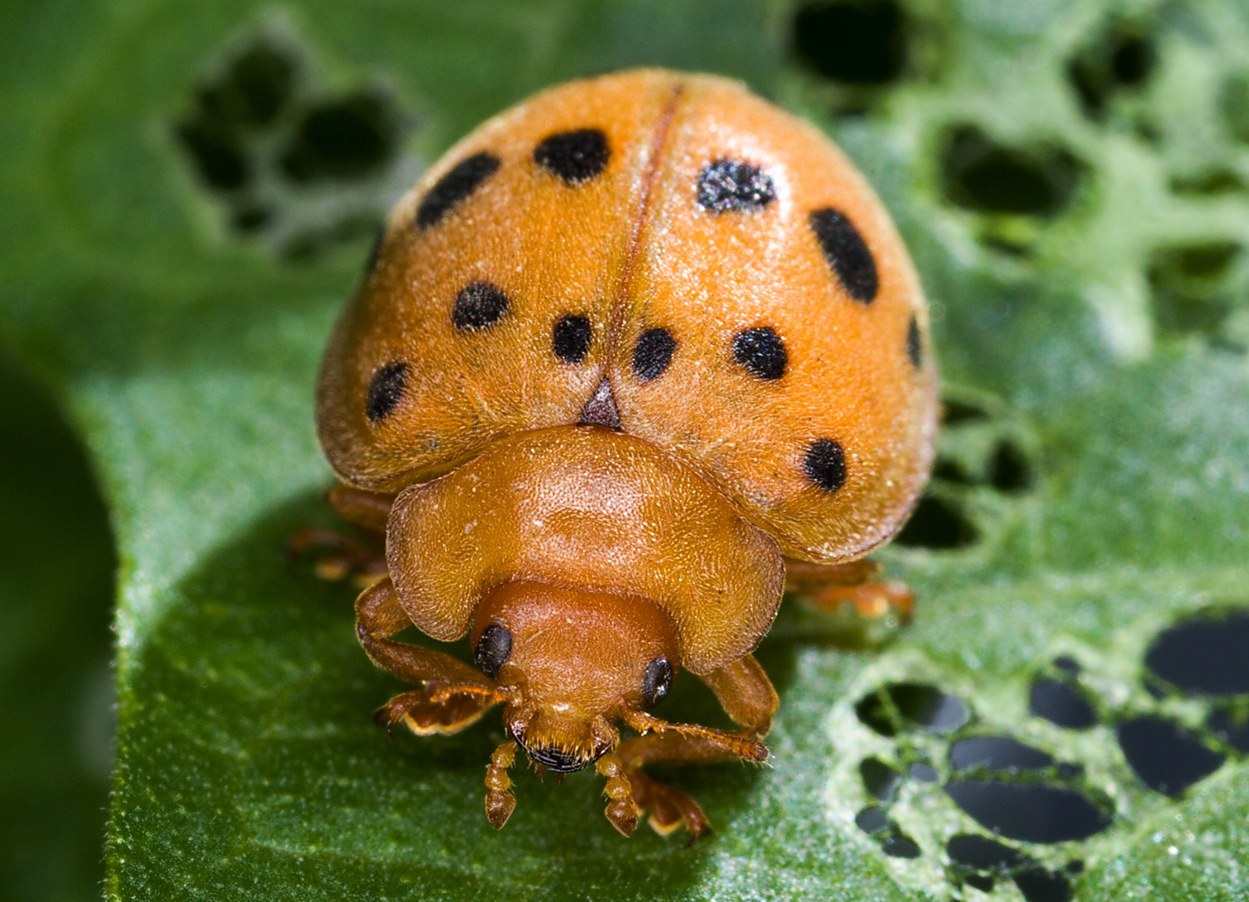
Mexican Bean Beetle
Epilachna varivestis
A copper-colored, spotted beetle resembling an overgrown ladybird that feeds on bean plant leaves along with its spiny yellow larvae.
- Size
- 6–7 mm
- Habitat
- Bean fields, vegetable gardens
- Danger
- Nuisance pest
Spotted a bug like this?
Identify any bug or insect from a photo, free.
Overview
The Mexican bean beetle belongs to the ladybird beetle family (Coccinellidae), but unlike the vast majority of its relatives, which are predatory and beneficial, this species is a dedicated plant feeder. It is one of only a small handful of herbivorous ladybird beetles found in North America.
Native to the highlands of Mexico and Central America, it has spread into much of the eastern and central United States, where it is closely tied to cultivated and wild legumes, especially bean plants. It is notable as an ecological outlier among ladybirds, illustrating that the family's familiar predatory reputation does not apply universally.
Within agricultural and garden ecosystems it functions as a specialist herbivore of legumes, and its feeding can be recognized by the distinctive lace-like damage left on bean foliage.
How to Identify
- Oval, domed body about 6–7 mm long, copper to yellowish-brown in color.
- Sixteen small black spots arranged in three rows across the wing covers.
- Body shape and size closely resemble a large ladybird beetle, but the coloring is duller, coppery-tan rather than bright red or orange.
- Larvae are pale yellow, oval, and covered in branching spines, giving them a fuzzy or bristly look very different from a typical ladybird larva.
- Lookalikes include the squash beetle, a very close relative with a similar spot pattern found on cucurbits instead of beans.
Habitat & Range
Found across the eastern and central United States as well as its native range in Mexico and Central America, wherever bean plants (including soybeans, snap beans, and lima beans) are grown. Adults and larvae are active on host foliage from late spring through summer and into early fall in warmer climates, and adults seek shelter in garden debris, mulch, or nearby vegetation to pass the colder months.
Behavior & Diet
Both adults and larvae feed on the underside of bean leaves, scraping away the lower leaf tissue and leaving the upper surface intact, which produces a distinctive lacy, skeletonized appearance. They are day-active, relatively slow-moving insects that rely on host-plant chemical cues to find legumes. As a specialist herbivore, the Mexican bean beetle plays a role in regulating legume foliage biomass and serves as prey for various generalist predators such as spiders and predatory bugs. It has little defense beyond mild reflex bleeding of distasteful hemolymph from its leg joints when disturbed, a trait shared with many ladybird beetles.
Life Cycle
Development is complete metamorphosis: egg, larva, pupa, adult. Yellow-orange egg clusters are laid on the underside of bean leaves; the spiny larvae pass through four instars while feeding on foliage before pupating attached to the leaf surface. Multiple generations, typically two to three, occur per growing season in warm regions. Adults overwinter in sheltered plant debris and emerge in late spring to begin feeding and laying eggs on new bean growth.
Frequently asked questions
Is the Mexican bean beetle a type of ladybird?
Yes, it belongs to the ladybird beetle family, but it is unusual because it feeds on plants rather than preying on other insects like most ladybirds.
How is it different from a regular ladybird?
It has a duller, coppery-tan color rather than bright red or orange, and it is consistently found feeding on bean foliage rather than hunting aphids.
What does the larva look like?
The larva is a soft, spiny, pale yellow grub covered in branching bristles, quite unlike the smooth, dome-shaped adult.
Where would I find one?
On the leaves of bean plants in gardens or fields, often accompanied by lace-like leaf damage from feeding.
Mexican Bean Beetle guides
In-depth guides for identifying, understanding, and living alongside Mexican Bean Beetle.
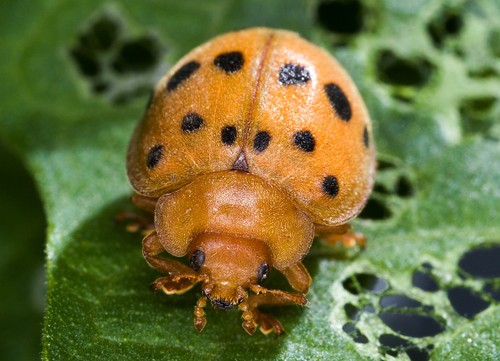
Mexican Bean Beetle identified by the community
Real finds identified with Bug Identifier.
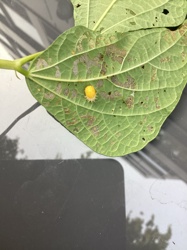
Other bugs you may enjoy
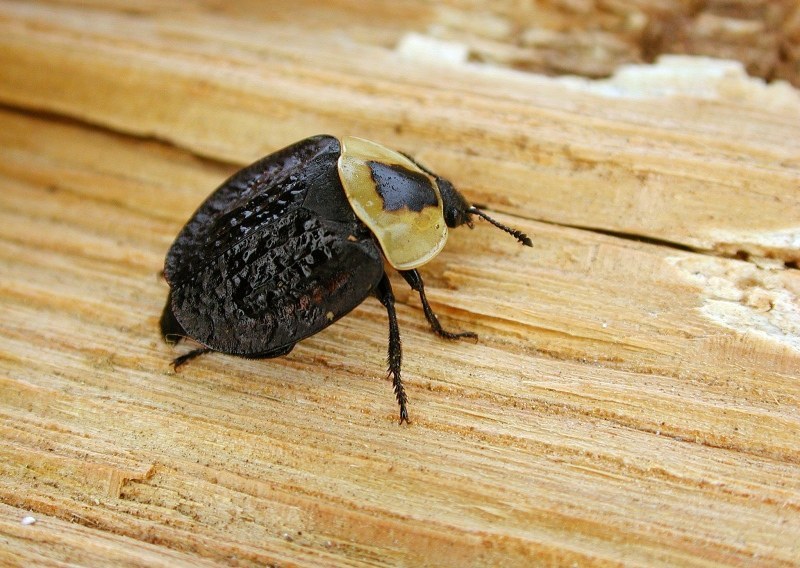
American Carrion Beetle
Forests, fields, and roadsides across North America, near decaying animal carcasses
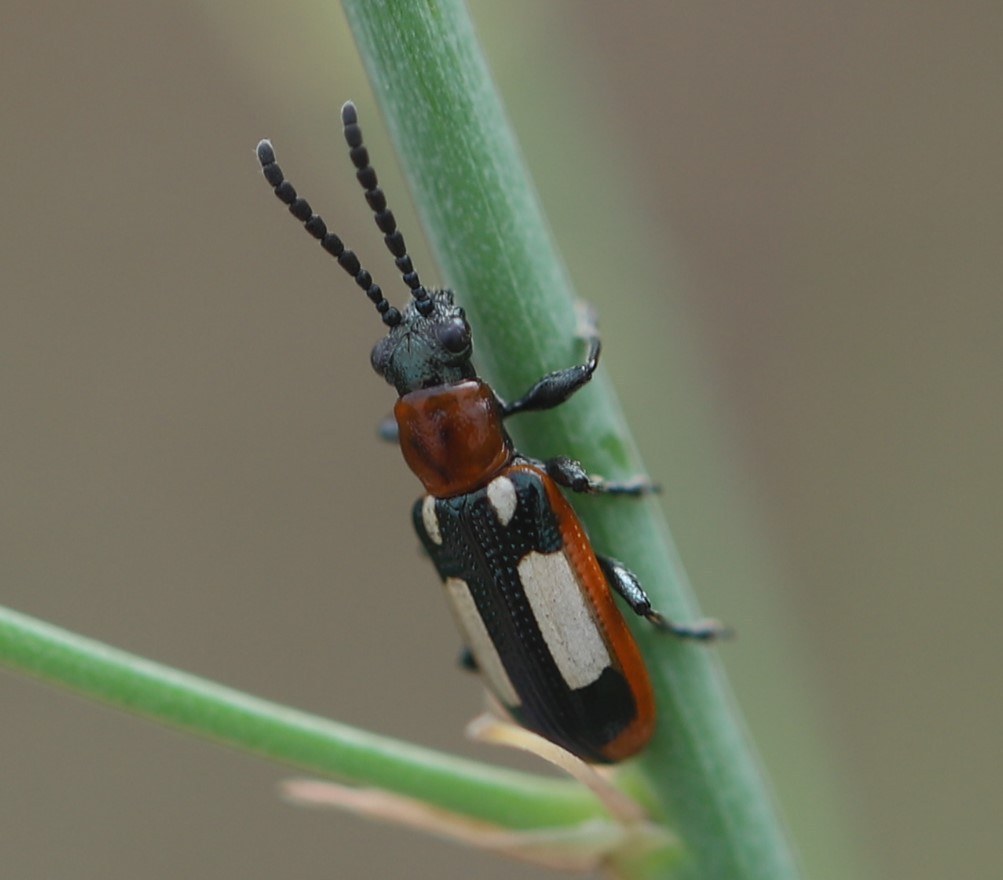
Asparagus Beetle
Asparagus patches, gardens, and farm fields
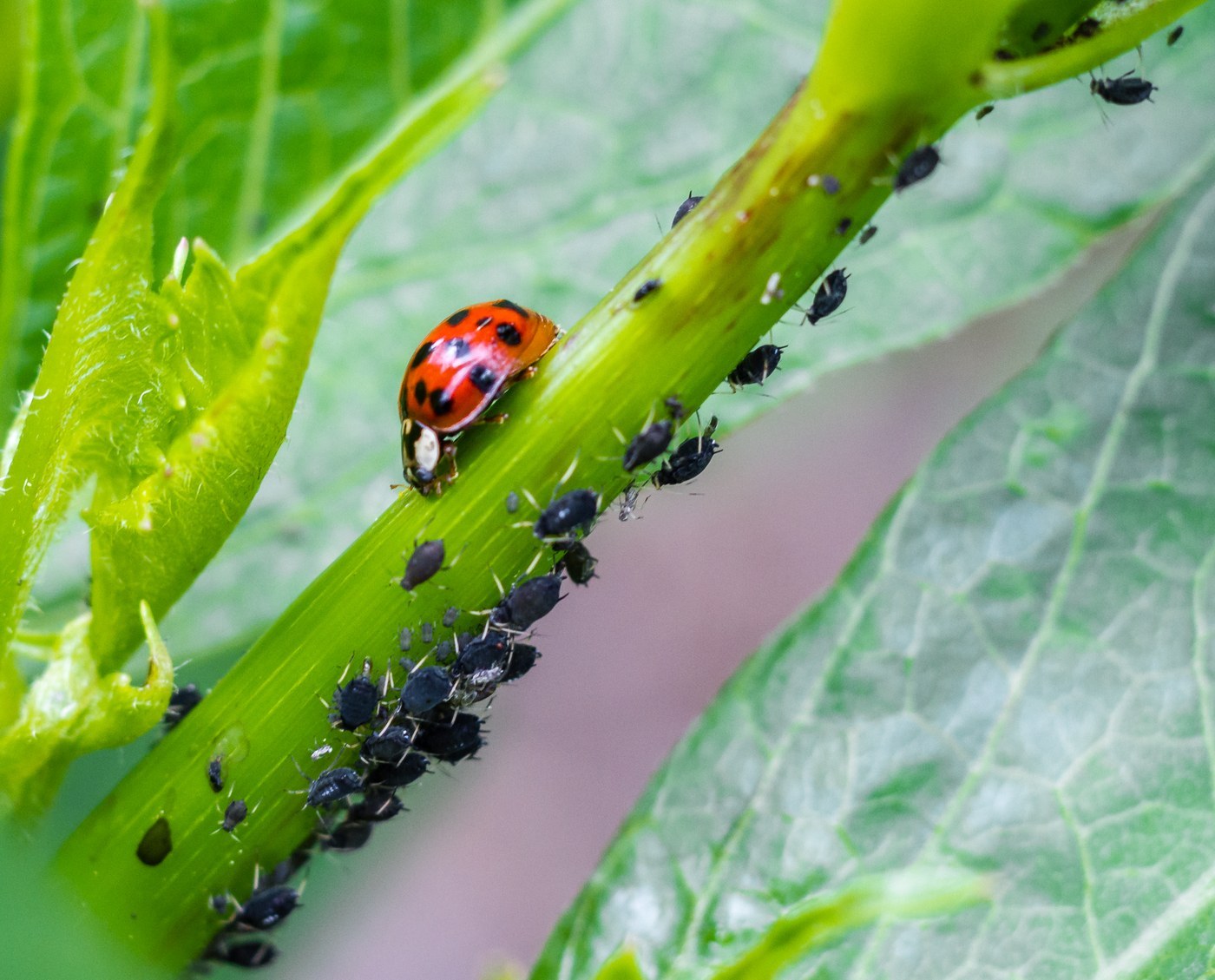
Asian Lady Beetle
Gardens, crop fields, woodlands, buildings
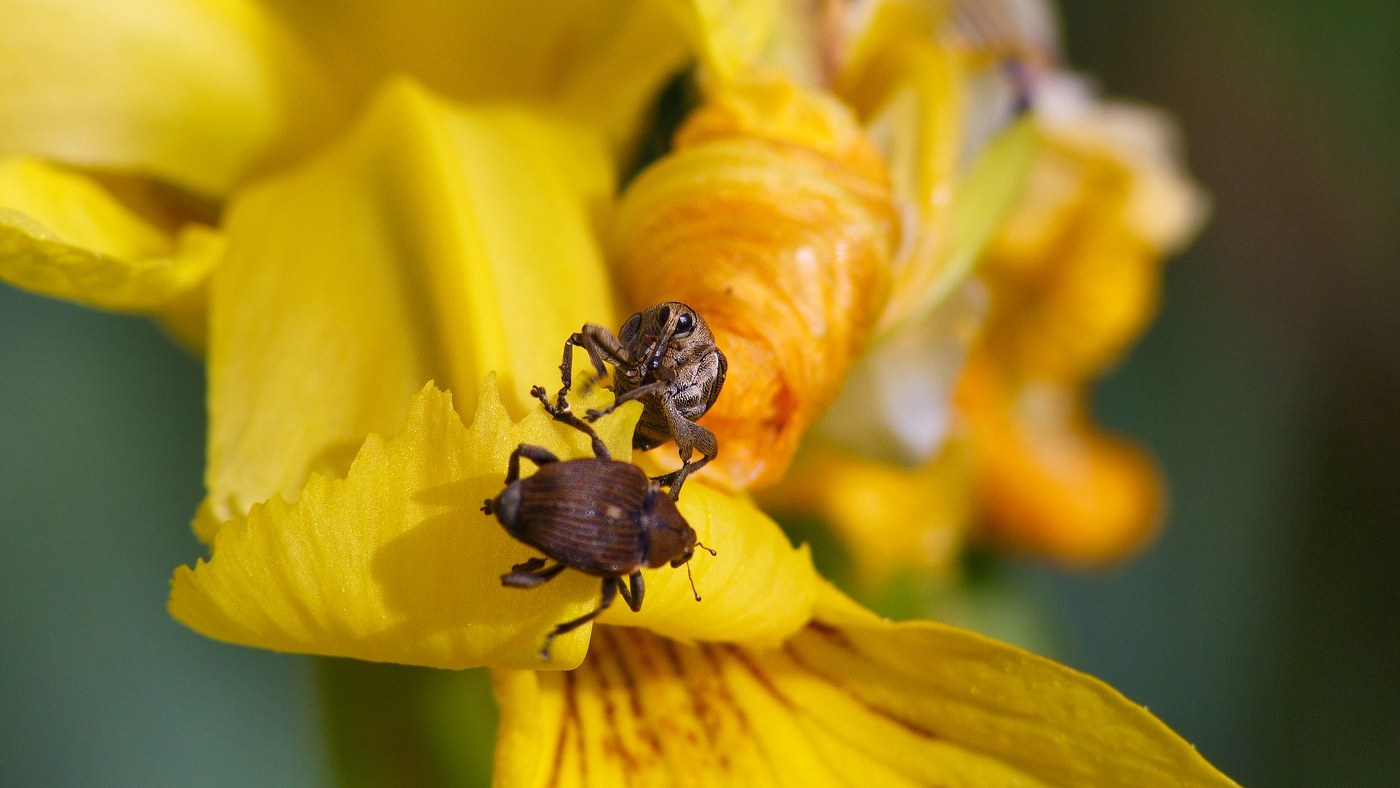
Acorn Weevil
Oak woodlands and forests, on and beneath oak trees
Wireworm
Soil of grasslands, gardens, and cultivated fields worldwide
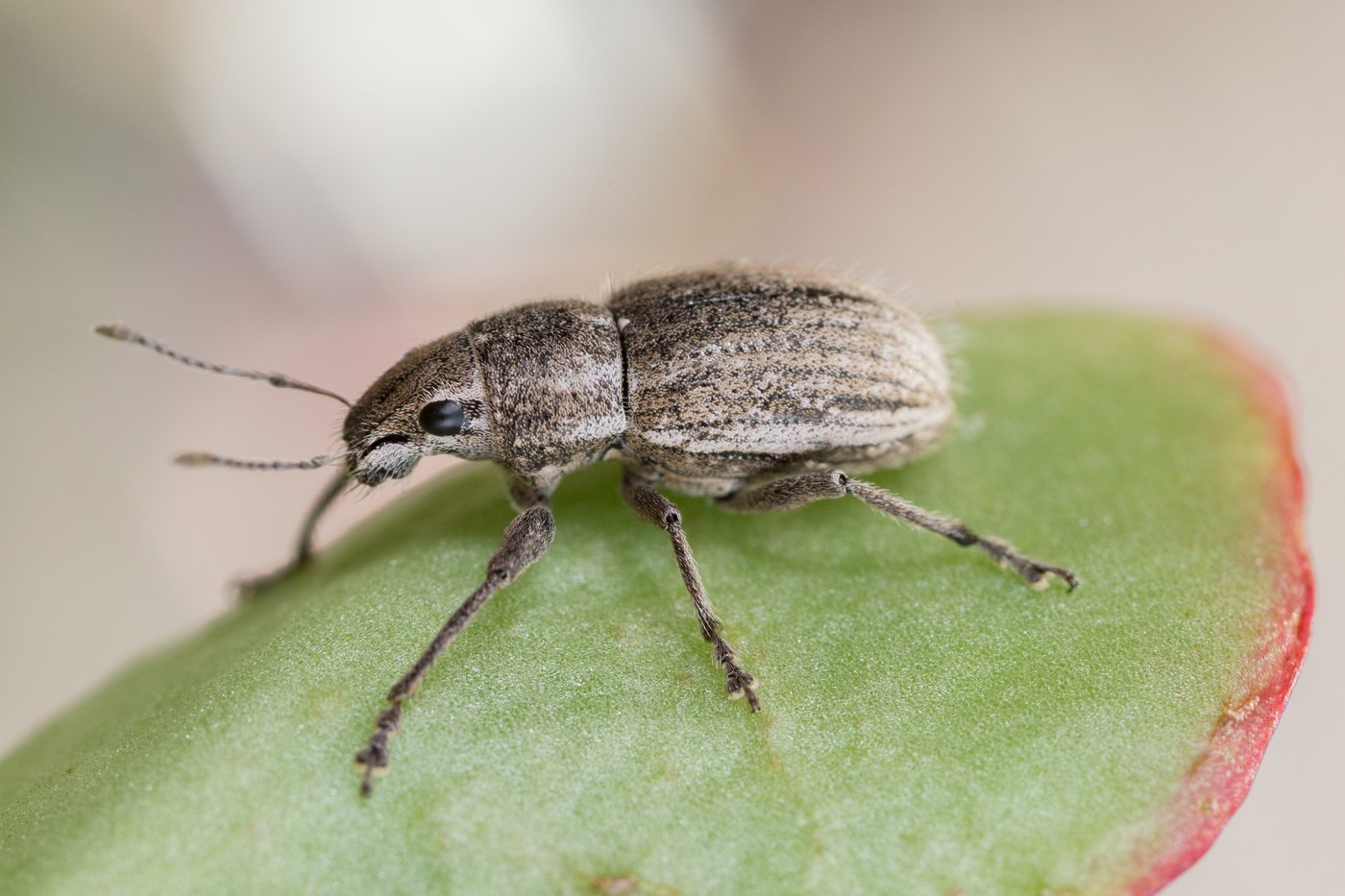
Whitefringed Beetle
Pastures, row crops, lawns, disturbed soils
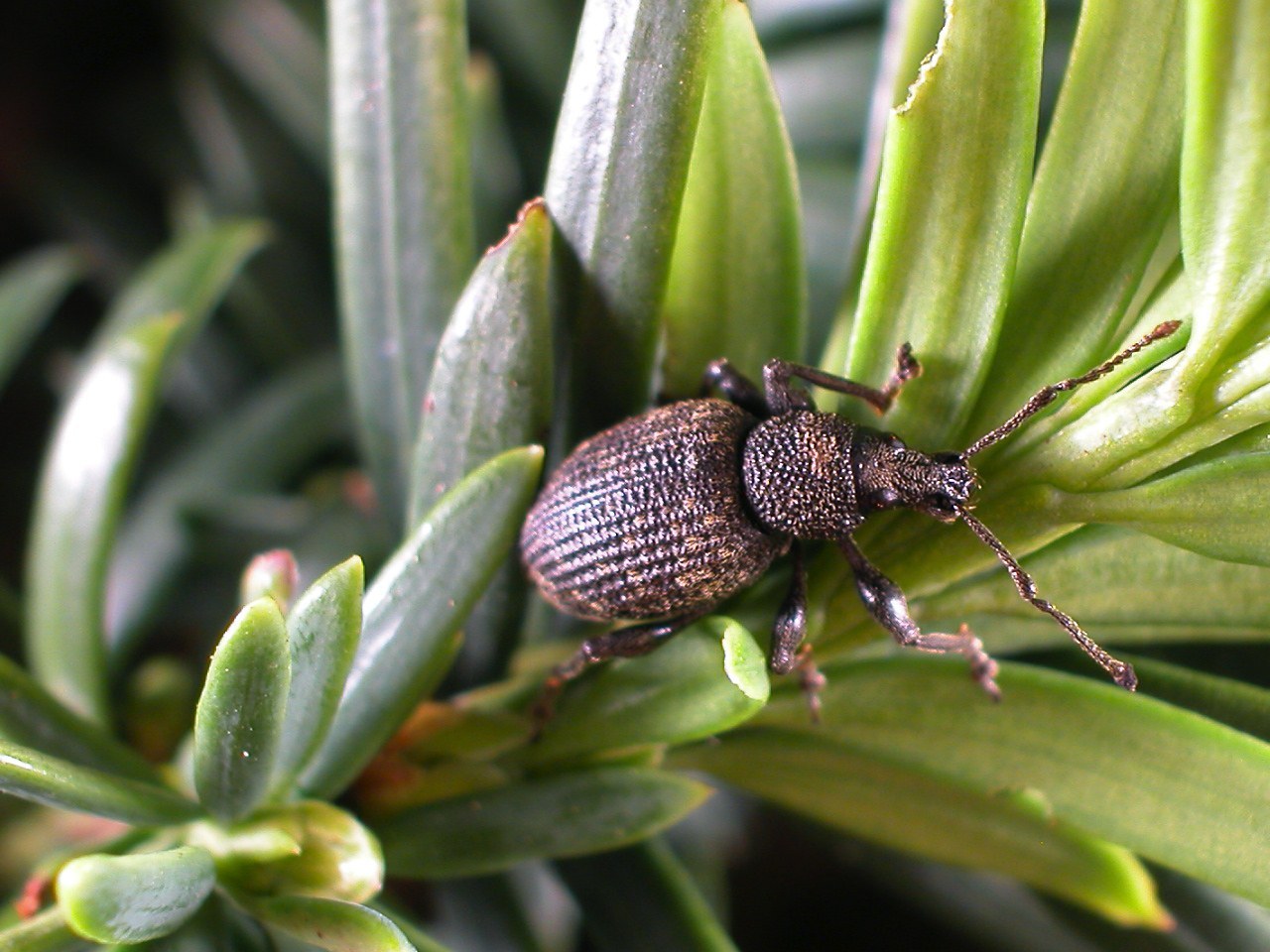
Vine Weevil
Gardens, nurseries, greenhouses, and container plantings
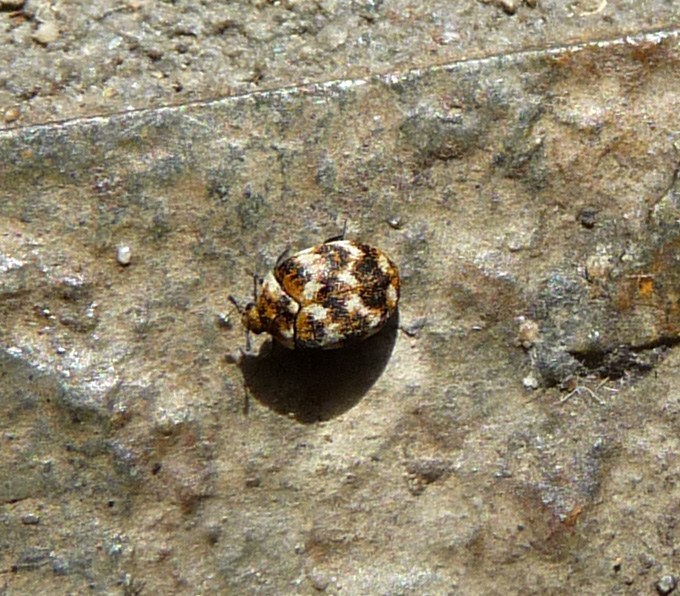
Varied Carpet Beetle
Homes, nests of birds and mammals, and flowers outdoors
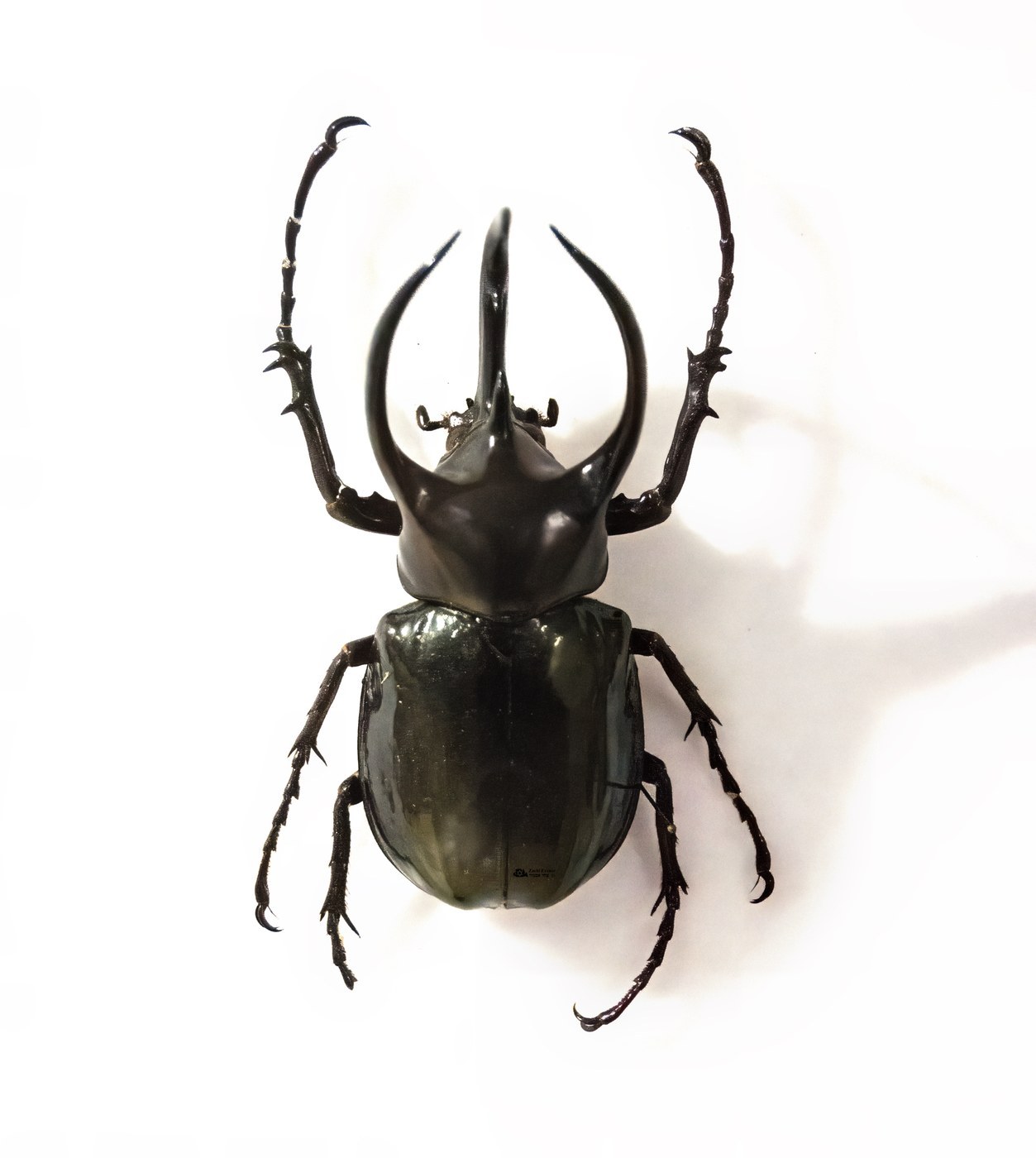
Atlas Beetle
Tropical forests of Southeast Asia
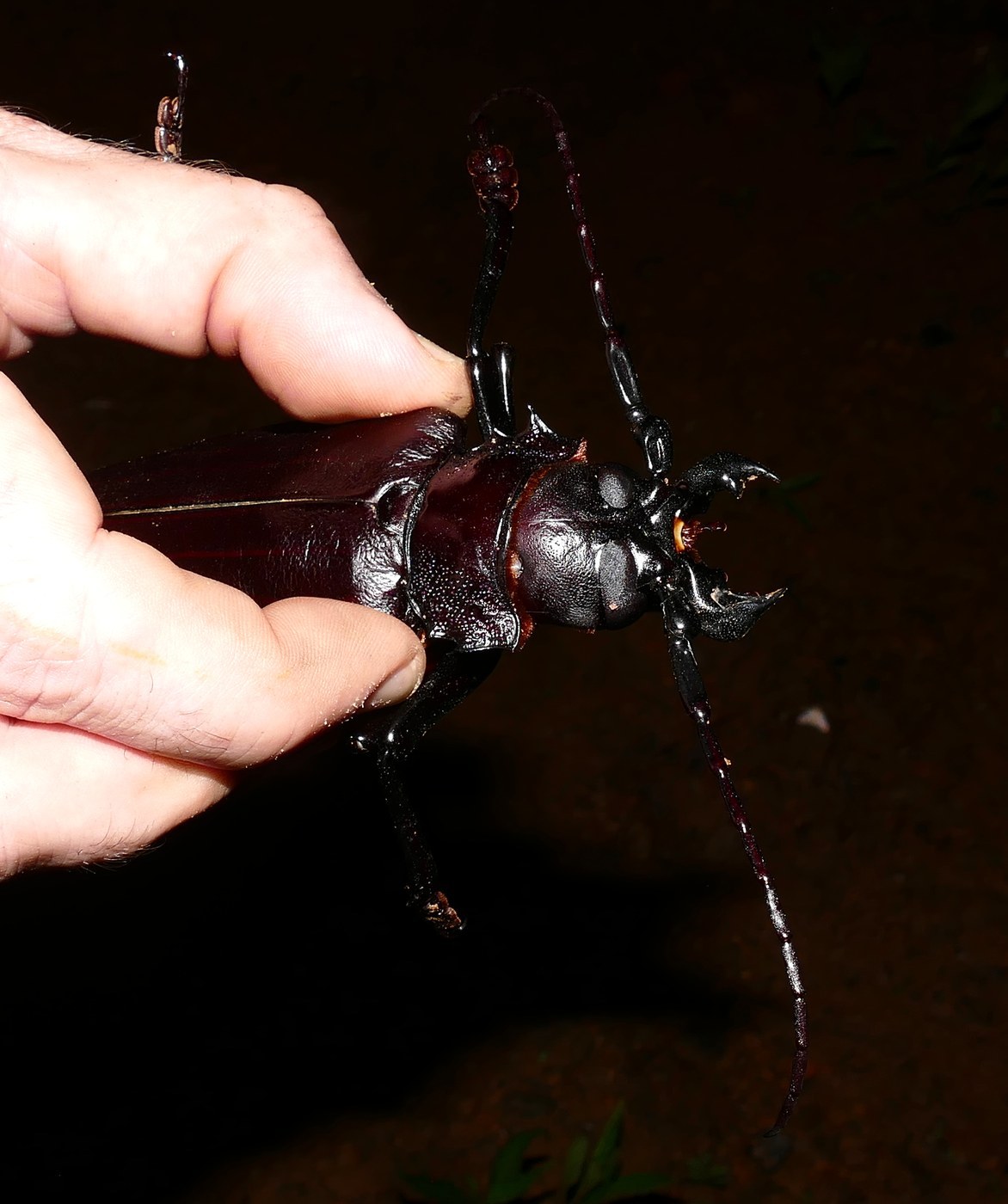
Titan Beetle
Amazon rainforest of South America
Ten-lined June Beetle
Sandy soils, pine forests, and orchards of western North America
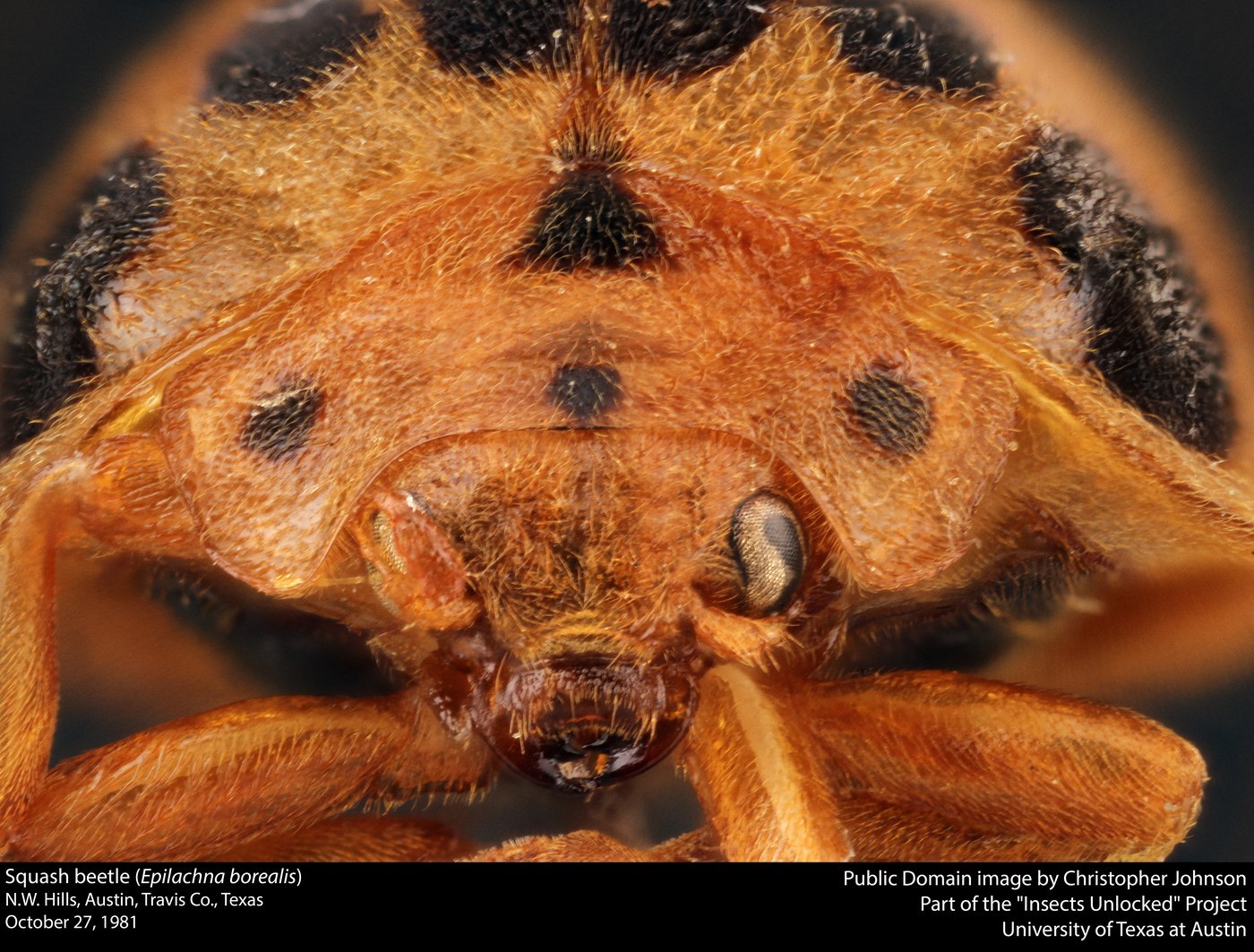
Squash Beetle
Vegetable gardens and fields growing squash, pumpkin, and other cucurbits