Mud Dauber Identification Guide
Recognize this slender, solitary wasp by its long thread-like waist and tube-shaped mud nests.
Read the full Mud Dauber encyclopedia entry →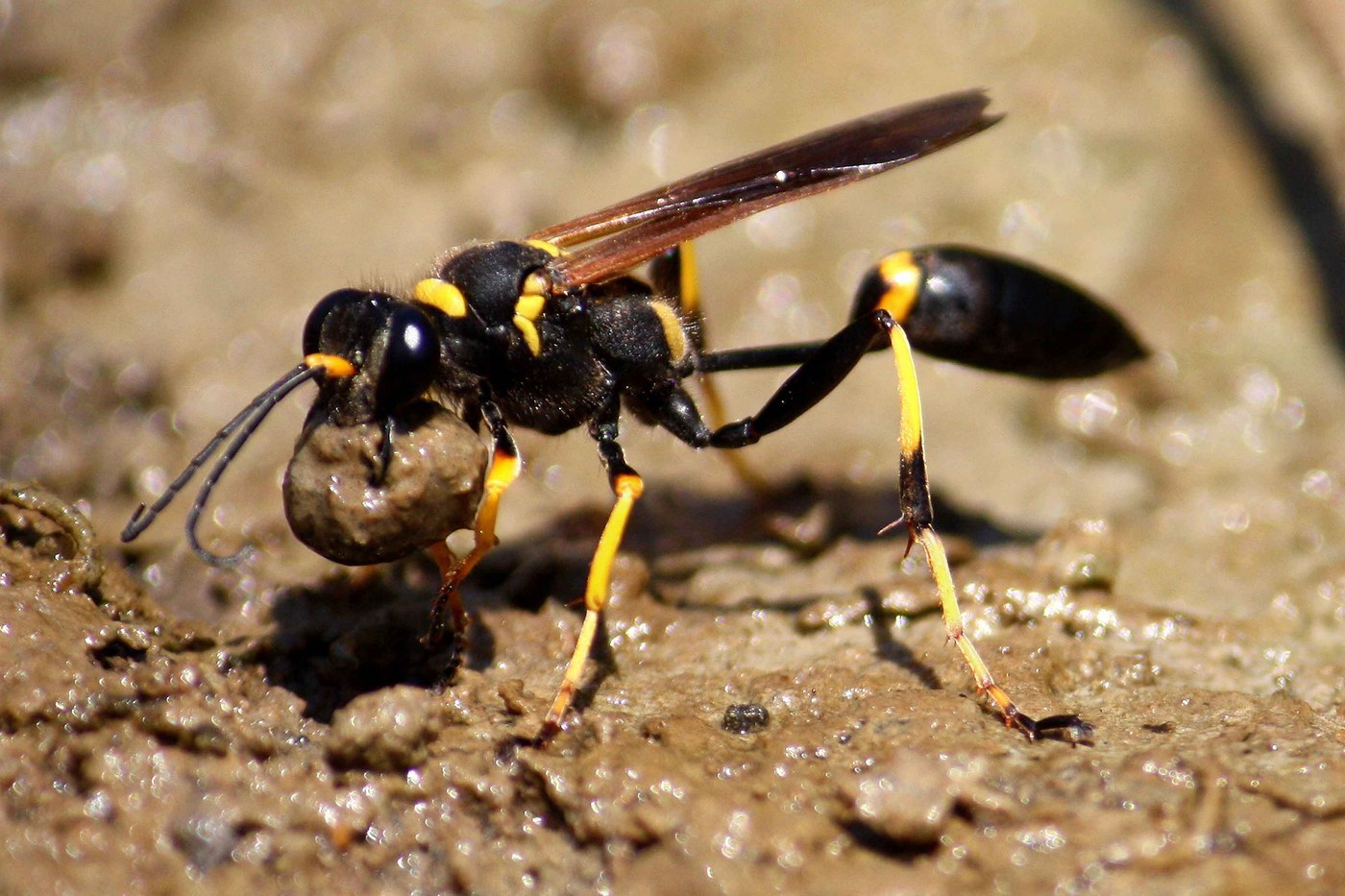
Key Visual Features
Mud daubers are solitary wasps best known for the distinctive mud nests they build rather than for living in large colonies.
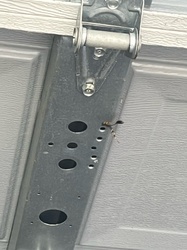
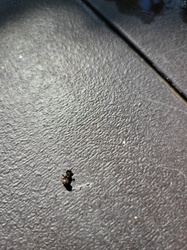
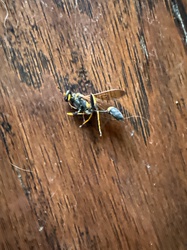
- The body is slender and elongated, typically about 1/2 to 1 inch (1.3-2.5 cm) long, with a notably long, thin, thread-like waist connecting the thorax and abdomen—longer and more exaggerated than in most other wasps.
- Coloring varies by species and can include solid black, black with pale yellow markings, or metallic blue-black with an iridescent sheen.
- Wings are clear to smoky and folded along the body at rest, and the legs are long and often trail noticeably during flight.
- The head is small relative to the body, with long, thin, slightly curved antennae.
- Overall, the body proportions—especially the extremely elongated waist—give mud daubers a more delicate, thread-waisted silhouette compared to the stockier build of hornets or yellowjackets.
Where and When You'd See It
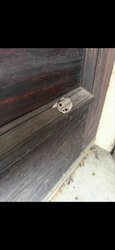
Mud daubers are solitary, meaning each female builds and provisions her own nest rather than living in a shared colony. Nests are made of mud collected from puddles, pond edges, or damp soil, formed into tube-shaped or organ-pipe-like cells, or a smoother lump if multiple cells are consolidated together, and are commonly attached to walls, eaves, sheds, and other sheltered vertical surfaces. Activity is highest in warm months from late spring through summer, when females are frequently seen collecting mud at damp ground or puddle edges and provisioning nest cells with prey. Because they are solitary, mud daubers are typically seen alone rather than in groups, and multiple nests in one area do not indicate a shared colony.
Similar-Looking Bugs
- Paper wasps build open, umbrella-shaped combs from chewed wood fiber rather than mud tubes, and have a shorter waist and stockier build.
- Yellowjackets and hornets are stockier, more robust, and live in large social colonies with enclosed paper nests rather than solitary mud structures.
- Spider wasps can share the long, slender build and dark coloring but do not construct mud nests, instead using existing burrows or cavities.
- The combination of an extremely long, thin waist and the habit of building mud tube nests is the most distinctive way to identify a mud dauber among wasps.
Quick ID Checklist
- Slender body with an unusually long, thread-like waist
- Solid black, black-and-yellow, or metallic blue-black coloring
- Builds tube-shaped or lumped mud nests on walls, eaves, or sheds
- Solitary behavior—seen alone rather than in groups or colonies
- Often observed gathering mud at damp soil or puddle edges
Frequently asked questions
What is the most distinctive physical feature of a mud dauber?
Its extremely long, thin, thread-like waist connecting the thorax and abdomen, more exaggerated than in most other wasps.
How can I recognize a mud dauber's nest?
Look for tube-shaped or organ-pipe-like cells made of mud, or a smoother mud lump, attached to walls, eaves, or sheltered surfaces.
Are mud daubers social like hornets or yellowjackets?
No, they are solitary wasps, with each female building and provisioning her own nest rather than living in a shared colony.
When are mud daubers most active?
They are most commonly seen from late spring through summer, often gathering mud at damp soil or puddle edges.
Mud Dauber identified by the community
Recent Mud Dauber finds identified with Bug Identifier.