Orb Weaver Spider Identification Guide
Learn how to recognize orb weaver spiders by their round, often colorful abdomens and the classic wheel-shaped webs they build.
Read the full Orb Weaver Spider encyclopedia entry →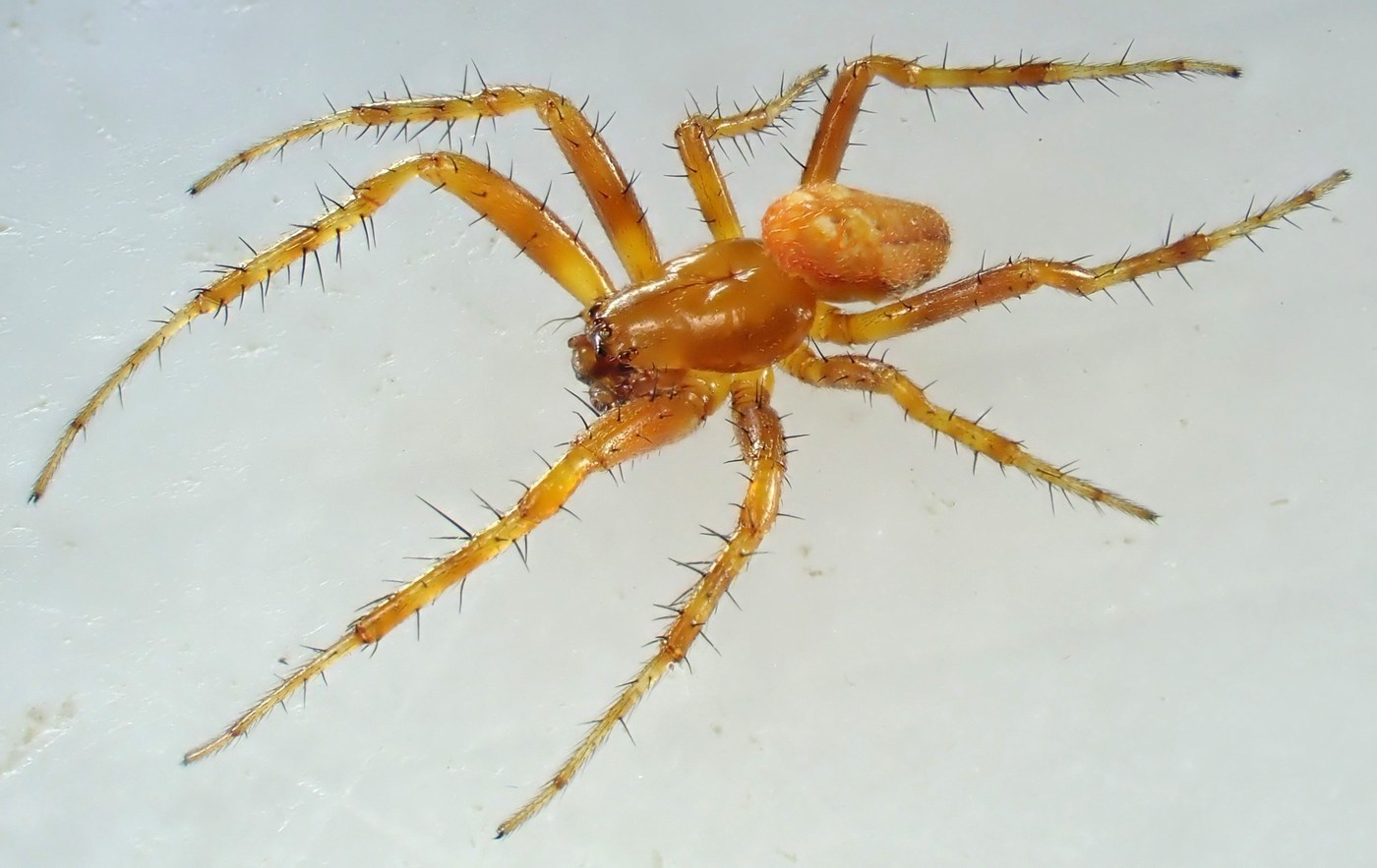
Key Visual Features
Orb weavers (family Araneidae) are a large, varied group united by one trademark: a circular, spiral "orb" web. Beyond the web, look for:
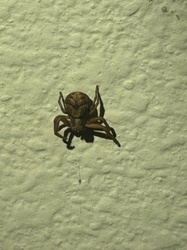
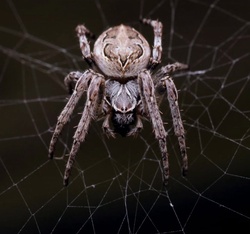
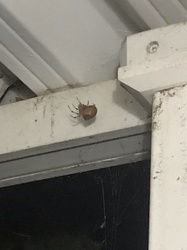
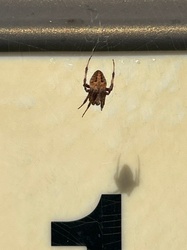
- Body shape: A bulbous, often oversized abdomen attached to a smaller cephalothorax, giving many species a rounded or angular "lumpy" silhouette.
- Size: Ranges widely, from under a quarter inch to well over an inch in body length depending on species, with females typically much larger than males.
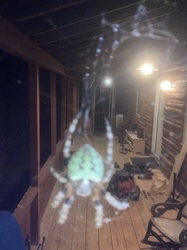
- Color and pattern: Highly variable—mottled brown and tan, bright orange, spiny and black-and-white, or patterned with stripes, spots, or chevrons depending on species.
- Legs: Eight legs, usually held in a symmetrical pose (often in pairs, forming an X shape) while resting at the web's hub.
- Eyes: Eight small eyes arranged in two rows, though hard to see without magnification.
Where and When You'll See Them
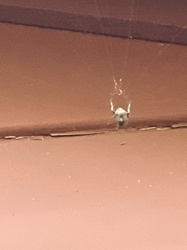
Orb weavers are common in gardens, meadows, woodland edges, and around porches, eaves, and fences—anywhere they can anchor a web between two fixed points. Most species rebuild their web daily, often at dusk, and many are most active at night, resting head-down at the web's center or hiding at the edge during the day. Webs and spiders become especially noticeable in late summer and fall as the spiders reach full size.
Similar-Looking Bugs
- Garden spider (Argiope species): A specific, boldly black-and-yellow orb weaver with a zigzag band woven into its web; essentially a type of orb weaver but distinctive enough to be its own recognizable form.
- Funnel weavers: Build a flat sheet web with a funnel retreat rather than a circular spiral, and have longer legs.
- Wolf spiders: Similar bulk in some species but build no web at all and are found roaming on the ground.
Quick ID Checklist
- Circular, spiral-patterned web strung between plants, fences, or structures
- Rounded, often patterned abdomen much wider than the front body segment
- Eight legs held in a symmetrical resting pose at the web's hub
- Most active and visible at dusk or night, or in late summer/fall
Frequently asked questions
How can I tell an orb weaver from other web-building spiders?
Look at the web shape first: orb weavers spin a distinctive circular web with spokes radiating from a center hub and a tight spiral connecting them, unlike the messy tangle webs or flat sheet webs other spiders build.
Why do orb weavers look so different from one another?
Araneidae is a huge family with hundreds of species, so body shape, color, and size vary enormously—some are spiny and angular, others smooth and round, but nearly all share the orb-shaped web.
Do orb weavers rebuild their webs often?
Many species take down and re-spin their web daily, typically in the evening, which is why you may see a fresh, perfectly formed web each morning in the same general spot.
Why are orb weavers bigger in fall?
They grow throughout the season after hatching in spring, so by late summer and autumn the females have reached their largest size, making them much more noticeable.
Orb Weaver Spider identified by the community
Recent Orb Weaver Spider finds identified with Bug Identifier.