Palo Verde Beetle Identification Guide
Learn to recognize one of North America's largest beetles, a heavy-bodied desert longhorn with spiny shoulders.
Read the full Palo Verde Beetle encyclopedia entry →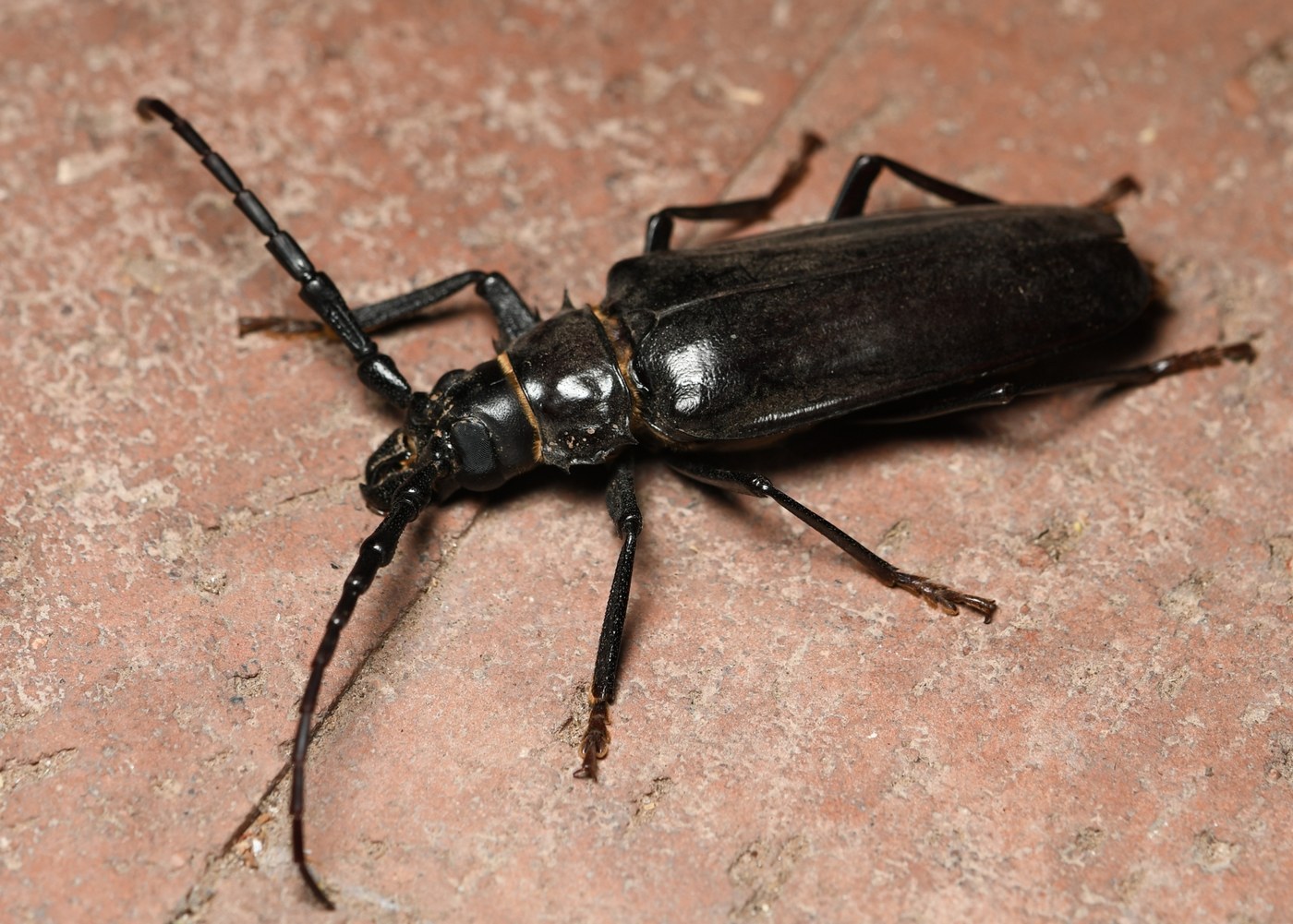
Key Visual Features
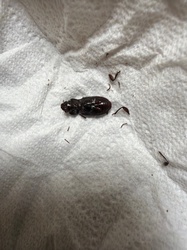
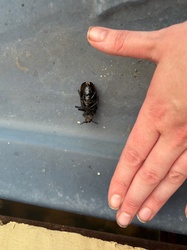
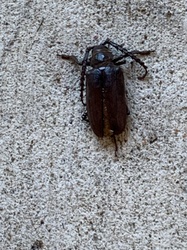
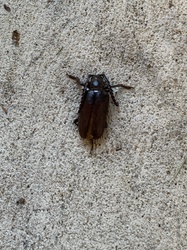
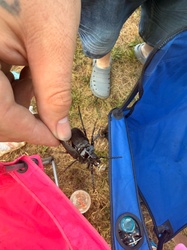
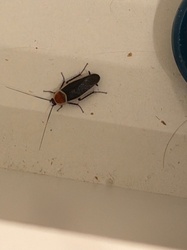
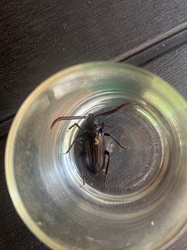
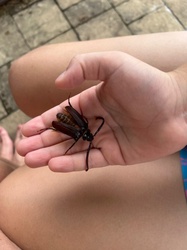
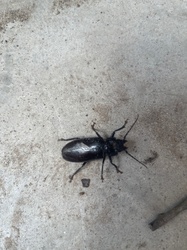
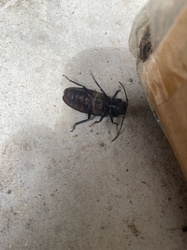
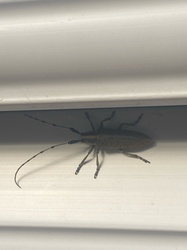
The palo verde beetle is among the largest beetles in North America, with adults commonly reaching 5-14 cm (2-5.5 inches) in body length when the long antennae are included. Its body is dark brown to blackish, heavily armored, and cylindrical, typical of the longhorn beetle family. The most distinctive features are the very long, segmented antennae, which can be as long as or longer than the body, and the pronotum, which bears several sharp, spine-like projections along its edges. The wing covers are relatively smooth and glossy, and the legs are thick and sturdy, built for a heavy-bodied insect.
Where and When You're Likely to See Them
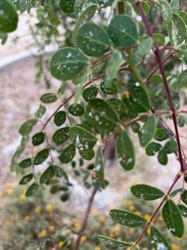
This beetle is found in the deserts of the southwestern United States and northern Mexico, closely tied to areas with palo verde trees and mesquite, since its larvae develop in the roots of these and other desert trees and shrubs. Adults emerge in the hottest part of the year, typically early to late summer, often triggered by monsoon rains. They are strong fliers and are frequently seen at night, drawn to porch lights and other artificial lighting, or found on the ground and low vegetation near host trees during the evening and early morning.
Similar-Looking Bugs
The palo verde beetle's massive size and spiny-edged pronotum make it fairly distinctive, but it can be confused with other large longhorn beetles in the same desert range, such as related Derobrachus species, which look nearly identical and are best told apart by subtle differences in range and minor structural details rather than obvious field marks. Smaller longhorn beetles lack both the extreme size and the spined shoulders. Its dark, heavy body might also draw comparison to large ground beetles or stag beetles, but those groups lack the extremely long, whip-like antennae characteristic of longhorns.
Quick ID Checklist
- Very large beetle, body length 5-14 cm including long antennae
- Dark brown to black, heavily armored, cylindrical body
- Long, segmented antennae often exceeding body length
- Pronotum edged with several sharp, spine-like projections
- Found in desert areas near palo verde and mesquite trees, especially in summer nights
Frequently asked questions
How big can a palo verde beetle actually get?
Adults are among the largest beetles in North America, with bodies that can reach roughly 5-14 cm long, and the antennae often add significant additional length.
Why do I only see palo verde beetles in summer?
Adults typically emerge during the hottest months, often coinciding with monsoon rains in the desert Southwest, after which they are active for a limited flight period.
What are the spines on its shoulders for identification-wise?
The sharp, spine-like projections along the edges of the pronotum are a helpful field mark that separates this beetle from smoother, unarmed longhorn beetle species.
Why are palo verde beetles often seen near lights at night?
They are strong nocturnal fliers that are commonly attracted to porch lights and other artificial lighting during their summer flight season.
Palo Verde Beetle identified by the community
Recent Palo Verde Beetle finds identified with Bug Identifier.