Powderpost Beetle Identification Guide
Identify powderpost beetles by their slender reddish-brown bodies and the fine, flour-like wood powder they leave behind.
Read the full Powderpost Beetle encyclopedia entry →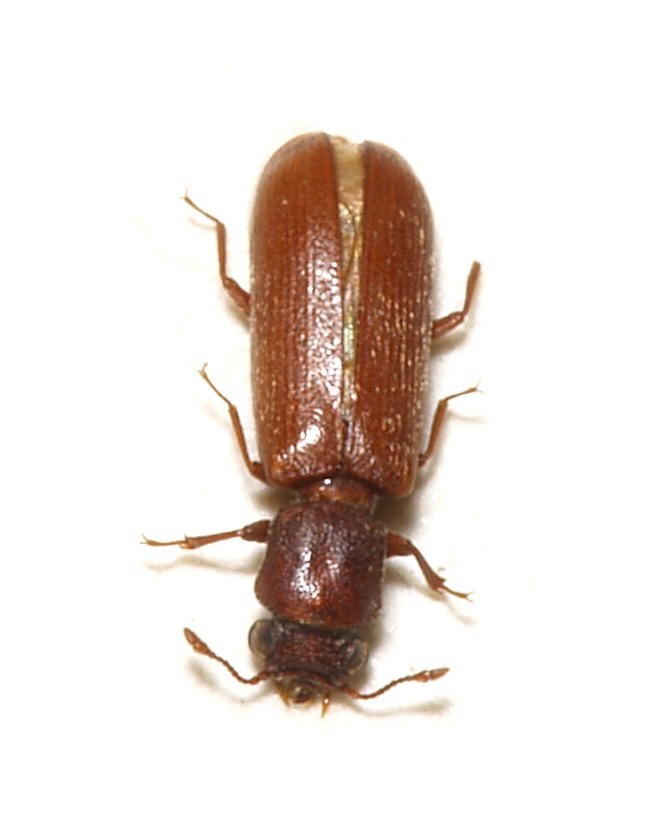
Key Visual Features
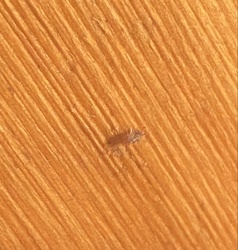
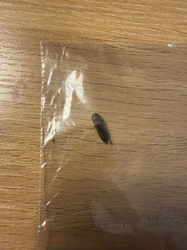
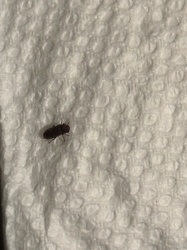
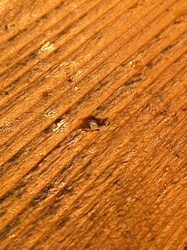
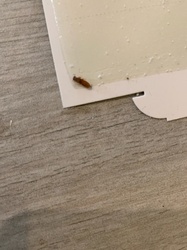
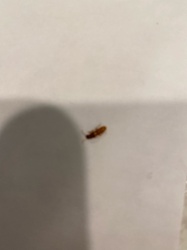
Powderpost beetles (subfamily Lyctinae) are small, narrow, reddish-brown to nearly black beetles, typically 1/8 to 3/8 inch long. The body is elongated and cylindrical, flattened along the top, with the head clearly visible when viewed from above (not hidden beneath the thorax, which distinguishes them from some related wood-boring beetles). Antennae are relatively short and end in a two-segmented club. Wing covers are smooth with faint rows of tiny punctures. Because adults are rarely seen in the open, identification in the field usually relies on the signs their larvae leave in wood: extremely fine, flour-like powder (frass) sifting out of tiny round exit holes about 1/16 inch in diameter.
Where and When You'll See Them
Powderpost beetles infest seasoned hardwoods with high starch content, such as oak, ash, hickory, and bamboo, commonly found in furniture, flooring, tool handles, and structural lumber. Adults tend to emerge and fly in warmer months, spring through summer, when females seek out bare, unfinished wood surfaces to lay eggs in the wood's pores. The larvae then develop hidden inside the wood for months before emerging as adults, so visible activity (fresh powder beneath exit holes) is the most common way people notice them, often long after the original infestation began.
Similar-Looking Bugs
- Furniture beetle — produces gritty, pellet-like frass rather than the fine, flour-like powder of powderpost beetles, and its head is hidden from above by a hood-like thorax.
- Deathwatch beetle — larger, with a mottled, hairy appearance and coarser frass.
- Old house borer — much larger overall with oval rather than round exit holes.
Quick ID Checklist
- Slender, reddish-brown to black, 1/8 to 3/8 inch
- Head visible from above, not hidden under the thorax
- Antennae end in a 2-segmented club
- Round exit holes about 1/16 inch with very fine, flour-like powder
- Found in seasoned hardwood furniture, flooring, and lumber
Frequently asked questions
How can I identify powderpost beetle damage without seeing the beetle itself?
Look for tiny round exit holes about 1/16 inch across paired with very fine, flour-like powder collecting beneath the wood — a signature of this beetle's larval stage.
What kind of wood do powderpost beetles prefer?
They favor seasoned hardwoods with high starch content, such as oak, ash, and hickory, often found in furniture, flooring, and structural lumber.
How do powderpost beetle exit holes differ from other wood-boring beetles?
Powderpost beetle holes are small and round with very fine, powdery frass, whereas beetles like the old house borer leave larger, oval holes with coarser debris.
When are adult powderpost beetles most likely to be seen?
Adults typically emerge and are most active in warmer months, spring through summer, when they seek bare wood surfaces to lay eggs.
Powderpost Beetle identified by the community
Recent Powderpost Beetle finds identified with Bug Identifier.