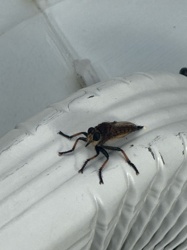
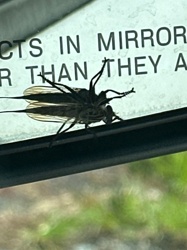
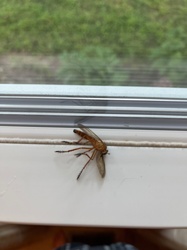
Robber Fly Identification Guide
Identify this bristly, predatory fly by its elongated body, bearded face, and habit of perching to scan for passing prey.
Read the full Robber Fly encyclopedia entry →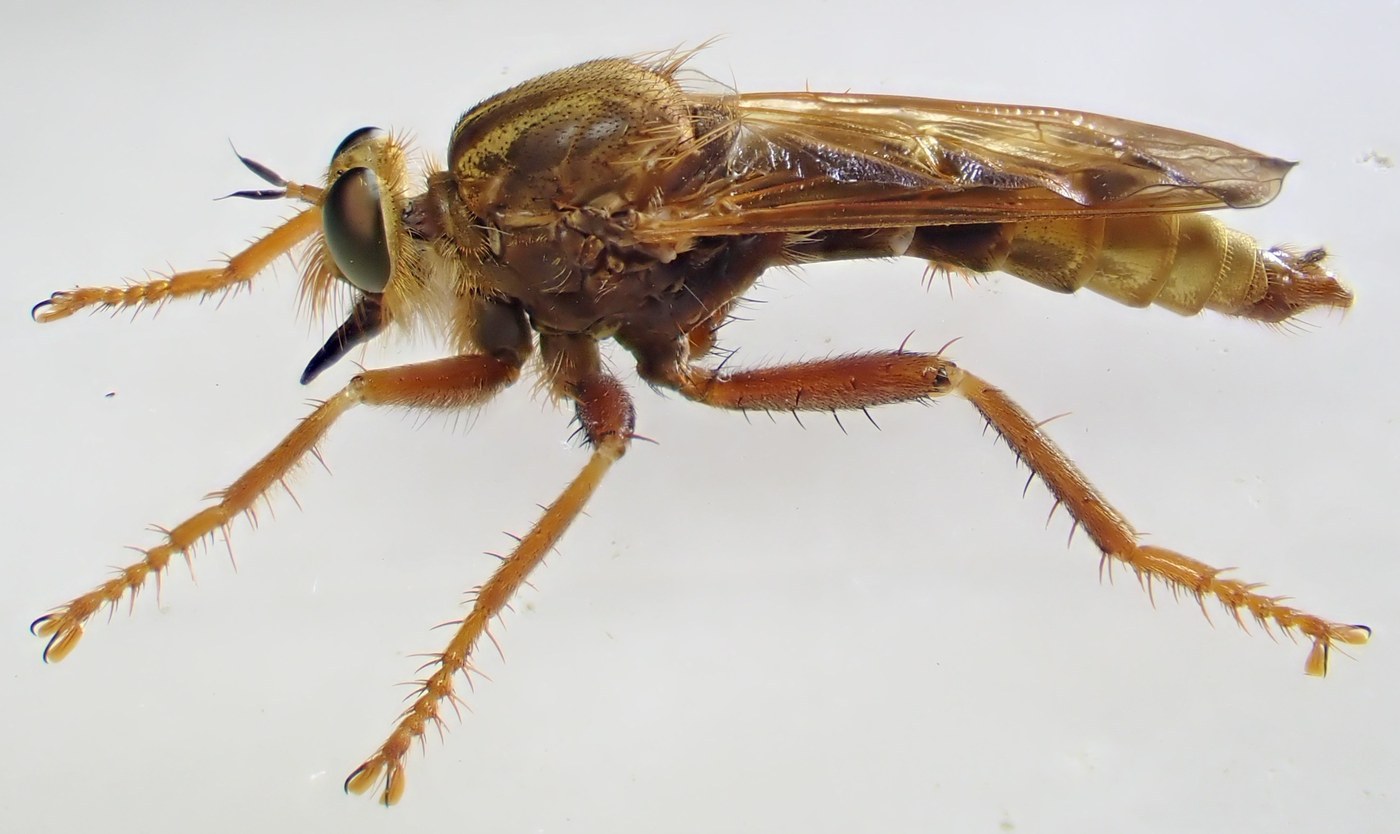
Key Visual Features
Robber flies are agile aerial predators with a distinctive rugged build, easily told apart from bees and wasps once you know their key features.
- Size: Ranges from about 0.3 inches in small species to over 1.5 inches in the largest species.
- Color: Often gray, brown, black, or tan, sometimes with a yellowish or orange abdomen; body frequently appears dusty or bristly rather than smooth and shiny.
- Body shape: Elongated, tapering body, often described as robust and somewhat "hump-backed" at the thorax, narrowing toward the rear of the abdomen.
- Wings: A single pair of wings held flat and angled along the body at rest (a true fly trait), often held apart in a shallow V.
- Legs: Long, strong, bristly legs used to snatch prey out of the air in flight.
- Antennae: Short, simple antennae, inconspicuous compared to the face.
- Face: The most distinctive feature — a dense tuft of bristly hairs (the "mystax" or beard) covers the face just above the mouthparts, along with large, widely spaced compound eyes set in a notably concave depression on top of the head.
Where and When You'd See One
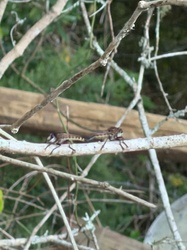
Robber flies favor open, sunny habitats — meadows, fields, gardens, woodland edges, and dry open ground — where they perch conspicuously on fence posts, twig tips, rocks, or bare soil to scan for passing insects. They are most active on warm, sunny days from late spring through late summer, launching from a perch in fast pursuit of prey before returning to the same or a nearby perch, a distinctive "sit-and-wait" hunting pattern.
Similar-Looking Bugs
- Bee flies: Softer, rounder, and more uniformly furry, without the robber fly's bristly beard or the deep notch between the eyes; bee flies hover at flowers rather than perching to ambush.
- Horse flies and deer flies: Stockier, with large unnotched eyes that often meet at the top of the head, and lack the robber fly's bearded face and elongated tapering abdomen.
- Dragonflies: Much larger with two pairs of wings held out flat and a longer, narrower abdomen; robber flies have only one pair of wings.
- Wasps (some mimicking species): Some robber flies mimic wasps in color, but lack a wasp's narrow "waist," elbowed antennae, and have only one pair of wings versus a wasp's two.
Quick ID Checklist
- Dense tuft of bristly hair (mystax) covering the face above the mouth
- Large eyes set apart by a distinct notch on top of the head
- Elongated, tapering, somewhat bristly body
- Perches on twigs, posts, or bare ground and darts out after passing insects
- Single pair of wings held flat/angled at rest
Frequently asked questions
What is the bristly patch on a robber fly's face for?
That dense tuft of hair, called the mystax, covers the face just above the mouthparts and is one of the most reliable features for identifying a robber fly at a glance.
How does a robber fly's hunting behavior help identify it?
Robber flies typically perch on an exposed spot like a twig tip, fence post, or bare ground, then dart out rapidly to intercept a passing insect in flight before returning to the same perch, a pattern distinct from hovering or wandering insects.
How can I tell a robber fly from a dragonfly?
Robber flies have only one pair of wings, as with all true flies, while dragonflies have two pairs held flat and separate; robber flies also have a distinctly bristly, bearded face that dragonflies lack.
Why do robber flies have such large, notched eyes?
Their large compound eyes, set apart by a shallow depression on top of the head, give them wide-angle vision suited to spotting fast-moving prey in flight, a feature that helps distinguish them from similarly sized flies.
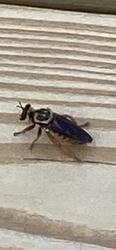
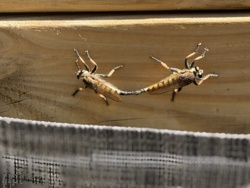
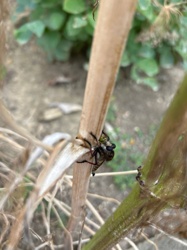
Robber Fly identified by the community
Recent Robber Fly finds identified with Bug Identifier.