Silverfish and Firebrat Identification Guide
Tell apart these two fast, wingless, scale-covered insects by their color, sheen, and preferred indoor temperature zones.
Read the full Silverfish Firebrat encyclopedia entry →Key Visual Features
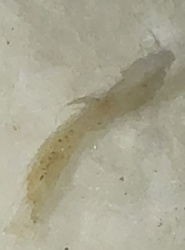
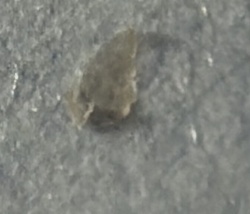
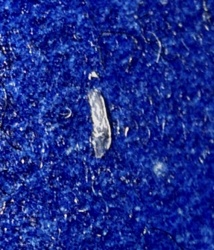
Silverfish (Lepisma saccharinum) and firebrats (Thermobia domestica) are closely related, wingless insects with a distinctive teardrop shape.
- Size: Both measure roughly 12-19 mm long as adults, not counting the long tail filaments.
- Body shape: Elongated, flattened, and tapering smoothly from a wider head/thorax region to a narrow tail, giving a classic teardrop or carrot-like silhouette.
- Silverfish coloring: Covered in fine, silvery-gray to pearlescent scales that give the body a metallic shine and smooth appearance.
- Firebrat coloring: Covered in mottled gray and brown scales with a speckled, less uniform pattern compared to the silvery sheen of true silverfish.
- Tail filaments: Three long, thread-like appendages extend from the rear end — a central filament flanked by two lateral ones (cerci), all roughly as long as the body itself.
- Antennae: Long, thin, and thread-like, often as long as or longer than the body.
- Movement: Extremely fast, fluid runners with a side-to-side, fish-like wiggling motion, and no wings at any life stage.
Where and When You'd See It
Both are nocturnal and shun light, so they are typically spotted at night or when disturbed from hiding spots such as behind baseboards, in bathrooms, basements, closets, or storage boxes. Silverfish prefer cooler, more humid conditions, often found in bathrooms, basements, and damp storage areas. Firebrats favor warmer locations, historically near heat sources such as furnaces, ovens, and boiler rooms, reflecting their name. Both can be active year-round indoors given suitable temperature and humidity.
Similar-Looking Bugs
- Each other: The clearest distinction is color and habitat preference — silverfish have a uniform silvery sheen and favor cooler, damp spots, while firebrats show a mottled gray-brown pattern and favor warmer areas.
- Earwigs: Larger, with a hardened front wing cover and a pair of pincers at the rear, features silverfish and firebrats entirely lack.
- Centipedes: Have many pairs of legs running the length of the body, versus the three pairs and tail filaments of silverfish/firebrats.
Quick ID Checklist
- Wingless, teardrop-shaped body tapering to a point
- Three long tail filaments of roughly equal length at the rear
- Silvery, metallic sheen (silverfish) versus mottled gray-brown speckling (firebrat)
- Long, thread-like antennae
- Fast, fish-like scurrying motion; active at night in dark, undisturbed spots
Frequently asked questions
What is the main difference between a silverfish and a firebrat?
Color and habitat are the best clues: silverfish have a uniform, shiny silvery-gray body and prefer cooler, damp areas, while firebrats show a mottled gray-brown pattern and are typically found in warmer spots near heat sources.
Why do silverfish and firebrats move so fast?
Both are quick, agile runners built for scurrying away from light and disturbance, using a distinctive side-to-side wiggling gait reminiscent of a swimming fish.
Do silverfish or firebrats have wings?
No, neither species has wings at any point in its life; both remain wingless from hatching through adulthood.
What are the long threads at the rear of a silverfish?
These are three tail filaments — a central one and two lateral cerci — that are roughly equal in length and give the insect its tapering, three-pronged tail appearance.
Silverfish Firebrat identified by the community
Recent Silverfish Firebrat finds identified with Bug Identifier.